

Audio By Carbonatix
President John Dramani Mahama has reiterated that his administration's accountability drive is not motivated by political vendetta, insisting that he derives no satisfaction from prosecuting individuals who have committed no offence, and that all investigations must be grounded in credible evidence and due process.
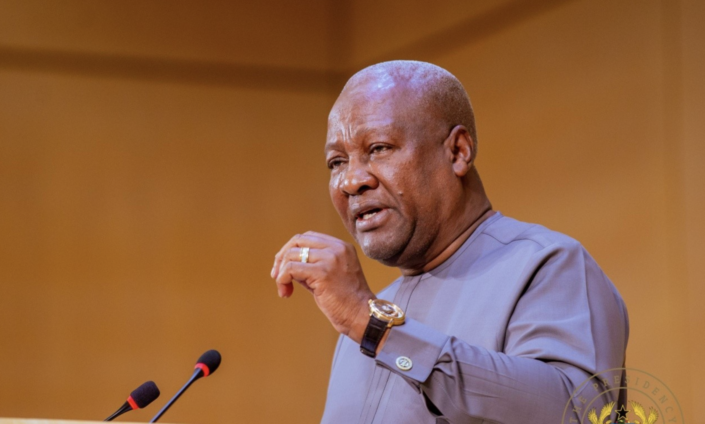
Addressing participants during the Citizens' Engagement in the Volta Region, the President sought to reassure Ghanaians that ongoing investigations and prosecutions are intended to uphold the rule of law rather than target political opponents.
"I also want to touch on accountability. We do not harbour any malice against any person, and indeed, I do not take any enjoyment or pride in prosecuting people if they have done no wrong," President Mahama said.
He stressed that Ghana's prosecutorial, investigative and judicial institutions provide adequate safeguards to ensure that justice is served, adding that no individual should fear persecution on political grounds if they have acted within the law.
"I believe that our prosecutorial system, investigative system and judicial system grant enough leverage for people to have justice, and so nobody would, out of political vendetta or malice, prosecute anybody if you've done no wrong," he stated.
The President argued that the country's courts remain the ultimate arbiters in cases where individuals believe they have been wrongly prosecuted.
"If you've done no wrong, and you're being prosecuted maliciously, the courts will be able to uphold your rights and set you free," he said.
President Mahama dismissed suggestions that the government's accountability agenda is designed to hound political opponents, maintaining that every investigation is initiated and pursued on the strength of evidence gathered by the relevant state institutions.
"It shouldn't be like we're trying to hound our political opponents or something. We proceed on the basis of evidence we have received, and then the evidence is weighed, and if it is sufficient, we proceed," he explained.
According to the President, the investigative process often takes considerable time because authorities must ensure that allegations are thoroughly examined before any enforcement action is taken.
"There are many times we've had evidence. Sometimes the evidence comes, and it is not substantive. That is why the whole system of accountability takes time because you need to be thorough," he remarked.
He noted that by the time institutions such as the Economic and Organised Crime Office (EOCO), the Office of the Special Prosecutor (OSP) or other law enforcement agencies effect an arrest, months of investigative work would already have been undertaken.
"By the time EOCO, OSP, or somebody comes and arrests the person, it means that months of work have taken place reviewing the evidence," the President said.
President Mahama assured the public that accountability remains a central pillar of his administration and pledged that investigations into allegations of wrongdoing would continue wherever credible evidence exists.
"I just want to assure you that accountability is still our priority," he said.
The President also made it clear that the government's anti-corruption efforts would apply equally to members of his own administration. He warned that ministers, political appointees and public officials serving under his government would face investigation and possible prosecution if evidence showed they had abused the public trust.
"Like I keep saying, the sword does not cut only one way. If we find evidence that any of our current appointees or persons working in government under our tenure have also abused the public trust, the way the sword is cutting that way, it will cut this way too," he stated.
He disclosed that he has consistently advised his appointees to comply strictly with established procedures in the discharge of their duties and to avoid taking decisions that could expose them to allegations of misconduct.
"I always caution my appointees to be very careful. Be sure you follow the procedure. Don't cut corners," he cautioned.
President Mahama further encouraged ministers and senior government officials to seek collective approval through Cabinet whenever they encounter uncertainty over policy or administrative decisions.
"If you have any doubts, bring it to Cabinet. Let's all take a look at it and take a collective decision on it," he added.
Latest Stories
-
Europa League: Eddie Nketiah scores first goal of 2026/27 season in Palace win over Lech Poznan
5 minutes -
Bawumia condemns remand of Techiman nurse, demands her release over free speech concerns
12 minutes -
Today’s front pages: Friday, September 18, 2026
2 hours -
Prof Kwaku Asare questions legal basis of case against senior nursing officer linked to ‘Ghana Jollof’
2 hours -
Financial inclusion must go hand in hand with investor protection – BoG Governor
2 hours -
Ablakwa rewards six North Tongu WASSCE best performers with MacBooks, scholarships
3 hours -
Gender Ministry touts gains in LEAP, school feeding and disability support
4 hours -
72 vessels, 17,336 fishing hours: The monitoring gap at Ghana’s first Marine Protected Area
4 hours -
Ansa-Asare questions rush to lower presidential age to 30
4 hours -
Minority challenges claim all 431 government-sponsored World Cup travellers have returned
4 hours -
No evidence linking government, NDC members to cocaine probe – Kwakye Ofosu
4 hours -
Minority demands full breakdown of GH¢58.9m spent on Ghana’s World Cup participation
5 hours -
Stay away from negative peer influences – MP warns SHS students
5 hours -
Mahama to commission Agbogbloshie waste evacuation to Nsawam landfill today
5 hours -
Kwadaso NDC supporters demonstrate to demand removal of MCE
5 hours