

Audio By Carbonatix
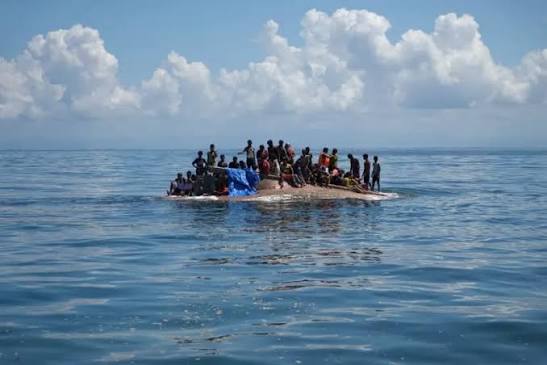
More than 500 people fleeing violence in Myanmar are missing and feared dead after two vessels disappeared in rough seas. United Nations migration agencies reported the potential tragedy on Thursday, highlighting a dramatic escalation in the region's ongoing humanitarian crisis.
The Disappearances
Two vessels departed from Myanmar’s western Rakhine State in late June carrying mostly Rohingya passengers. One boat, estimated to be carrying 250 people, lost contact shortly after departure. A second vessel, carrying approximately 280 passengers, is believed to have sunk off the Ayeyarwady coast on July 8.
The International Organization for Migration (IOM) and the UN Refugee Agency (UNHCR) issued a joint statement detailing the incidents. The agencies noted these journeys occurred outside the "regular sailing season," when maritime conditions are significantly more hazardous. Recent torrential rainfall and regional flooding have further increased the risks. Some of the missing passengers had reportedly traveled back to Rakhine from refugee camps in Bangladesh before attempting this voyage.
A Worsening Humanitarian Crisis
The Rohingya are a stateless Muslim ethnic minority who have endured decades of state-sponsored persecution. The United States has formally classified this violence as a genocide.
Over one million Rohingya have sought refuge in Bangladesh, where they remain confined to squalid, overcrowded camps. Conditions there are increasingly perilous due to funding shortfalls. Last week, torrential monsoon rains triggered deadly mudslides in the Cox’s Bazar camps, killing at least 17 people and displacing thousands, according to Human Rights Watch.
Roughly 630,000 Rohingya remain in Rakhine, where a severe humanitarian emergency is unfolding. The crisis is driven by intense fighting between Myanmar's military junta and the Arakan Army. Myanmar has been engulfed in a bloody civil war since the 2021 military coup. Conflict monitoring group ACLED estimates that at least 100,000 people have been killed in the ensuing violence.
A Growing Regional Toll
While the sinkings have not been officially confirmed, the IOM and UNHCR stated they are "gravely concerned by the potentially devastating loss of life." Nearly 300 people had already been reported dead or missing in the Andaman Sea and Bay of Bengal earlier this year.
The UN agencies emphasized the root causes of these desperate journeys: "These reports underscore the devastating impact of protracted conflict and displacement, as well as the continued lack of sustainable solutions for Rohingya communities."
They further highlighted the intersection of regional instability and failing protection measures: "Escalating conflict and a worsening humanitarian situation in Myanmar, along with limited assistance and opportunities in refugee camps in Bangladesh, contribute to increasing numbers of people attempting perilous sea journeys in search of safety and protection."
The IOM and UNHCR are calling for urgent international intervention to prevent further deaths "along one of the world’s deadliest maritime routes." They are specifically advocating for "enhanced search and rescue efforts, access to asylum and protection, and actions against smuggling and trafficking networks."
Global stakeholders and regional governments face an urgent moral imperative to address the root causes of this displacement. Until sustainable solutions and safe, dignified conditions for the Rohingya are prioritized, the cycle of life-threatening journeys will likely continue.
Latest Stories
-
12th FASU Games: University of Ghana win 23 medals in Cairo
1 hour -
Jordan Ayew, Yirenkyi feature as Ghanaian trio exit Carabao Cup
4 hours -
Snapchat ‘willing to implement’ daily time limits for teens, boss tells BBC
4 hours -
Microsoft says AI rival Anthropic could have ‘disastrous impact’ on humanity
5 hours -
De la Fuente extends Spain contract to 2032
5 hours -
Raphinha hat trick in Barcelona’s 7-goal rout of Santander
5 hours -
Carabao Cup fourth-round draw: Liverpool to host Chelsea as Arsenal drawn away to League Two Fleetwood
5 hours -
Mbappe, Vini and Konate obscure Real’s Ceuta message
5 hours -
Reggie Rockstone named Unichem Ghana brand ambassador
5 hours -
Man United lose to Brighton from 2-0 up to end 50-year record
5 hours -
Man United lose to Brighton from 2-0 up to end 50-year record
5 hours -
Petrol and diesel price rises push UK inflation higher
5 hours -
City of David Foundation donates to Koforidua Hospital, Koforidua Prison
5 hours -
AMA says Konkomba traders were consulted ahead of Agbogbloshie 24-hour market project
6 hours -
Let’s pilot Chinese in public schools before scaling up – EduWatch
6 hours