

Audio By Carbonatix
9. THE ROAD TO LEGISLATIVE REVITALISATION
The historical trajectory of Ghana's tribunal system reveals a deep, ongoing tension between the populist pursuit of accessible, citizen-led justice and the structural demand for constitutional due process. As detailed in Part I, the system originated amidst the summary opacity of the Armed Forces Revolutionary Council (AFRC) era in 1979 and expanded into a sweeping, aggressive parallel branch under the Provisional National Defence Council (PNDC). The enactment of the Courts Act, 1993 (Act 459) sought to tame this apparatus, stripping the public tribunals of their revolutionary autonomy and integrating them into an orthodox, unified judiciary headed by the Chief Justice.
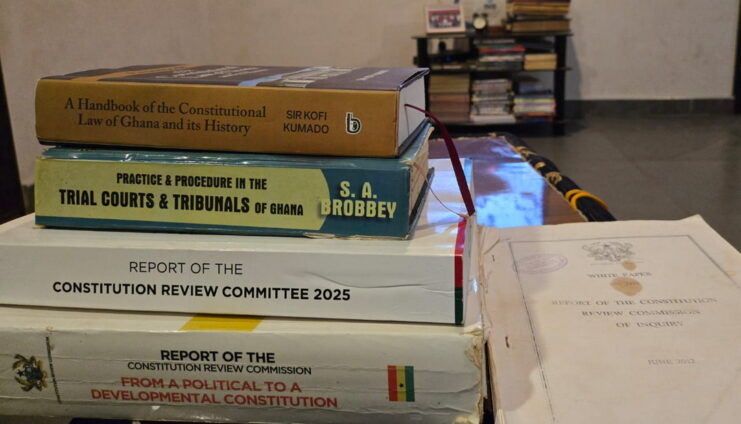
However, as explored in Part II, structural integration did not yield operational longevity. Over the next three decades, the Regional Tribunals fell into total obsolescence. Plagued by a persistent historical stigma, a lack of dedicated personnel, and the practical reality that their criminal caseload was entirely handled by the specialised divisions of the High Court, the tribunals sat completely dormant. While the 2012 Government White Paper and the 2025 Constitution Review Committee robustly recommended their formal constitutional de-establishment to simplify the court hierarchy, a persistent statutory vacuum (lacuna) remained regarding how to fulfil the constitutional directive under Article 125(2), which mandates popular citizen participation in the administration of justice through public tribunals.
A sudden, transformative paradigm shift occurred at midnight on 16th July 2026, when Parliament passed the Tribunals Bill, 2026. Rather than completing the erasure of the tribunals, the new Act (it becomes an Act upon assent by the President) completely overhauls, rationalises, and revitalises the system. It replaces the obsolete framework of Act 459 with the promise of a modern, dual-tier system specifically engineered to provide operational clarity, reduce case backlogs, secure human rights safeguards, and fulfil the constitutional mandate of popular participation in justice delivery.
I am reliably informed by the Learned Attorney-General, Dr Dominic A. Ayine, that the version of the Bill passed underwent significant changes and it should be ready soon. What I am relying on now is the version that has been publicly available since notification by the gazette dated 18th May, 2026. Let’s still call it The Tribunals Act 2026 for the present purpose, with the caveat in mind.
10. COMPARATIVE ANALYSIS: ACT 459 VS. THE TRIBUNALS ACT, 2026
The Tribunals Act, 2026 introduces profound structural, administrative, and procedural changes in direct comparison with the old provisions of Act 459. Through section 58, the 2026 Act executes a consequential amendment to Act 459, deleting its reference to Regional Tribunal jurisdictions and formally repealing sections 23, 24, 25, 26, and 27 of the old law.
The critical legislative shifts between the old framework and the new 2026 enactment are structured below:
A. Composition and structural modifications
- The Judicial Panel Framework: Under the old section 23 of Act 459, a Regional Tribunal was constituted by a Chairman and "not less than two or more than four other panel members". The Tribunals Act, 2026 (section 7) refines this setup, dictating that a panel consists strictly of the Chairman and "not less than two other panel members".
- Layperson Participation: To fulfil the spirit of popular participation, section 7(1) (c) of the 2026 Act explicitly allows the Chief Justice to designate members "who may or may not be lawyers" to sit as panel members for a written, specified period.
- Political Exclusions: To prevent political weaponisation, sections 8(2) and 10(2) introduce a strict bar absent from Act 459, stating that a person "shall not be appointed as a Chairman... if that person is a sitting Member of Parliament or holds a political office".
- The Creation of District Tribunals: While Act 459 saw the lower-tier public tribunals abolished or folded back into traditional magistracies, the 2026 Act builds a fresh lower tier by establishing the District Tribunal. It features a Chairman qualified to be a Circuit Court Judge, sitting with two panel members.
B. Jurisdictional realignment and explicit exclusions
- Expanded Statutory Criminal Jurisdiction: Under Act 459, the Regional Tribunal's original jurisdiction focused on economic crimes, special offences under the Criminal Code, and narcotics. Section 16 of the Tribunals Act, 2026 modernises this by granting concurrent original jurisdiction with the High Court across an expanded list of contemporary legislation:
- Criminal Offences Act, 1960 (Act 29) (Chapter 4, Part Three)
- Narcotics Control Commission Act, 2020 (Act 1019)
- Income Tax Act, 2015 (Act 896)
- Customs Act, 2015 (Act 891)
- Minerals and Mining Act, 2006 (Act 703)
- Supervisory and Appellate Jurisdiction: The 2026 Act creates a clear internal hierarchy. The Regional Tribunal is now given explicit appellate and supervisory jurisdiction over the newly created District Tribunals within its region.
- Strict Constitutional Guardrails: To address the historical abuses of the PNDC era where tribunals overstepped into political theatre, section 23 explicitly debars tribunals from hearing constitutional interpretation disputes (which must be stayed and referred directly to the Supreme Court under section 24) and any case involving a "violation of human rights".
C. Enhanced oversight and accountability
- The Tribunal Oversight Committee: In a radical departure from the Act 459 structure, where tribunal administration was simply swallowed by the Judicial Council, section 43 of the 2026 Act establishes a dedicated Tribunal Oversight Committee as a formal committee of the Judicial Council.
- Committee Composition & Oversight: Appointed by the Chief Justice, this diverse body includes representatives from the Judicial Council, the Attorney-General's office, CHRAJ, the National House of Chiefs, organisations of lawyers, and two non-lawyers. It is statutorily mandated to evaluate operations, investigate complaints of misconduct, and provide strict ethical guidance.
- Ethical Rules and Code of Conduct: Under section 14, all members are bound by a code of conduct, and disciplinary committees are empowered to investigate allegations of misconduct or actions that bring "the integrity of the tribunal into disrepute".
11. RADICAL PROCEDURAL INNOVATIONS: FAST-TRACKING AND PUBLIC ACCESS
The Tribunals Act, 2026 departs completely from old orthodoxies by implementing statutory measures designed to guarantee transparency and eliminate the massive delays criticised by the 2011 Constitution Review Commission.
A. Live media broadcasting
To ensure public accountability, the Act introduces rules for media coverage. Under section 30, proceedings before a Regional Tribunal involving a matter of public interest or an offence against the State "may be broadcast live" under guidelines issued by the Chief Justice. For District Tribunals, live broadcasts are restricted unless explicitly authorised by the panel.
B. Revolutionary timelines for mining offences (Act 703)
The most aggressive policy shift in the 2026 Act appears under sections 33 to 42, which establish an unyielding procedural track for trials under the Minerals and Mining Act, 2006 (Act 703), totally overriding standard criminal procedure rules:
- Day-to-Day Trials: Section 41 dictates that mining trials "shall proceed on a day-to-day basis until the conclusion of the trial". Adjournments are restricted, can never exceed 14 days, and cannot be granted solely due to the absence of counsel.
- Continuous Registry Operations: To facilitate this rapid workflow, section 41(3) mandates that the Tribunal Registry shall stay open on Saturdays, Sundays, and public holidays to process filings and service.
- Ban on Stays: Section 40 completely prohibits any stay of proceedings in a case under the Minerals and Mining Act.
- Strict Statutory Timeline: Section 38(4) ties the process to a rigorous, fixed schedule laid out in the Act:
| Process / Timeline | Action Required |
| 7th day | Appearance and Answer |
| 10th day | Pre-trial |
| 15th day | Trial Commences |
| 21st day | End of Trial |
| 42nd day | Final Judgment Delivered |
READ the remaining instalments in this article below:
Click to read Part II
Click to read Part IV
Join me on my weekly legal clinic THE LAW every Sunday @ 2 pm on Joynews
Latest Stories
-
Today’s front pages: Friday, September 18, 2026
1 hour -
Prof Kwaku Asare questions legal basis of case against senior nursing officer linked to ‘Ghana Jollof’
1 hour -
Financial inclusion must go hand in hand with investor protection – BoG Governor
1 hour -
Ablakwa rewards six North Tongu WASSCE best performers with MacBooks, scholarships
2 hours -
Gender Ministry touts gains in LEAP, school feeding and disability support
3 hours -
72 vessels, 17,336 fishing hours: The monitoring gap at Ghana’s first Marine Protected Area
3 hours -
Ansa-Asare questions rush to lower presidential age to 30
4 hours -
Minority challenges claim all 431 government-sponsored World Cup travellers have returned
4 hours -
No evidence linking government, NDC members to cocaine probe – Kwakye Ofosu
4 hours -
Minority demands full breakdown of GH¢58.9m spent on Ghana’s World Cup participation
4 hours -
Stay away from negative peer influences – MP warns SHS students
4 hours -
Mahama to commission Agbogbloshie waste evacuation to Nsawam landfill today
4 hours -
Kwadaso NDC supporters demonstrate to demand removal of MCE
4 hours -
GSA records 18% revenue growth in 2025
4 hours -
2027 Budget to target nine sectors to create jobs – Mahama
4 hours