

Audio By Carbonatix
The Executive Director of the Institute for Education Studies (IFEST), Dr Peter Anti Partey, has questioned the feasibility of the government's plan to eliminate the double-track system in Senior High Schools (SHSs) by 2027, arguing that the timeline does not align with the implementation schedule of the recently approved World Bank education support facility.
He said although the World Bank funding represented a significant boost to Ghana's secondary education infrastructure, procurement procedures and project implementation timelines made it unlikely that the programme could deliver the required infrastructure within the period announced by government.
His comments come after the Finance Minister, Dr Cassiel Ato Forson, announced in the 2026 Mid-Year Budget Review that the government had secured a World Bank facility to accelerate infrastructure expansion in second-cycle institutions as part of efforts to phase out the double-track system.
The government's plan is backed by a US$300 million World Bank-supported Transformative Secondary Education for Access, Results and Relevance for Jobs (STARR-J) project funding.
As part of efforts to boost education, the government plans to upgrade 50 major schools—elevating 30 Category C schools to Category B, and 20 Category B schools to Category A.
In addition, the government plans to expand dormitories, lecture halls, and dining facilities to increase student capacity and safely boost teacher-student contact hours.
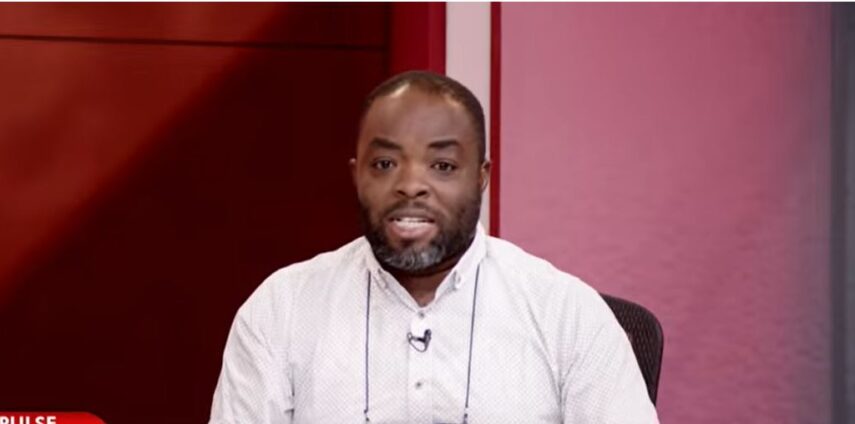
Speaking on JoyNews, Dr Anti Partey described the financing package as timely but cautioned against raising expectations that could prove difficult to fulfil.
Implementation timeline
"The World Bank facility is a very good intervention at this time of our secondary education. The unfortunate news is that the government roadmap seems not to be realistic. Because the facility was approved just this month. We know how our procurement process and other things go," he said.
He explained that major infrastructure projects financed through development partners typically undergo extensive procurement, contracting and execution processes before construction begins.
According to him, those procedures alone make it improbable for the infrastructure required to abolish the double-track system to be completed within a year.
Dr Anti Partey further argued that the implementation schedule outlined in the project itself points to a much longer completion period.
"And so targeting 2027 to end double track relying solely on the World Bank facility is not realistic. We think that the project plan itself pushed the end of the project to 2030. And so we should be estimating that Double Track would be ending somewhere around 2030 and not 2027. It is not going to be feasible to end Double Track by next year if the sole source of funding is the World Bank facility," he stated.
Need for realistic planning
The education policy analyst suggested that the government either revise its implementation timetable or identify additional funding sources and complementary interventions if it intends to meet the 2027 target.
He maintained that while expanding infrastructure remains essential to ending the double-track system, realistic timelines are equally important to ensure public confidence in education sector reforms.
The double-track system was introduced in 2018 to accommodate the sharp increase in SHS enrolment under the Free Senior High School policy while the government worked to expand educational infrastructure.
Although successive governments have pledged to abolish the system, education experts have consistently argued that achieving that objective depends largely on the timely provision of additional classrooms, dormitories, laboratories and other facilities.
Latest Stories
-
GTBank supports paediatric cancer care with donation of medical equipment to Ridge Hospital
10 minutes -
Public transport fares go up by 8% from September 26: Check how much you will pay
11 minutes -
Softcare partners with National Nursing Leaders to advance healthcare solutions
13 minutes -
West Africa to advance education solutions for children and young people affected by crises
15 minutes -
DVLAverify app now available on iOS as DVLA introduces web verification platform
15 minutes -
EOCO embarrassed itself with letter on Manhyia South MP arrest attempt – Haruna Mohammed
15 minutes -
Prof Abotsi wants ECOWAS Court to bring regional justice closer to citizens
23 minutes -
The seductive metal: Can GoldBod build a healthier gold shore?
29 minutes -
Parliament will resist breaches of arrest protocol for MPs – Dafeamekpor warns
39 minutes -
Prof Abotsi calls for clearer jurisdictional boundaries to strengthen ECOWAS Court
41 minutes -
Why Ghanaian businesses can no longer ignore green finance
45 minutes -
ECOWAS Court credibility depends on enforcement, judicial independence – Prof Abotsi
57 minutes -
7-month-old EOCO invitation letter surfaces after chaotic attempt to arrest Manhyia South MP
59 minutes -
Four granted GH₵320,000 bail for alleged kidnapping
59 minutes -
The Oyoko Agyare-Prem Family Land Official Declaration
1 hour