

Audio By Carbonatix
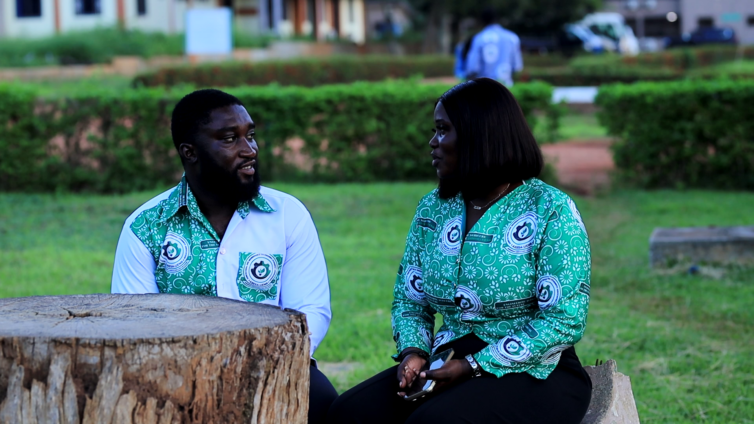
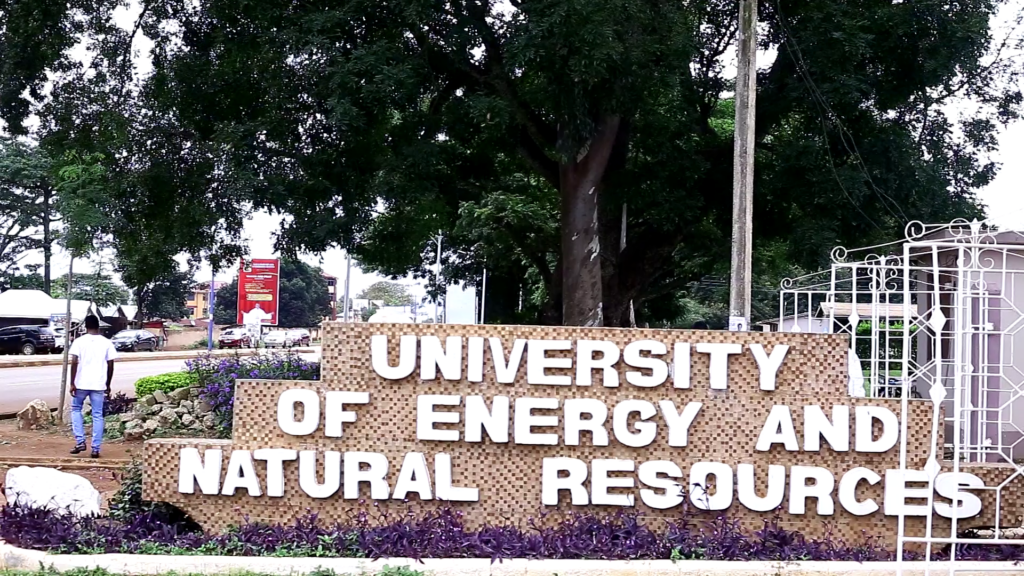
Daniel Owusu and Bertha Amoako arrived at the University of Energy and Natural Resources (UENR) as students. Four years later, they are preparing to leave with practical skills, friendships and experiences they hope will shape their future.
For Daniel, the journey has been about learning how knowledge can move from the classroom into the real world.
For Bertha, it has also been about discovering abilities she did not know she had and experiencing the support of people who stood by her during one of the most difficult moments of her university life.
Both are graduating from the Department of Agricultural and Bioresources Engineering. And both say the four years have equipped them with knowledge, skills and experiences they hope to carry into the next stage of their lives.
Daniel is leaving with practical knowledge spanning agriculture, food storage, soil management, irrigation and farm machinery.
“I am leaving with friendships, practical experience and knowledge that I believe will be useful both in the industry and in engineering more broadly,” he says.
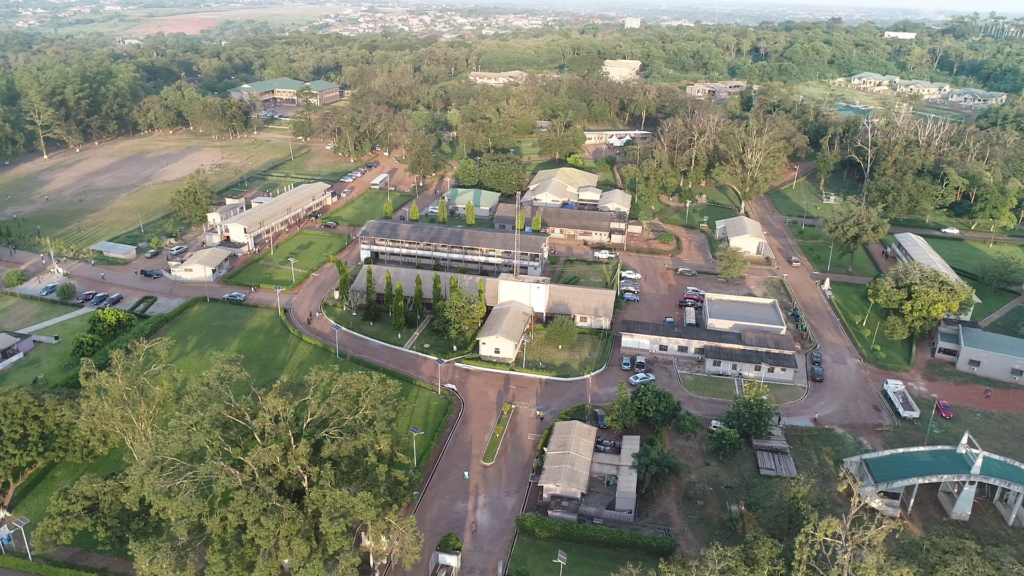
For Daniel, one of the most important parts of his education has been learning how to put theory into practice.
“We do not learn only the theoretical aspects of our courses. We are taken through both the theoretical and practical aspects, which has given us in-depth knowledge of how to apply what we learn in the real world and contribute to the industry,” he says.
His training has included internships, equipment operation, data evaluation and other practical tasks. But some of the lessons he is taking with him concern what happens after crops leave the farm.
Through courses such as Post-Harvest Loss Reduction, Daniel says he has learned how agricultural produce can be stored in ways that minimise spoilage and extend its shelf life.
“In essence, we are trained on how to store agricultural produce in ways that minimise spoilage, improve food security and extend the shelf life of food,” he says.
It is knowledge he hopes to take into communities. “I hope to take these skills into the community and help improve agricultural practices while giving farmers the opportunity to benefit from the knowledge we have acquired.”
His studies have also introduced him to ways of turning materials such as cow dung, poultry droppings, wood ash and sawdust into compost and organic fertilisers.
“These materials can be used to improve soil structure and restore the fertility of declining soils in Ghana,” he says.
He is also leaving UENR with practical knowledge of irrigation systems and water conservation, as well as the maintenance and management of farm machinery.
“I have also gained skills in the maintenance and management of farm machinery, including ways of extending the useful life of machines and improving their productivity,” Daniel says.
For Bertha, some of the most important lessons were not learned in a lecture hall. They came during an examination period when she was unwell.
She says she had been sick throughout the week but chose not to seek medical attention because she was worried that going to hospital would affect her preparation for the examination.
She went to the examination hall. Then she collapsed. “When I got there, I passed out,” she says.
After she regained consciousness, her friends told her that her lecturers had carried her to hospital and ensured that she received medical attention. She was later given permission to take the course examination the following year. The experience changed the way she viewed the people behind the academic work.
“I have experienced many things on campus, especially when it comes to the lecturers and how caring and supportive they are, particularly during difficult times. That experience really amazed me, and I was deeply touched by the consistent care and support the lecturers showed me, even after the examination,” she says.
For Bertha, it was an experience she will not easily forget. Her transformation has also been evident in the skills she has acquired.
When she arrived at UENR four years ago, she says she knew very little about the programme she was about to study.
She did not know how to fix a tyre. She did not know how to change engine oil. Today, she says, she can do both.
“When I first arrived, I did not even know how to fix a tyre or change engine oil. But looking at myself today, I can say that I have learned to do many of these things.”
She hopes to continue developing those skills after graduation. “I am hoping that when I leave the university, I will continue to improve these skills, gain more experience and become even better at what I do.”
For Daniel and Bertha, those experiences have made university life about more than lectures and examinations.
There have been laboratories, internships and practical sessions, but also friendships, difficult moments and the gradual discovery of abilities that were unfamiliar when they first arrived.
UENR's Institutional Advancement and Alumni Relations Officer, James Clark, says creating opportunities for students is an important part of the university's approach.
He points to the requirement for Level 100 and Level 200 students to take French courses as one example.
“We believe that a student should not leave this campus without having some proficiency in French. That gives our students an additional advantage when they enter the world of work,” he says.
James also points to opportunities for international exposure and exchange programmes, as well as research through the university's Earth Observation Research and Innovation Centre.
He says the centre uses earth observation technology to monitor and provide information relating to flooding and other disasters, working with organisations including NASA and the Ghana National Fire Service.
For James, preparing students for the future is not only about technical knowledge. It is also about leadership. “I have seen the university's commitment to preparing students for leadership,” he says.
He believes young people need the right environment to develop their abilities. “I believe that every Ghanaian child is gifted and individually talented. What they need is the right environment, exposure and experience,” he says.
For Daniel and Bertha, their student lives at UENR are now drawing to a close. The examinations are over, the practical lessons are complete, and soon they will leave as graduates. But they leave with more than what will appear on their certificates.
Daniel leaves with skills he hopes to use to improve agricultural practices and support farmers. Bertha leaves with the confidence to do things she could not do when she arrived.
Along with the friendships and experiences that shaped their four years, they are now taking their first steps beyond university. The degree will mark what they studied. What they do with it will tell the rest of the story.
Latest Stories
-
Nkrumah’s vision for African dignity remains relevant – P.L.O. Lumumba
14 minutes -
Court jails mason 4 years for GH¢44,800 fraud
16 minutes -
Ghana, Norway seek closer trade and security ties after UNGA talks
23 minutes -
AG responds to $235m Teshie desalination award, says tribunal rejected $402m claim
25 minutes -
Chiefs can help stop galamsey where government enforcement struggles – KNUST Professor
27 minutes -
Mahama’s rekindling Ghana’s Pan-African role echoing Nkrumah’s vision – P.L.O. Lumumba
28 minutes -
Gov’t already in advanced talks to buy Teshie desalination plant to avert $235m payout
31 minutes -
Tema-Kpone road had no valid contract or approved scope of work – Roads Minister
41 minutes -
You pay for electricity, water but not roads – Roads Minister chides Tema companies
43 minutes -
Political independence earned under Nkrumah is being eroded – P.L.O Lumumba
45 minutes -
Oro Oil CEO urges decentralised use of $500m World Bank oil palm fund
45 minutes -
Busuama MA Basic School in crisis: 120 KG pupils stranded as teacher deficit bites
55 minutes -
Churches are not exempt from paying music royalties – GHAMRO CEO
56 minutes -
Gender Ministry expresses condolences over death of child in Cantonments fire
57 minutes -
Nkrumah foresaw Africa’s vulnerability without unity – P.L.O. Lumumba
1 hour