

Audio By Carbonatix
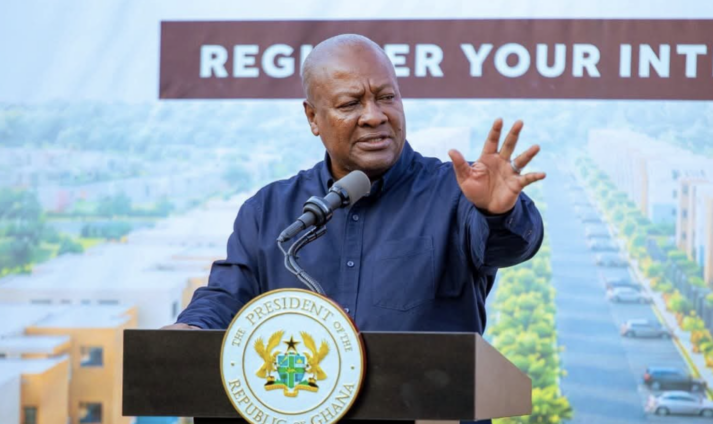
President John Dramani Mahama has cautioned against the criminalisation of legitimate criticism, political commentary, satire and dissent in efforts to address harmful content on social media.
He said that while hate speech, threats, incitement and other unlawful conduct must be addressed, the response should not undermine freedom of expression.
The President said this in a letter to the Media Foundation for West Africa (MFWA) and the Ghana Journalists Association (GJA), asking the two organisations to jointly convene a national stakeholder engagement on hate speech, abusive language and other harmful content on social media and emerging digital platforms.
According to President Mahama, the media environment has changed significantly, with bloggers, content creators, influencers and users of platforms such as TikTok increasingly shaping public discourse.
He noted that many of these actors command substantial audiences and influence but may not operate under recognised editorial standards or clear accountability mechanisms.
“While hate speech, threats, incitement and other unlawful conduct must be addressed, legitimate criticism, political commentary, satire and dissent must not be criminalised,” the President said.
He expressed concern that disproportionate arrests over mere criticism or politically charged commentary could be counterproductive, create “undeserving martyrs” and undermine public confidence in state institutions.
President Mahama is therefore calling for a coherent national roadmap that protects freedom of expression while ensuring an appropriate and proportionate response to genuinely harmful digital content.
He has tasked the MFWA and GJA to lead a broad stakeholder process involving the National Media Commission, Ghana Police Service, civil society organisations, traditional media organisations, content creators, bloggers and influencers, legal and human-rights experts, religious bodies and relevant state regulatory and security institutions.
The engagement is expected to examine the adequacy of Ghana’s existing legal, regulatory and institutional framework and clarify the distinction between lawful criticism and unlawful speech.
It is also expected to propose practical guidelines for law-enforcement agencies and recommend policy, legislative, regulatory and non-legislative measures for addressing harmful online content.
The President further wants the process to consider public education, media and digital literacy, professional and ethical standards for online content creators, accessible complaints and redress mechanisms, as well as alternatives to arrest and prosecution where content does not involve threats, incitement, violence or other clearly criminal conduct.
The MFWA and GJA have been asked to submit a proposed framework and timetable for the stakeholder engagement, together with recommendations arising from the process, for the President’s consideration.
Latest Stories
-
Ghana’s public service faces risky future amid politicisation, talent exodus – Prof Akuoko
2 minutes -
EOCO must go through Speaker before seeking to arrest Baffour Awuah – Dafeamekpor
4 minutes -
GTBank supports paediatric cancer care with donation of medical equipment to Ridge Hospital
16 minutes -
Public transport fares go up by 8% from September 26: Check how much you will pay
17 minutes -
Softcare partners with National Nursing Leaders to advance healthcare solutions
19 minutes -
West Africa to advance education solutions for children and young people affected by crises
21 minutes -
DVLAverify app now available on iOS as DVLA introduces web verification platform
21 minutes -
EOCO embarrassed itself with letter on Manhyia South MP arrest attempt – Haruna Mohammed
21 minutes -
Prof Abotsi wants ECOWAS Court to bring regional justice closer to citizens
29 minutes -
The seductive metal: Can GoldBod build a healthier gold shore?
35 minutes -
Parliament will resist breaches of arrest protocol for MPs – Dafeamekpor warns
45 minutes -
Prof Abotsi calls for clearer jurisdictional boundaries to strengthen ECOWAS Court
47 minutes -
Why Ghanaian businesses can no longer ignore green finance
51 minutes -
ECOWAS Court credibility depends on enforcement, judicial independence – Prof Abotsi
1 hour -
7-month-old EOCO invitation letter surfaces after chaotic attempt to arrest Manhyia South MP
1 hour