

Audio By Carbonatix
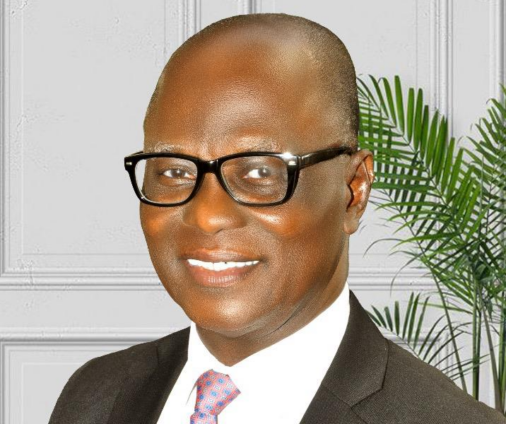
Sociologist Prof. Kofi Osei Akuoko says Ghana’s public service is at risk of losing the institutional capacity needed to deliver essential services as political interference, skilled worker exits, fiscal pressures and declining public trust continue to take a toll.
Prof. Akuoko says country is facing a public-service crisis in which responsibilities are expanding as the capacity of institutions to absorb pressure is shrinking.
He made the submission at the 10th Annual Ghana Sociological and Anthropological Association Conference at the University of Cape Coast.
Speaking on “Ghana: The Risky Future of the Public Service,” Prof. Akuoko said the warning should not be dismissed as a short-term problem.
He described the public service as the backbone of critical services including healthcare, education and land administration, but warned that its ability to cope with growing demands is being weakened.
Political interference
At the heart of the problem, according to Prof. Akuoko, is the politicisation of public-sector appointments, recruitment, promotions and transfers.
He said changes in political power have repeatedly been followed by transfers, reassignments and, in some cases, the effective removal of career officers perceived to be linked to the previous administration.
The consequence, he warned, is a public service where some young officers may begin to see political connections as more important to career advancement than competence.
“Every time a change of government is followed by a purge of technical staff rather than a change of political appointees only,” he said, the separation between public office and the person occupying it becomes weaker.
Prof. Akuoko also cited research indicating partisan bias in public-sector hiring following changes in the governing party.
He said informal referrals and so-called protocol arrangements could also determine who gets access to some public-sector jobs, potentially shutting out qualified young people without influential connections.
Talent is leaving
Another major concern is the steady departure of skilled professionals from the public service to the private sector, international organisations and jobs abroad.
Prof. Akuoko said the problem extends beyond the widely documented migration of doctors, nurses, engineers, statisticians, planners, IT specialists and mid-career administrators.
"The professionals most likely to leave are often those with the skills and mobility to find alternatives, leaving public institutions with a narrower pool of talent even as the complexity of their work increases," he noted.
Wage pressures deepen the problem
Ghana’s fiscal constraints are also putting pressure on the public service.
Prof. Akuoko said the country’s debt restructuring and IMF-supported programme have placed the public-sector wage bill under sustained pressure.
He cautioned that wage compression and recruitment freezes could hit new entrants and middle-grade officers hardest.
That, he said, threatens the very layer of the public service needed to transfer institutional knowledge from experienced officers to younger recruits.
Prof. Akuoko’s prescription
Prof. Akuoko is calling for a comprehensive approach to public-service reform rather than isolated interventions.
He wants government to strengthen open and competitive recruitment, rebuild the middle layer of experienced officers and protect career professionals from arbitrary political transfers.
Professional development and genuine merit-based advancement, he added, must become part of the reform agenda.
For Prof. Akuoko, the problems cannot be addressed separately.
“Politicisation, talent loss, fiscal pressure, digitalisation, decentralisation, youth expectations and public trust are interconnected and can reinforce one another,” he said.
He is therefore urging policymakers and researchers to approach public-service reform as one integrated national undertaking.
Despite the warning, Prof. Akuoko says the situation is not irreversible.
“Ghana’s public service has rebuilt its capacity in the past, but doing so again will require deliberate reforms that take the country’s social and institutional realities into account,” he noted.
Latest Stories
-
Human remains are not collectibles, specimens – Mahama demands restitution of Africa’s heritage
31 seconds -
EOCO, Baffour Awuah clash: Article 117 does not give MPs blanket protection from arrest – Samson Ayenini
3 minutes -
Mahama unveils 3 pillars to advance global reparatory justice agenda
21 minutes -
JoyNews Democracy Is Not for Sale regional dialogue – My take
25 minutes -
US ready to work with Ghana on reparatory justice despite opposing UN resolution – Ablakwa
37 minutes -
UK, Netherlands, Denmark ready to work with Ghana on reparatory justice – Ablakwa
44 minutes -
Ghana TVET Service partners TOR to strengthen industry skills training
50 minutes -
KNUST hosts Nyansapo Photonics School, commissions GPOL to boost research and innovation
1 hour -
Minority Leader outlines procedure for security agencies seeking to arrest MPs
1 hour -
Baffour Awuah’s lawyers dispute EOCO claim over February invitations
1 hour -
Pursuing Manhyia South MP through Parliament would have made arrest process more decorous – Interior Ministry spokesperson
1 hour -
2026 Women’s Super Cup: Hasaacas, Prisons Ladies dominate first round of games
1 hour -
After a year without Police, Kwame Danso breathes again as Station reopens
1 hour -
GES transfers funds to SHSs for perishables and recurring items
1 hour -
Eriksen leaves Wolfsburg by mutual consent
1 hour