

Audio By Carbonatix
Ghana has an opportunity to make gold work not only for national wealth, but for healthier people, protected rivers and resilient communities.
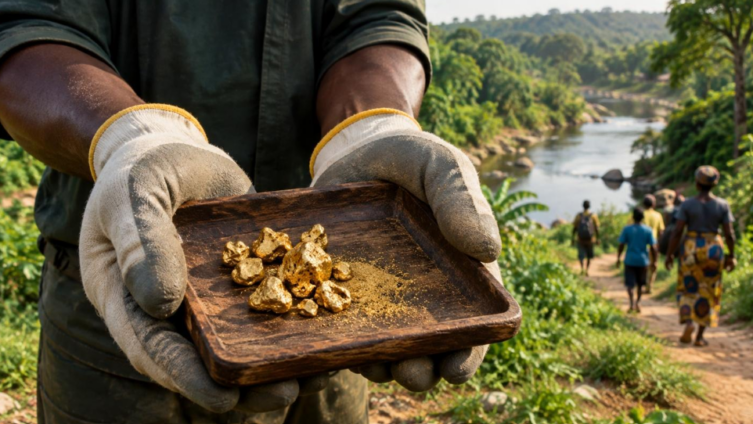
Gold dazzles because it appears to promise permanence: a store of value, a symbol of achievement and a hedge against uncertainty. Yet beneath its glow lies a harder truth. Gold is often less a measure of wealth than a test of what a society is prepared to protect while pursuing it.
Ghana knows this story better than most. Long before independence, European traders named the territory the Gold Coast for the extraordinary wealth flowing from its rivers, forests and mines. Gold made the land globally important, but it also drew conquest, extraction and unequal exchange.
Ghana’s Gold, Ghana’s Opportunity
That history makes Ghana GoldBod more than another public institution. It gives Ghana a timely opportunity to build a better relationship between gold, national development and public wellbeing. By strengthening oversight of the gold trade and supporting formal, traceable mining, GoldBod can help the country retain more value from its natural resources, reduce illicit activity and direct the gains of gold towards national progress.
This matters because Ghana does not need to choose between gold and development. It needs gold to deliver development in the fullest sense: decent livelihoods, safer work, clean water, functioning farms, healthy children and communities that can prosper after mining has ended. GoldBod’s emphasis on responsible sourcing, traceability and the formalisation of artisanal and small-scale mining offers a practical foundation for that ambition.
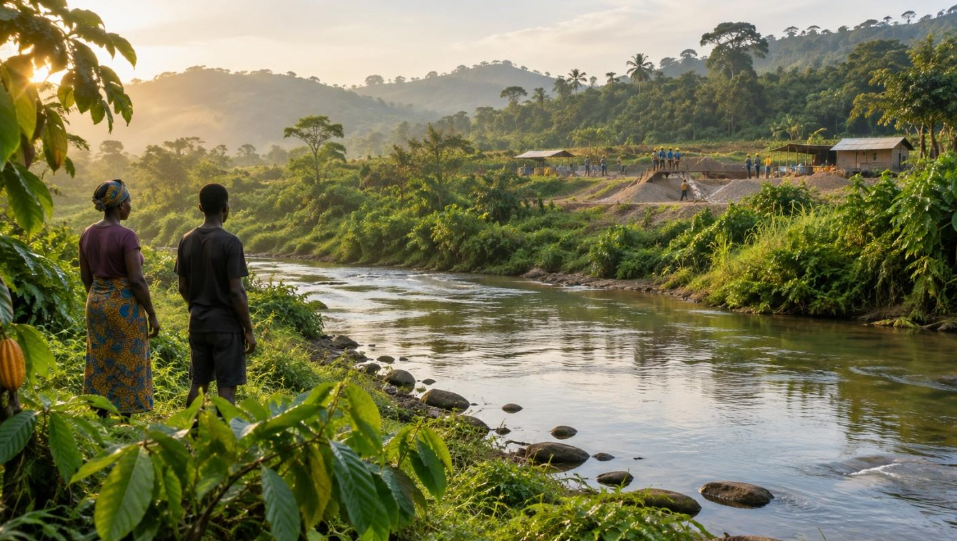
An Ashanti proverb says: “Gold should be sold to him who knows the value of it.” Ghana’s challenge is to define that value more fully. Gold’s market price does not include a polluted river, a lost cocoa farm, a child exposed to mercury, or a community left with unsafe pits after the ore has gone.
When Gold Costs Too Much
Mining creates livelihoods. For many rural families, artisanal and small-scale mining is a vital source of income where formal employment is scarce. Any serious strategy must respect this reality. The goal should not be to condemn miners or deny communities an income; it should be to help mining become safer, lawful and more beneficial to the people living closest to it.
But the health and environmental stakes are real. Poorly managed extraction can expose workers and nearby communities to dust, toxic chemicals, unsafe pits and contaminated water. It can place pressure on farms, streams and local infrastructure. The strongest case for reform is therefore a human one: preventing avoidable disease, protecting children and pregnant women, preserving food systems and ensuring that communities do not inherit the costs of wealth they did not fairly share.
The same is true of the environment. When forests are cleared and waterways become polluted, the
consequences travel well beyond the mining site. Agriculture, fishing, biodiversity and household water security can all be affected. In a country where rivers and land sustain so many families, environmental protection is not an obstacle to development. It is part of development itself.
Ghana’s struggle with galamsey shows why simple slogans fail. Small-scale mining is not only a law- enforcement issue; it is also a livelihoods, governance and development issue. Where people lack viable income opportunities, illegal activity can thrive. Where rules are inconsistently applied, communities lose confidence. And where the benefits of gold do not visibly return to local people, resentment grows.
Gold Shore That Protects People
GoldBod can help change this equation. Its opportunity is to bring more miners into a lawful and accountable system—one that rewards responsible practice, improves transparency and makes it harder for illicit gold to enter the market. A traceability system can help establish where gold comes from and create a stronger incentive for legal operations to meet environmental and social standards.
The public should expect GoldBod’s progress to be measured in practical outcomes, not only national figures. Does formalisation improve safety for miners? Does it make water protection and land restoration more likely? Does it reduce the space for illegal and destructive mining? Do mining communities gain better livelihoods, stronger local services and a meaningful voice in decisions affecting their land?
These are not burdens placed on GoldBod from outside. They are the basis of its public purpose. A gold sector that is trusted by communities and protects natural resources is more stable, more investable and more valuable to Ghana in the long run.
A Ghanaian proverb warns: “He who pursues money will always be its slave.” The warning is not against wealth. It is against allowing wealth to become the master of public judgement.
Ghana’s task is not to abandon gold. It is to make gold serve the country’s people. If GoldBod succeeds in supporting responsible mining, improving traceability, curbing illicit trade and placing community wellbeing at the centre of the gold economy, it can help Ghana fulfil the promise of a modern Gold Shore.
That Gold Shore should be judged not only by what leaves Ghana’s borders, but by what remains: living rivers, productive land, safer work, healthier families and communities with a lasting share in the wealth beneath their feet.
-
Author: Dr Selorm Avumegah, UK
Email: Selorm.Avumegah1@outlook.com
Latest Stories
-
KNUST hosts Nyansapo Photonics School, commissions GPOL to boost research and innovation
6 minutes -
Minority Leader outlines procedure for security agencies seeking to arrest MPs
10 minutes -
Baffour Awuah’s lawyers dispute EOCO claim over February invitations
12 minutes -
Pursuing Manhyia South MP through Parliament would have made arrest process more decorous – Interior Ministry spokesperson
15 minutes -
2026 Women’s Super Cup: Hasaacas, Prisons Ladies dominate first round of games
16 minutes -
After a year without Police, Kwame Danso breathes again as Station reopens
17 minutes -
GES transfers funds to SHSs for perishables and recurring items
18 minutes -
Eriksen leaves Wolfsburg by mutual consent
19 minutes -
Iran’s president tells Trump it will never ‘bend the knee’
20 minutes -
Parents of missing baby at Asafo Market arrested over false accusation against woman
37 minutes -
Ghana–Russia Center CEO launches book on youth diplomacy in Moscow
37 minutes -
Afenyo-Markin hands over as head of Ghana’s delegation to ECOWAS Parliament
38 minutes -
EOCO never personally invited me – Manhyia South MP on chaotic arrest at High Court
40 minutes -
Ghana’s public service faces risky future amid politicisation, talent exodus – Prof Akuoko
59 minutes -
EOCO must go through Speaker before seeking to arrest Baffour Awuah – Dafeamekpor
1 hour