


Audio By Carbonatix
Google has released a tool that lets Android apps run on any machine that can run its Chrome browser.
Called Arc Welder, the tool acts as a wrapper around Android apps so they can run on Windows, OSX and Linux machines.
The software expands the places that Android apps can run and might make it easier for developers to get code working on different machines.
But one developer said it was better to write apps that run "natively" rather than via separate software.
Native code
Arc - the App Runtime for Chrome - was first released in late 2014 as a way for Android apps to run on machines running Google's Chrome operating system. The OS is used on many netbooks and other small machines made by Google and some of its hardware partners.
Now Google has produced a new tool, called Arc Welder, which converts Android apps into versions that can be used with the Chrome browser, not just the OS. With Welder it has also added support for many Google Play services so when apps are converted they do not lose access to payment systems, maps and other functions they expect.
In its developer documentation, Google said the underlying technology for Arc Welder meant converted apps should run almost as quickly as they did on a phone or tablet.
With Arc Welder Google, it is seeking a way to help developers get their creations onto as many machines as possible, but one developer was not sure it would accomplish that aim.
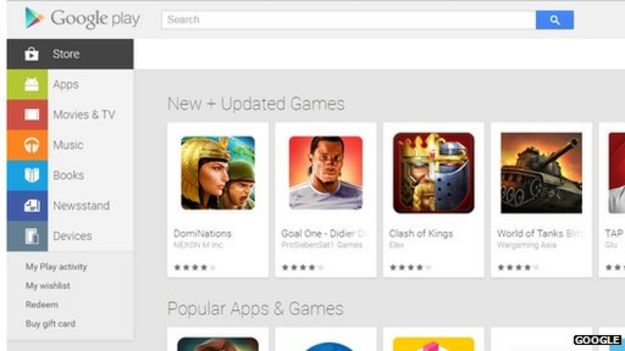
The software tool could see Android apps popping up on desktop machines
"The best way to make apps by far is to make them natively using the tools that they give us," said Sam Furr, director and co-founder of development studio The App Developers.
He said that moving away from those well-known development systems can mean losing some behaviours, such as touch combinations, that people expect. He also wondered if a converted app running via a browser sitting in a separate operating system would be as fast as one developed natively.
Running a phone app on a desktop would inevitably mean losing some functions, he said, because bigger computers lack some of the extras, such as accelerometers and GPS receivers, that are now standard on smartphones.
Mr Furr said the ability to reach lots of different operating systems with just one app was potentially attractive.
"When building an app you want to get it to as many people as possible but you have to ask how long it will take to get it on other platforms," he said.
"There's no shortage of cross-platform frameworks and some of them are very good," he said, "but in our experience you do not get the same end product as you would when you build it natively."
Latest Stories
-
Vice President urges Methodist Church to add digital skills to women’s training programmes
1 hour -
Forestry Commission arrests 12 illegal miners in Atewa Forest
2 hours -
NPP National Treasurer aspirant involved in accident during campaign
2 hours -
Treat coastal communities as partners in sea turtle conservation – Dr Agyekumhene
2 hours -
The Chief Justice is not a Touring Minister: Baffoe-Bonnie’s SOE visits are unconstitutional officiousness
2 hours -
Enforcing environmental laws carries political cost, while offenders go unpunished – Frimpong-Boateng
3 hours -
Galamsey fight collapsed after safeguards introduced in 2018 were abandoned – Prof Frimpong-Boateng
3 hours -
Jail officials who approve projects in wetlands and forest reserves – Prof Frimpong-Boateng
3 hours -
Ghana needs $21bn to restore lands damaged by illegal mining – Frimpong-Boateng
3 hours -
Law student killed in hit-and-run on Tema Motorway; family offers GH¢50,000 bounty
3 hours -
Gas explosion near Larteh school contained after fire outbreak
3 hours -
Nigerian-British businessman dies after penis enlargement procedure in Thailand
3 hours -
CHEAP JUSTICE? – Occasional Kwatriot Kwesi Yankah writes
4 hours -
WASSCE 2026: English performance decline requires urgent action – EduWatch
4 hours -
Old Tafo MCE pledges action as residents raise alarm over faulty drainage systems
4 hours