

Audio By Carbonatix
A Center for Social Impact Studies (CeSIS) research has revealed that many inhabitants in communities affected by mining are losing lands, cultural sites and identities, and social ties due to resettlement by companies.
The report also found indications of nifty and unfulfilled promises, involuntary displacements, and little or no resettlement support systems for victims.
It became evident that most residents around mineral-rich areas in Obuasi are unaware of applicable laws governing resettlement and compensation, a development, which according to the report, is adversely affecting their engagements with mining companies.
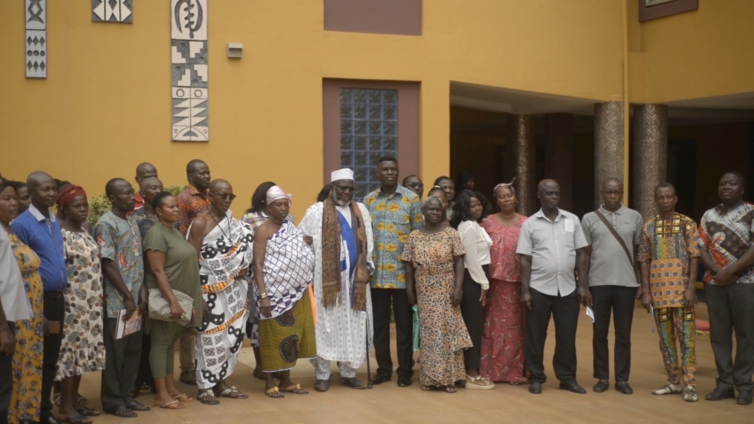
This was revealed at the launch of a new research on community experiences of mining-induced compensation and resettlement in the Ahafo and Adansi Districts by the Center for Social Impact Studies (CeSIS).
The report, titled “community experiences of mining–induced compensation and resettlement in the Ahafo and Adansi Districts” aims to influence re-settlement and compensation policies in favour of the community.
The report by the Center for Social Impact Studies (CeSIS) is expected to raise awareness and sensitize affected residents in their settlement and compensation processes.
Indigenes affected by large scale mining usually complain they've been short-changed because they have no or little capacity to negotiate with multinational companies.
Executive Director for the Center for Social Impact Studies (CeSIS), Robert Ali Tanti, believes the report will guide residents in mining communities to seek redress in resettlement and compensation issues.
He wants government to offer help to affected communities through policies and regulations.
“The people are complaining that the compensations are not enough. What I will advise is that they need to build their capacities. So that when they go to the negotiation table, they know the law.
“We believe in constructive dialogue and we believe the community should sit down and channel their grievances to the appropriate offices. We are encouraging them, if they are not satisfied, they should go to court.
“I am calling on NCCE and state institutions to make it an intention to educate people in mining communities, and they will understand. The state shouldn't take the sides of the mining companies when issues arise,” he said.
Some beneficiaries said they have been enlightened about the intricacies of protecting their resources.
“Now we know what to say during dialogues with mining companies. So that we will not be deceived. I appreciate the knowledge gained today,” Yaa Georgina ssaid.
“We have been enlightened really. Our forefathers secured arable lands for us to have a constant flow of food and water. But we have now been relocated to a place where we have to buy water. We have lands and resources locked up, and this training has opened our eyes to how to address issues like these in the future,” James Ofori added.
The launch was coupled with media capacity training to provide expert perspectives on the research findings and afford journalists the opportunity to appreciate issues of compensation and resettlement in mining communities.
CeSIS with support from the Third World Network through the Power of Our Voices Project (PVP) undertook the study.
Latest Stories
-
PNC cautions NPP against making flagbearer automatic party leader
9 minutes -
Treat healthcare as an investment, not a budget cost – Mahama
37 minutes -
Mahama outlines Ghana’s strategy to expand healthcare and produce medicines locally
40 minutes -
Don’t pay attention to those who will distract you; Ghanaians are already disappointed – LPG tells NPP
43 minutes -
Prof Mike Oquaye praises NPP Minority’s performance in Parliament
44 minutes -
KAAF University vice chancellor urges fresh students to embrace technology, innovation
44 minutes -
Move beyond packaging to produce drug ingredients in Africa – Mahama to pharma industry
47 minutes -
Ghana Medical Trust Fund, Hungary explore partnership to strengthen specialised healthcare
48 minutes -
Manhyia South MP Baffour Awuah pleads not guilty to EOCO charges, granted GH¢10m bail
51 minutes -
NPP conference: We need leaders to complement our efforts in Parliament – Annoh-Dompreh
54 minutes -
Sammy Crabbe steps down from NPP Chairmanship race, backs John Boadu
54 minutes -
NPP postpones constitutional amendments, including proposal on party leadership to next national conference
58 minutes -
NDC ‘running into opposition like Usain Bolt’ – Sammy Awuku
1 hour -
Local pharma production can create jobs, strengthen Africa’s health security – Mahama
1 hour -
Mahama calls for removal of barriers to boost Africa’s pharmaceutical industry
1 hour