

Audio By Carbonatix
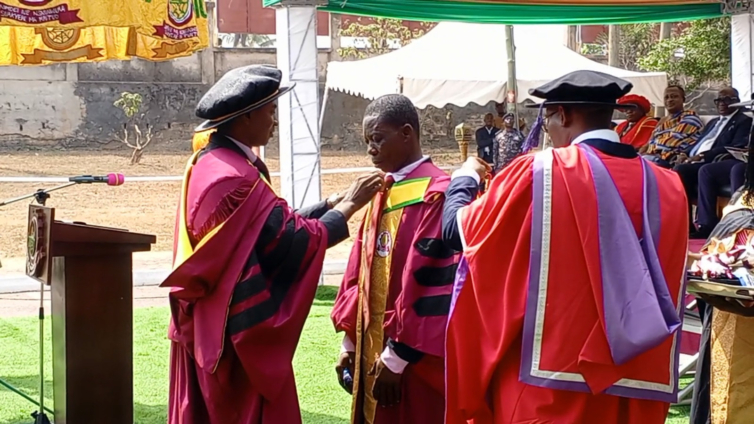
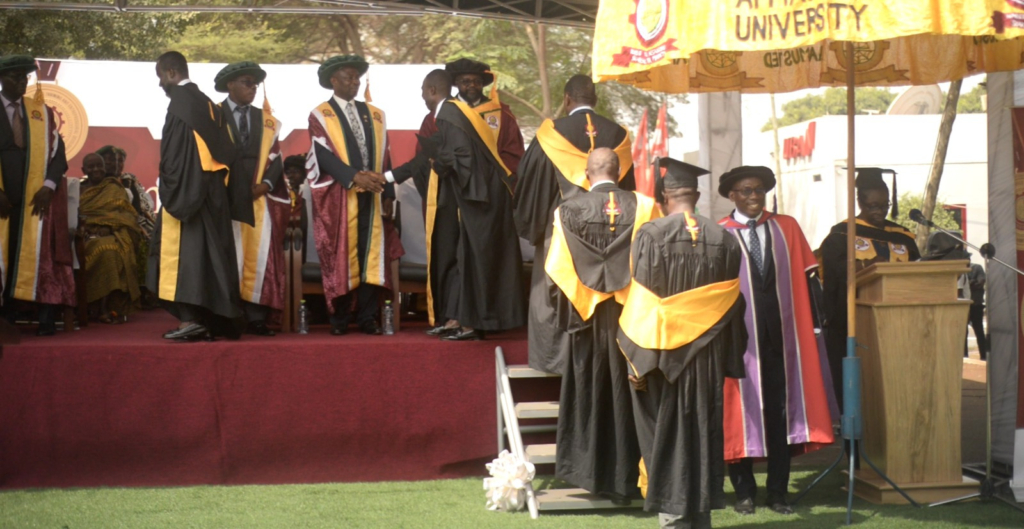
Akenten Appiah-Menka University of Skills Training and Entrepreneurial Development (AAMUSTED) has hosted its third congregation in the Ashanti Region.
Members of the academic board, convocation, graduating students, and other dignitaries gathered to celebrate the conclusion of another academic journey.
A total of 8,274 students were awarded Certificates, Diplomas, Bachelor’s, Master’s, and PhD degrees.
The ceremony underscored the university’s progress towards achieving academic excellence while reflecting on areas of improvement.
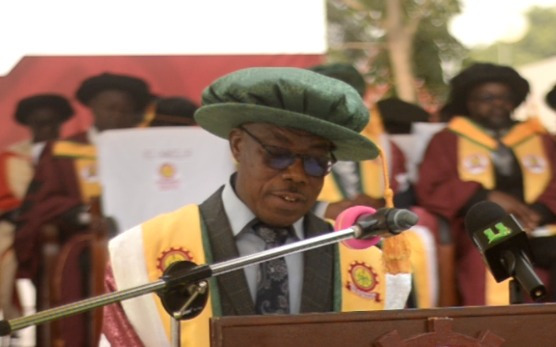
The Vice-Chancellor of AAMUSTED, Professor Frederick Kwaku Sarfo, urged graduates to foster strong alumni relations to support the university's development.
“Learn to adapt to change, as well as the challenges and opportunities in the world of work. I am confident that the education and training you have received from this university have equipped you with technical knowledge and the flexibility to tackle current and future challenges wherever you may go. We are building a strong alumni relations system, and I encourage you, the fresh graduates, to join the alumni Association.
“We have enhanced the students’ internship programme, workplace experience learning, teaching support in schools, and industrial attachment to make student training more practical. We are deeply grateful for the invaluable support provided by state agencies such as GTEC, CTVET, GTVET Service, and our numerous local and international partners like GIZ, WUSC, and UNESCO, all of whom have contributed to our survival and growth as a young university,” he said.
The third AAMUSTED congregation marked the graduation of the first batch of students matriculated for four-year degree programmes.
AAMUSTED has completed a national and internal university-wide Comprehensive Needs Assessment (CNA). As a result, the university has developed eighty-six (86) new academic programmes focused on TVET, ATVET, STEM/STEAM, and entrepreneurial education, in consultation with key stakeholders.
Bantamahene, Nana Baffour Owusu Amankwatia VI, urged the graduates to be innovative and prioritise collaboration.
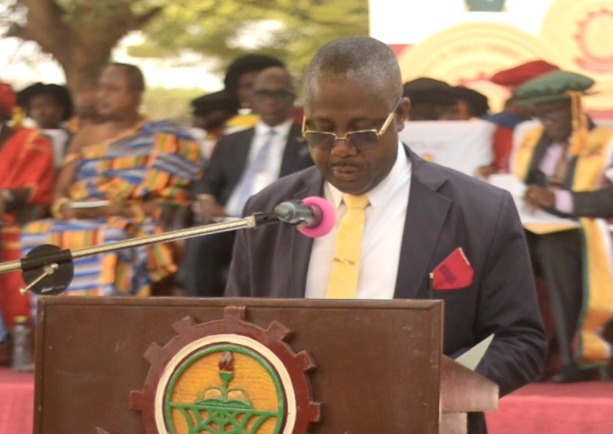
“I need not tell you that unemployment has been one of the key challenges facing our nation for many years. If you cannot find immediate employment, do not waste time endlessly searching for rare opportunities. Instead, come together and create something for yourselves.
“I encourage you to take the initiative and venture into opportunities to earn a living. That is how many of the world’s most successful individuals began, starting small before growing into flourishing businesses,” he said.
Professor Frederick Kwaku Sarfo also addressed some of the university’s ongoing challenges that require attention.
“We continue to face challenges such as insufficient student accommodation, lecture halls, and staff offices. The university requires modern library buildings, ICT centres with up-to-date facilities, workshops, and laboratory spaces to accommodate the growing student population. We also need an ultra-modern hospital to serve our staff, students, and the surrounding communities on both campuses.
“The university requires adequate financial clearance to hire additional staff and reduce the high student-to-lecturer ratio. There is also a shortage of staff in non-teaching directorates, including the registry, the library, the Directorate of Works, Physical Development and Facility Management, the Directorate of Internal Audit, and the Directorates of Health Services and Finance,” he said.
Following the political transition and the dissolution of all boards and councils on January 7, 2025, the Ghana Tertiary Education Commission (GTEC) has assumed responsibility for the management of tertiary educational institutions.
By the Presidential Transition Act, 2012 (Act 847), the Commission will now oversee decisions traditionally made by these Councils to maintain stability in educational governance.
Tertiary institutions have been advised to suspend decisions that would typically have been made by their Councils and refer such matters to the Commission for guidance.
Deputy Director-General of GTEC, Professor Francis K.E. Nunoo, highlighted that the Act sets a precedent for smooth leadership transitions within the education sector.
“This Act has been pivotal in ensuring a seamless transition of governance. Just as it has brought clarity to political transitions, we must also ensure that leadership changes in educational institutions are equally smooth. Clear guidelines and succession planning should be integral to the leadership culture across all our tertiary institutions,” he stated.
Latest Stories
-
King Mohammed VI reaffirms Morocco’s full support for Gulf States following attacks on their security
1 hour -
Esther Cobbah urges women founders to make trust and excellence their competitive edge
1 hour -
Adonis Adamado
2 hours -
‘Control lies with private capital’ – COPEC warns NPA’s fuel stock assurance not enough amid Iran attack
2 hours -
10 illegal miners feared dead, 30 critical after mine cave-in at Manso Tontokrom
2 hours -
GPL 2025/2026: All Blacks hold leaders Medeama at home
2 hours -
Ghana has over 5 weeks of fuel stock despite Middle East tensions – NPA
2 hours -
Middle East tensions may hit Ghana’s pumps soon – Duncan Amoah
3 hours -
WPL 2025/26: Hasaacas beat Army Ladies as Ampem Darkoa Ladies draw
3 hours -
Five facts about Baba Sadiq, Ghana’s High Commissioner Designate to Nigeria
3 hours -
Baba Sadiq Abdulai appointed as High Commissioner to Nigeria
4 hours -
Playback: The Probe examined Israel-Iran-US tensions and Ghana’s energy security
4 hours -
T-bills auction: Investor appetite remains at all-time high; interest rates tumble to 5.3%
4 hours -
Yes, we “eat Macroeconomics” because it is the foundation of every meal
4 hours -
Annoh-Dompreh launches Nsawam-Adoagyiri Eye Care Project 2026, screens 3,000 residents
4 hours