

Audio By Carbonatix
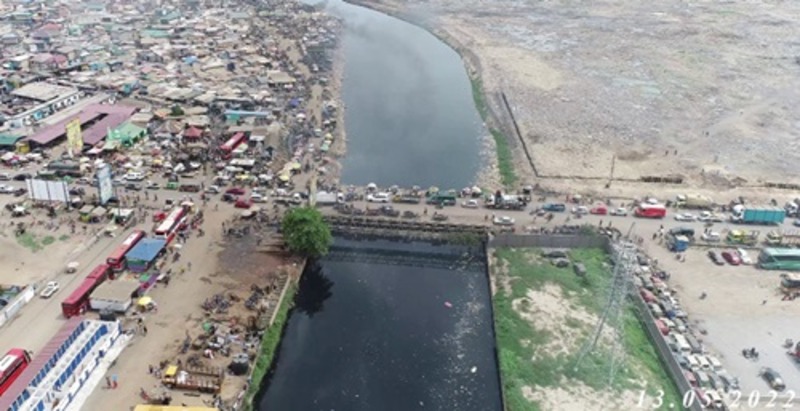
At least $675 million is needed for an enhanced flood protection regime along the Odaw Basin to build resilience against perennial flooding in Accra.
The amount covers a mix of interventions such as land acquisition, resettlement, construction costs, contingency and other waste management services targeted at a drainage ecosystem that can withstand flood events that occur once in every 25 years (T25).
Currently, a $200 million project in the form of the Greater Accra Resilient and Integrated Development (GARID) is ongoing to improve drainage and curb the perennial flooding in the city to last about 10 years.
Under the project, work is ongoing to re-engineer drains, remove obstructing materials and implement a performance-based dredging programme targeted at improving drainage in the Odaw Basin.
The project is intended to build a one in 10 years flood protection regime, which means that the drainage system will be capable of containing flood events that occur once in every 10 years.
However, the Coordinator of the GARID project, Dr Kwadwo Ohene Sarfoh, said for the country to be able to sustainably build resilience against flooding in the capital city, it was important to build a one in 35 years flood protection regime.
“A more resilient city would mean investing in a flood protection regime that is able to contain greater volumes of water and whose likelihood of occurrence will be one in every 25 years,” he told the Daily Graphic in an interview.
The Daily Graphic had contacted the housing and urban development expert to find out the progress of work on the GARID project and how those interventions being rolled out were translating into improving drainage in the city.
Context
The GARID project is a five-year initiative that was rolled out by the government with funding from the World Bank as part of the Greater Accra Climate Risk Mitigation Strategy and is meant to build resilience against the perennial flooding in the capital city.
The project was conceived in the aftermath of the flood disaster in Accra on June, 3, 2015, which claimed almost 200 lives. The World Bank and the National Disaster Management Organisation (NADMO) estimated that the damage of the flood alone was $100 million.
Based on the flood risk mitigation investment alternatives for the Odaw Basin that was carried out, the GARID project was rolled out to implement drainage interventions that would help to improve the Odaw drain and curb flooding in the city.
Steady progress
Dr Sarfo said the GARID project had implemented a number of interventions along the Odaw Basin, including creating retention ponds, dredging of the Odaw River, widening of some drains, removing or adjusting of obstructing structures on the drains, and implementing a social and behaviour change campaign to engender a change of attitude towards solid waste management.
He also said the GARID project was working with some state agencies such as the Ghana Meteorological Agency (GMet), Ghana Hydrological Authority (GHA), the National Disaster Management Organisation (NADMO) and Water Resources Commission (WRC) to implement an early warning system for flood risk management.
T25 key
While those interventions were expected to help reduce flooding in the capital city, Dr Sarfoh said it was important for the government and other stakeholders to have a critical conversation on how to build a drainage infrastructure that could withstand severer flood events.
He noted that although the current flood protection regime being executed under the GARID project would help to contain one in 10 years flood events, it was prudent to look at the bigger picture, especially so when climate change, urbanisation and other factors would affect the resilience of drainage infrastructure.
“We have to widen the channel. At the moment, the widest spans are in the region of 35 metres across. To be able to do a one in 25 years flood protection, you will have to widen it to about 60 metres.
“But imagine the current state and the number of encumbrances on each side and how much you will displace in order to provide that level of protection, plus the cost of that displacement,” he said.
The GARID coordinator stressed that there was the need to have a bigger conversation about those who were living along the Odaw drain, whether legitimately or illegitimately.
“The conversation will have to see how to deal with such people so as to deal with the effects such flood protection measure will bring on them,” he said. Dr Sarfoh said the 2015 flood event, which recorded rains of about 137 millimetres over a six-hour span and was characterised as a one in 10 years event, was a wake-up call for the country to prepare for extreme occurrences.
“A one in 25 years flood event might double what was recorded in 2015 in terms of the volume or the duration of the rain. We need to prepare and put the needed infrastructure and systems in place for this,” he stressed.
Latest Stories
-
Several Ghana-bound vegetable trucks detained in Nigeria
43 minutes -
Black Sherif questions Wendy Shay’s absence in “Artiste of the Year” talks ahead of TGMA 2026
2 hours -
Government confirms arrival of 100 new buses to ease transport challenges
2 hours -
$600m tomato imports undermining Ghana’s economy — Chamber of Agribusiness
3 hours -
Rainstorm wreaks havoc: Faulty transformers, feeder failures leave parts of 3 regions without power
4 hours -
CUTS International calls for urgent competition law amid sachet water price hikes
4 hours -
‘I never did this advert’, AI clones hijack Ghanaian identities for profit
5 hours -
25-year-old woman battles trauma after surviving deadly Nkwanta attack
5 hours -
Vice President honoured at Tortsogbeza as South Tongu leaders highlight development needs
5 hours -
Kwahu Business Forum 2026: Corporate citizenship, sustaining African businesses take centre stage with KGL as the case study
6 hours -
Trump seeks $152m to reopen notorious Alcatraz prison
8 hours -
Ex-Chelsea player Oscar retires with heart issue
9 hours -
CA Foundation drives constitutional literacy in Kpone Katamanso municipality
9 hours -
GPRTU to hold talks with Transport Ministry over rising fuel costs
9 hours -
CUTS International urges gov’t to halt sachet water price hike pending cost review
9 hours