

Audio By Carbonatix
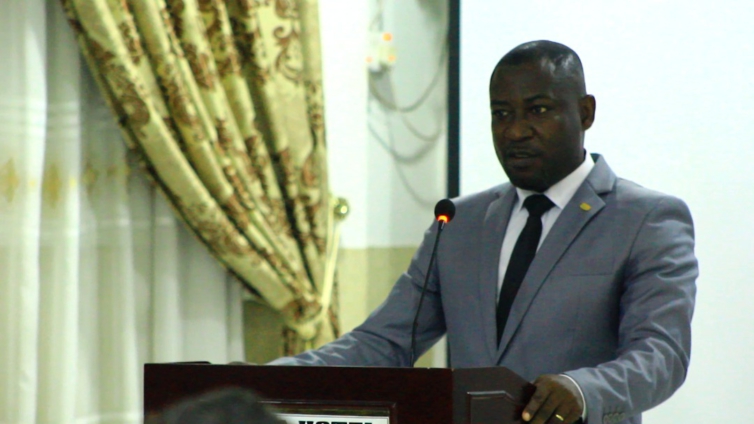
At the Mole XXXIII WASH Conference in Cape Coast, the Chairman of the Coalition of NGOs in Water and Sanitation (CONIWAS) reminded participants and stakeholders to resolve to act on the pressing issues confronting Ghana's water and sanitation sector.
According to Yaw Attah Arhin, there are serious concerns that require immediate response, including the wanton polluting of water bodies with reckless abandon caused by 'galamsey', the sand-winning, and other illicit activities.
Mr. Arhin made a plea to the Community Water and Sanitation Agency (CWSA) for help in order for its continuing changes to be successful, citing among other difficulties the lack of access to safe drinking water in households, schools, healthcare facilities, and other public areas.
“Government and development partners need to adequately resource CWSA in order to sustainably increase access to safe drinking water. It is a sad commentary that since 2016 till date, provider-based access to safe drinking water in rural and small towns has stagnated at 62% after 2015 when we hit 65%,” he said.
The CONIWAS Chairman further urged that deliberate actions be taken to address the growing inequity.
“We have taken note of the fact that while access to safe drinking water in Greater Accra and Ashanti Regions is estimated at 97.6% and 94.5% respectively, access to safe drinking water in North East and Savannah Regions is estimated at 54.8% and 55.1% respectively. This widening inequality needs to be addressed with intentional measures.”
Mr. Arhin stated that it is unacceptable that in the 21st century, 74.7% of families in Ghana lack access to improved toilet facilities that are not shared. He decried the poor access to toilets in households, schools, healthcare facilities, and other public areas.
He found it equally concerning that 17.7% of Ghanaians continue to openly defecate.
“And here again, the inequalities are much more pronounced – it is interesting that all five regions of Northern Ghana have open defecation rates higher than 50% with Savannah and Upper East regions recording open defecation rates of 68.5% and 68.4% respectively.”
The CONIWAS Chairman applauded the government for working with the business sector to gradually realise the President's goal of a clean, healthy, and wealthy Ghana in the field of solid waste management.
The finished solid and liquid waste treatment facilities in Accra and Kumasi, as well as the ongoing waste treatment facilities in all the regional capitals, he indicated, provide abundant evidence of the success that can be achieved through collaboration with the private sector.
The theme for this year’s Mole XXXIII WASH Conference is Ghana’s Commitment to Water, Sanitation and Hygiene (WASH): 'Connecting Systems to Bridge the Service Delivery Gaps' to reflect the complex mix of interventions and the systems required to deliver sustainable WASH services to the good people of Ghana, particularly the poor and vulnerable.
The organizers say, “Mole XXXIII WASH Conference is not the time for LAMENTATIONS. It is rather the time for SOLUTIONS.”
Latest Stories
-
The WTO is debating trade: The world runs on investment
24 minutes -
Minority questions gov’t purchase of fuel-powered buses, pushes for electric alternative
25 minutes -
GFA Executive Council to decide on new Black Stars coach ahead of 2026 World Cup
26 minutes -
One injured as fire destroys 14-bedroom house at Kwame Danso
34 minutes -
GACL struggling despite recording profit, levy needed for expansion – Agalga
37 minutes -
Kwahu Business Forum: Ghana Sports Fund calls for stronger corporate backing for sports dev’t
47 minutes -
Polling is no longer measuring opinion, it’s manufacturing it – Opong-Fosu
1 hour -
Penplusbytes’ statement on police action against deepfake and misinformation activities in Ghana
1 hour -
QNET, EOCO partnership showcased at UN global fraud summit as model for fighting organised crime
1 hour -
Mussa Dankwah is like a ‘lotto doctor’ – Miracles Aboagye
1 hour -
Investors target Ho Airport for training and maintenance hub — GACL Chair
1 hour -
NDC’s ‘grand deception’ on anti-LGBTQ+ bill exposed – Ntim Fordjour
1 hour -
Speak out against Mahama government’s LGBTQI+ u-turn – Ntim Fordjour to clergy
2 hours -
Opong-Fosu raises alarm over decline of national values
2 hours -
Ghanaians worse off despite improved macroeconomic indicators — Miracles Aboagye
2 hours