

Audio By Carbonatix
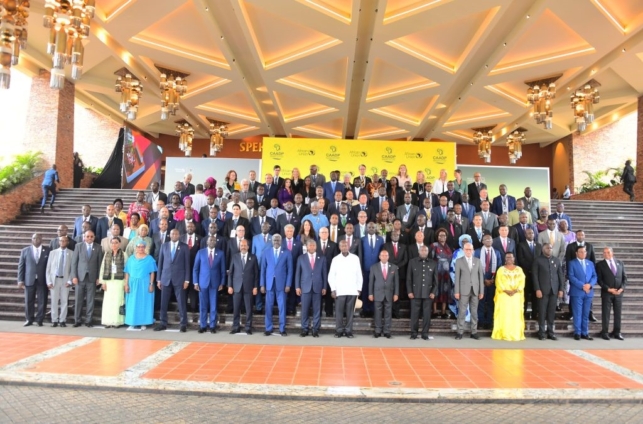
Heads of State, Ministers of Agriculture, Ministers of Foreign Affairs from the African Union’s 55 member states, and several food systems actors convened for a three-day Extraordinary Summit of the African Union in Kampala, Uganda, from January 9–12, 2025.
The Summit culminated in the adoption of the Kampala Declaration and a landmark ten-year agrifood systems strategy and action plan. Referred to as the Comprehensive Africa Agriculture Development Programme (CAADP) Strategy and Action Plan, it is set to run from 2026 to 2035.
This strategy has been under development over the past 10 months, following directives from the African Heads of State and Government. Its development was a collaborative effort involving a wide range of stakeholders, including the Regional Economic Communities, farmers’ organisations, development partners, parliamentarians, private sector groups, youth, and women, as well as African experts and researchers.
Professor Amos Laar, a Public Health Nutrition specialist from the University of Ghana School of Public Health, was appointed by the African Union to co-lead the Technical Working Group that contributed expertise to the development of Pillar III of the Strategy.
He expressed optimism for Africa’s future. However, he cautioned that there must be a meaningful focus on nutrition in the domestication and implementation of the CAADP Strategy and the Kampala Declaration at the national level.
“Having had the opportunity to contribute to the ten-year CAADP Strategy and Action Plan and the Kampala Declaration, I am compelled to urge all continental food systems stakeholders and actors towards a higher ambition – to ensure that agrifood systems are leveraged for nutrition,” he said.
We stand on the precipice of a historic moment – one that will shape Africa’s agrifood systems and the future of its people for generations to come. These documents hold immense promise: to increase agricultural productivity, transform economies, and feed millions. But if we stop here, posterity will judge us harshly. As Professor Laar poignantly asked:
“To what end? If we succeed in growing agriculture but fail to nourish our people, to what end? If we produce food that feeds but does not nourish – food that fills stomachs but not lives, food that sustains survival but not health, food that meets today’s needs while sowing tomorrow’s malnutrition – then to what end?”
Professor Laar was visibly pleased that Strategic Objective 3 of the Strategy and Pillar III of the Declaration prioritise food security and nutrition. African governments have committed to achieving zero hunger across all African Union member states by 2035, reducing stunting, wasting, and overweight by 25%, while ensuring that 60% of the population can afford a healthy diet.
To this end, they have resolved to, among other things, “promote agrifood systems that enhance human nutrition and health outcomes, supporting diets that contribute to overall well-being, and develop innovative social safety nets that effectively tackle malnutrition and promote food and nutrition security.”
As the clock ticks, every decision we make today regarding implementation will echo into the future. It is our responsibility to ensure that this strategy does not merely feed Africa, but nourishes Africa – and does so sustainably. The good news is that the custodians of the Strategy and Africa’s food systems actors are aligned in purpose. The Ministers of Agriculture and other stakeholders who were present at the Summit agreed that agriculture must be people-centric and nutrition-centric.
“If we address this challenge, we will not only win the current battle against hunger but also prevent the battles yet to come. These future battles will not be fought with cudgels, bows, and arrows – not even with tanks or drones. They will be fought with fork and knife. And this is a battle humanity cannot afford to lose. A malnourished child cannot learn. A malnourished worker cannot produce. A malnourished leader cannot lead well. And a malnourished society cannot thrive,” Professor Laar emphasised.
So, what must we do, I asked him? I acknowledge the risk of biased truth-signalling here, given my perspective, but my response to this question reflects a genuine truth. We must put nutrition front and centre as we work towards achieving the goals of the Strategy and the commitments declared.
Every seed planted, every policy crafted, and every investment made must focus on nourishing our people and doing so sustainably. This is our chance; this is our time. Our leaders have declared boldly. Let us seize this moment to ensure that Africa’s agrifood systems grow not just food, but a nourished, vibrant continent.
Latest Stories
-
Ghana shines in GSMA DNSI and DPRI 2025 report due to E-Levy repeal and tech neutrality
1 hour -
NJA College of Education inducts 379 students amidst infrastructure gains and calls for professional discipline
1 hour -
GJA President, executives join Sammy Gyamfi to observe One-Week memorial of father-in-law
1 hour -
FDA bans mixed alcoholic energy drinks: VAST-Ghana demands ‘Name and Shame’ list for public safety
2 hours -
Police probe deaths of teacher and farmer in Assin Fosu
2 hours -
Gov’t reaffirms commitment to safeguard Ghana’s energy supply amid Middle East crisis
2 hours -
What is wrong with us? When containers become our urban plan
2 hours -
Enterprise Group attains ISO 27001 Certification, reinforces commitment to data security
2 hours -
Afenyo-Markin referred to Privileges Committee over security recruitment allegations
3 hours -
President Mahama backs private sector push to expand Ghana Wheat Initiative to cut imports
3 hours -
Ghana to declare 21 communities Marine Protected Areas, starting with Cape 3 Points
3 hours -
Women of Valour: I had to save myself from abusive marriage – Diana Hopeson
3 hours -
Women of Valour 2026 Conference sells out ahead of London event
3 hours -
ECG assures the public of meter accuracy amid billing concerns
3 hours -
BBNJ Has Finally Arrived: What next for the world’s oceans?
3 hours