

Audio By Carbonatix
August 14 marks six months since Covid-19 was first detected in Africa. While the virus has raced through many other regions of the world, the pandemic’s evolution on the African continent has been different.
Preliminary analysis by the World Health Organization (WHO) finds that an exponential surge in cases which peak about two to three weeks later is not occurring in Africa.
Instead, many countries are experiencing a gradual rise in Covid-19 cases and it is difficult to discern a specific peak. Transmission patterns also differ between countries, but more importantly within countries.
At the onset, Covid-19 mainly affected capital cities. However, the virus is now moving from high density urban areas to informal settlements and then onward to rural areas that have a lower population density.
“In Africa, curbing Covid-19 is a marathon and not a sprint,” said Dr Matshidiso Moeti, WHO Regional Director for Africa.
“We are observing multiple local outbreaks each with their own infection patterns and peaks. It is by bolstering the response at the community level that we will win this race. The Covid-19 response must be integrated into the fabric of every health district.”
In the past six months, countries have made a lot of progress. Many African governments were quick to impose lockdowns and key public health measures that helped to slow down the virus.
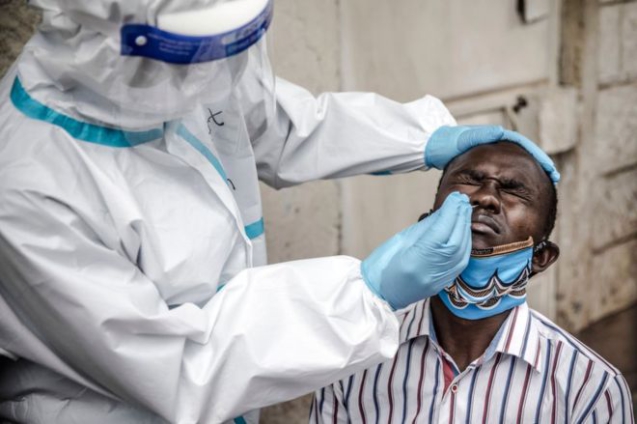
Over time preventive, diagnostic and treatment measures have been strengthened. All countries can now diagnose Covid-19, with 14 performing over 100 tests per 10,000 population.
Production of oxygen, critical for severely ill Covid-19 patients, has also considerably increased, with the number of oxygen plants in the region rising to 119 from 68 at the onset, while the number of oxygen concentrators has more than doubled to over 6000.
A recent WHO assessment based on self-reporting by 16 countries in sub-Saharan Africa found that the countries improved their capacity to respond to Covid-19.
WHO measured countries’ readiness in a range of areas including coordination, surveillance, laboratory capacity, case management, infection prevention and control.
Six months ago, the score was 62% and now it is 78%. While much progress appears to have been made at the national level, at the district level countries are generally lagging behind.
The scores for coordination (38%), infection prevention and control (46%) and clinical care for patients (47%) are all particularly low at the district level.
While progress has been made, it is important that governments step up readiness and response measures, particularly at the subnational levels. With the loosening of movement restrictions, there are risks that the virus may spread even further into remote areas of the continent.
“Not only must we keep up with the evolving trends, we must also anticipate, predict and act faster to head off potentially disastrous outcomes,” said Dr Moeti.
“Areas of high transmission as well as localities with relatively fewer infections both deserve attention. In short we must be strong on all fronts.”
WHO has worked with partners to provide technical support, training and essential medical supplies including the delivery of more than 2.1 million testing kits and the training of around 100,000 health workers.
WHO is also supporting countries witnessing a large number of COVID-19 infections. Last week, the first members of a surge team arrived in South Africa.
WHO is also increasing support to other countries that have requested urgent assistance by mobilizing more technical experts on the ground and by scaling up training to build local capacity, particularly at the provincial and district level.
Latest Stories
-
Ecowas Bank for Investment and Development targets SMEs in Ghana with fresh funding for 2026
37 seconds -
A-Plus claims independent candidates can defeat NPP, NDC with strong organisation
26 minutes -
A-Plus backs Mahama’s leadership but rejects NDC label
30 minutes -
Ghanaian women divided over natural and permed hair choices
32 minutes -
Supreme Court to launch month-long 150th anniversary events
33 minutes -
Volta chiefs condemn EOCO over alleged disregard for court ruling in Kwamigah-Atokple case
34 minutes -
Ghana steps up fight against banana, plantain diseases
35 minutes -
Women farmers need tailored pensions – Zanetor
39 minutes -
MP, MCE provide street bulbs and solar panels to lighten Evaloe Adjomoro-Gwira constituency
40 minutes -
ECG upgrades infrastructure, assures reliable, stable power supply
42 minutes -
Aggrieved cocoa farmers urge Parliament intervention
47 minutes -
Ghana launches first maternal mental health policy
50 minutes -
Mahama issues three calls to action at One Health Summit
56 minutes -
KNUST secures $2.3m funding for research activities
1 hour -
Ayigboe residents fear disaster as ECG delays repairs on live faulty cables
1 hour