

Audio By Carbonatix
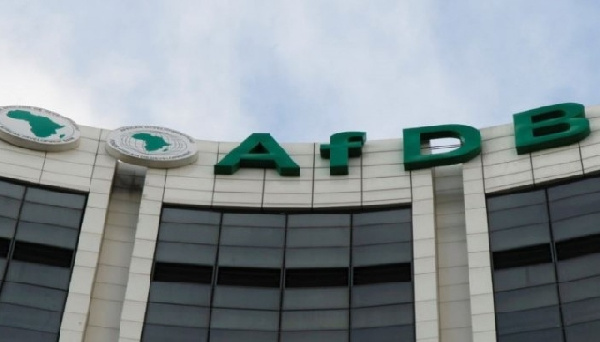
Following the announcement of an additional $5 billion to the African Development Bank’s Enhanced Private Sector Assistance (EPSA) program from the government of Japan, the Bank’s Central Africa Regional Development and Business Delivery Office is seeking to engage with private sector organizations from the region with economically viable projects for investment.
Serge N’Guessan, African Development Bank Director General for the region, said: “The Bank is very keen to support private promoters’ investments in Central Africa since they are critical for the economic growth and job creation in this important region of the continent. The EPSA Program financing will contribute tremendously to achieving this noble development objective.”
The announcement, made in Tunis during the Eighth Tokyo International Conference on African Development (TICAD8), comprises $4 billion under EPSA 5 (2023-2025), and is complemented by $1 billion for a new special window to support African countries that undertake reforms to foster debt transparency and sustainability. EPSA 5 aims to address four key priorities: power, connectivity, health and agriculture, and nutrition.
The EPSA non-sovereign operations component helps finance the Bank’s private sector operations through a line of credit from the Japan International Cooperation Agency (JICA) to the Bank on concessional terms. To date, seven non-sovereign loans have been signed with JICA for a total of $1.5 billion. Examples of private investment financed include infrastructure: Bujagali Hydropower Plant (Uganda), RASCOM (the first Pan-African communication satellite), the East Africa Submarine Cable System, Lekki Toll road (Nigeria), and the Kigali Bulk Water Supply (Rwanda), etc.
Credit lines for regional development financial institutions went to the West African Development Bank, Africa Trade Insurance Agency, Africa Finance Corporation, East African Development Bank, and several commercial banks. EPSA loans also financed small and medium business assistance programs in Tanzania and Zambia, as well as sector-specific equity funds such as Africa Agriculture Fund, Emerging Market Fund, and equity investment in the creation of the TCX currency hedge facility. Industries also benefited from funding, as exemplified by Lake Harvest (aquaculture project in Zimbabwe), OLAM (major agriculture company investing in Africa), and Moulin Moderne du Mali (food products).
Latest Stories
-
A source of excellence across generations – Vice President Opoku-Agyemang lauds Mfantsipim
47 minutes -
(Photos) Mfantsipim School launches historic 150th anniversary
1 hour -
Knights and Ladies of Marshall group backs Catholic Bishops’ stance on anti-LGBTQ+
2 hours -
Bright Simons writes: All the Filla in the Ibrahim Mahama/E&P – Gold Fields Saga
3 hours -
Monetise Idiocy In Ghana
3 hours -
The Ghanaian prophet and the mysterious death of his scottish wife Charmain Speirs
3 hours -
Nearly 400 sentenced in Nigeria for links to militant Islamists
4 hours -
Ghana’s recovery supported by gold strength despite global oil price pressures – Standard Bank Research
4 hours -
Methodist Church hails Mfantsipim@150; calls for “fresh consecration” to excellence
4 hours -
‘Excellence is our inheritance’ – Nana Sam Brew-Butler hails Mfantsipim’s 150-year reign in leadership
4 hours -
Kwaku Azar writes: A-G vs OSP
4 hours -
Mfantsipim–Adisadel rivalry built excellence, not division – Sam Jonah
5 hours -
Vice President launches Mfantsipim’s 150 years of shaping Ghana’s greatest mind
5 hours -
I assure Otumfuo, Mahama will join him to commission KNUST Teaching Hospital by end of this year – Haruna Iddrisu
6 hours -
Barcelona dominate derby to extend La Liga lead
6 hours