

Audio By Carbonatix
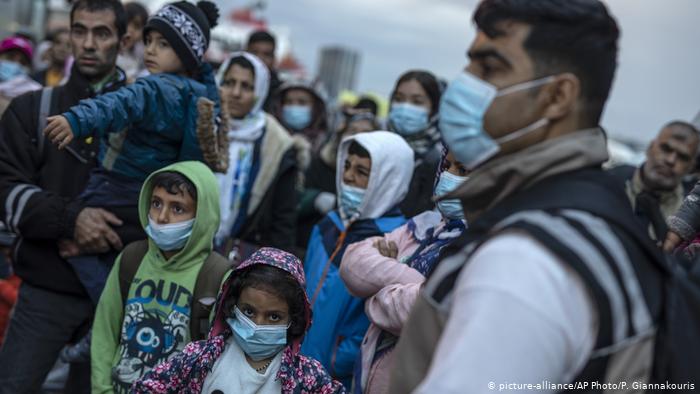
According to a new OECD report, migrants have been disproportionately affected by the COVID-19 pandemic. Migration itself has decreased significantly, with adverse effects on both countries of origin and destination.
The coronavirus pandemic has changed the lives of people all over the world, and particularly that of migrants, according to a new report by the Paris-based Organization for Economic Co-operation and Development (OECD).
Yet it also concludes that it's thanks to migrants that essential services have been provided in OECD member states, despite the restrictions imposed to curb the spread of the virus — particularly in the sectors of health care, retail and in delivery and courier services.
Even when borders were closed during the strictest lockdown period various governments, including Germany, introduced exceptions to allow workers into the country to help with the harvest.
Migrants make up 24% of doctors and 16% of nurses in OECD member states, and have often been on the front line in the fight against the virus. But they've also been disproportionately infected by COVID-19, as they are often in closer contact with contagious people and frequently live in close quarters.
According to the report, migrants are twice as likely to contract the virus than the rest of the population. A quarter of those who work in the hospitality industry in the EU are originally from non-EU states, a rate that is twice as high as in other economic sectors.
People working in this sector often only have temporary contracts, and migrants are usually the first to lose their job during an economic downturn.
The report noted that it's still too early to know the full extent of the damage caused by COVID-19, but said migrants living in southern Europe, in Ireland, Sweden, Norway and the US have been particularly badly hit.
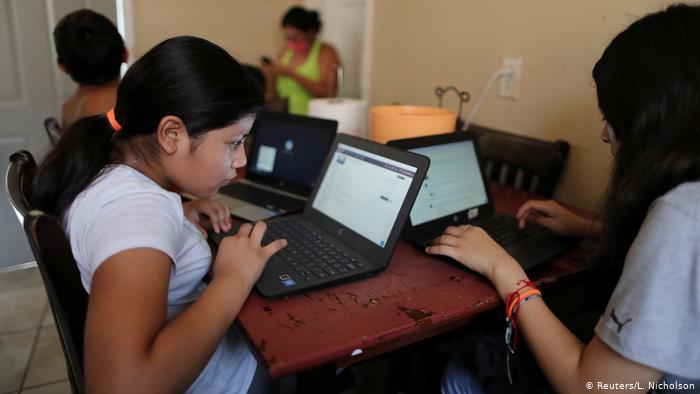
Migrant children hit by school closures
The children of migrants have also been disadvantaged by school closures in many countries, and the subsequent transition to home schooling and online learning.
On average, these children were less likely to have access to a home computer, and were less likely to benefit from parental help with lessons due to language barriers. Children were also often at a disadvantage because of lack of space at home.
The pandemic has had a dramatic impact on migration in OECD member states, which reportedly decreased by as much as 50% in the first six months of 2020 due to border closures, travel restrictions and a decrease in flight availability.
The authors of the study don't think the current slowdown will change any time soon, even if the economy picks up again. They predicted that due to weaker labor demand and continued travel restrictions, people will become less mobile.
Those who have stopped going to their workplace will continue to work from home in the foreseeable future, if they can, and students will continue to attend online lectures and seminars.
Fears of rise in xenophobia
Countries of origin have also been affected by COVID-19. For instance, many migrants who regularly transferred money to their relatives back home have not been able to do so, and this has had a major impact on those local economies.
The report also raised concerns that destination countries will clamp down on illegal migration, leading to frustration in countries of origin.
The report also noted that racism and xenophobia could rise in OECD states as a result of increased unemployment, if migrants are perceived as economic rivals.
Some countries have introduced campaigns to combat such misconceptions. In some areas where migrants have been wrongly accused of being responsible for the spread of the virus, there have also been campaigns to raise awareness about the dangers of xenophobia.
The report concluded that migration remained an integral part of life. Stefano Scarpetta, director for employment, labor and social affairs at the OECD, said the restrictions and isolation brought about by the pandemic had shown how much we needed other people.
He also said there was a risk that the progress made with regard to migration and integration could be lost as a result of the pandemic, and suggested that governments should consider the integration of migrants as a long-term investment with advantages for everybody.
Latest Stories
-
$600m tomato imports undermining Ghana’s economy — Chamber of Agribusiness
3 minutes -
Rainstorm wreaks havoc: Faulty transformers, feeder failures leave parts of 3 regions without power
12 minutes -
CUTS International calls for urgent competition law amid sachet water price hikes
51 minutes -
‘I never did this advert’, AI clones hijack Ghanaian identities for profit
1 hour -
25-year-old woman battles trauma after surviving deadly Nkwanta attack
1 hour -
Vice President honoured at Tortsogbeza as South Tongu leaders highlight development needs
2 hours -
Kwahu Business Forum 2026: Corporate citizenship, sustaining African businesses take centre stage with KGL as the case study
3 hours -
Trump seeks $152m to reopen notorious Alcatraz prison
5 hours -
Ex-Chelsea player Oscar retires with heart issue
5 hours -
CA Foundation drives constitutional literacy in Kpone Katamanso municipality
5 hours -
GPRTU to hold talks with Transport Ministry over rising fuel costs
5 hours -
CUTS International urges gov’t to halt sachet water price hike pending cost review
5 hours -
Chief Justice: Efficient Judiciary essential to reducing business costs
5 hours -
Bayern grabs 99th-minute winner to cap superb fightback
5 hours -
Ahmed Ibrahim urges Ghanaians to reflect Easter values in nation-building
6 hours