

Audio By Carbonatix
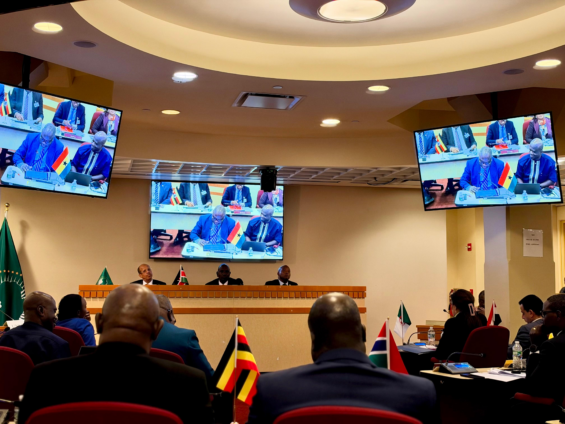
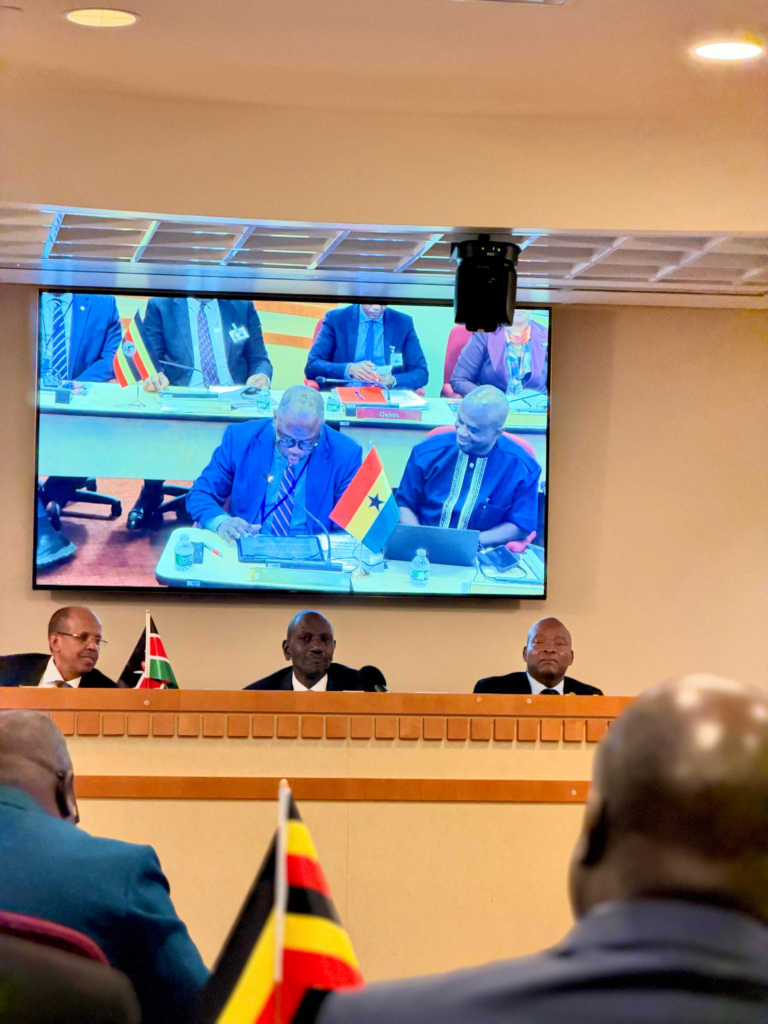
In a major presentation to the Committee of African Heads of State and Government on Climate Change (CAHOSCC), the Chair of the African Group of Negotiators (AGN), Nana Dr. Antwi-Boasiako Amoah, outlined Africa’s strategic priorities for upcoming climate negotiations, key outcomes from COP30 and recent Bonn climate sessions (SBs64), and a unified multi-year roadmap spanning COP31 through COP33.
Dr. Amoah warned that global climate action is facing unprecedented political and environmental pressures. Rising nationalism, conservatism, and climate denial are increasingly weakening multilateral cooperation. At the same time, geopolitical tensions and the global energy crisis have renewed international reliance on fossil fuels, slowing the transition to clean energy.
Across Africa, extreme weather driven by Super El Niño conditions is intensifying droughts, floods, food insecurity, displacement, and energy shortages. Africa continues to bear disproportionate human, economic, and non-economic impacts from climate-related loss and damage.
Despite these mounting crises, the AGN Chair noted global commitments to the UNFCCC and the Paris Agreement are weakening. Current Nationally Determined Contributions (NDCs) leave the world on an estimated warming trajectory of 2.7°C.
Furthermore, international climate finance is contracting when developing countries require it most: the Global Environment Facility (GEF) replenishment dropped by approximately 38% compared to previous cycles, and a 50% reduction in pledges from a developed country to the Green Climate Fund (GCF) created a major financing shortfall.
Unpacking COP30 Outcomes and Bonn Progress
Reviewing progress from COP30 and the SBs64 negotiations in Bonn, Dr. Amoah highlighted key thematic areas shaping Africa’s bargaining positions:
Just Transitions Mechanism: Building on COP30's agreement to set up a mechanism for international cooperation, technical assistance, capacity-building, and knowledge-sharing, the AGN is prioritizing its operationalisation. The goal is to establish clear governance, modalities, and work programmes heading toward an operational launch at COP32, while safeguarding national development space and nationally determined transitions.
Climate Change and Trade: Following the launch of the COP30 trade dialogue, Africa aims to address unilateral climate measures and protect its industrialisation, trade opportunities, and economic development from arbitrary discrimination or disguised trade restrictions.
Global Goal on Adaptation (GGA): While COP30 adopted the Belém Adaptation Indicators, negotiations on the GGA stalled during SBs64 in Bonn. The AGN is pushing to develop methodologies and guidance that keep adaptation visible as a vital priority and inform collective progress.
Climate Finance: The AGN is leveraging the two-year work programme established at COP30 to enforce developed countries' financial obligations under Article 9.1 of the Paris Agreement. The group is demanding concrete steps to improve access to predictable public finance, advancing the New Collective Quantified Goal (NCQG) and adaptation commitments to secure a major climate-finance outcome at COP32.
Adaptation Fund and Second Global Stocktake (GST-2): Priorities include resolving outstanding issues in the Adaptation Fund’s transition to serve the Paris Agreement—protecting its direct-access model—and ensuring an inclusive, Party-driven launch for GST-2 with balanced coverage across mitigation, adaptation, loss and damage, and means of implementation.
Strategic Continuity: A Three-Year Horizon from COP31 to COP33
Looking ahead, Dr. Amoah stressed the necessity of treating COP31, COP32, and COP33 as a single, connected political cycle. COP31 will focus on securing progress across the wider UNFCCC agenda—including adaptation, finance, just transitions, loss and damage, transparency, and mitigation—while launching GST-2.
The strategy includes dedicated support for Ethiopia’s COP31 Presidency to translate negotiation outcomes into concrete implementation, strengthen African priorities, and build political convergence for formal decisions at COP32.
By establishing COP31 as a foundation and COP32 as a milestone for consolidation, the AGN aims to maintain a coherent strategy through COP33. This multi-year framework is designed to strengthen Africa’s agency in multilateral climate negotiations and align global climate action directly with the continent's imperatives for sustainable development, energy access, adaptation, industrialisation, and economic transformation.
Latest Stories
-
Tema-Kpone road had no valid contract or approved scope of work – Roads Minister
2 minutes -
You pay for electricity, water but not roads – Roads Minister chides Tema companies
4 minutes -
Political independence earned under Nkrumah is being eroded – P.L.O Lumumba
6 minutes -
Oro Oil CEO urges decentralised use of $500m World Bank oil palm fund
6 minutes -
Busuama MA Basic School in crisis: 120 KG pupils stranded as teacher deficit bites
16 minutes -
Churches are not exempt from paying music royalties – GHAMRO CEO
17 minutes -
Gender Ministry expresses condolences over death of child in Cantonments fire
18 minutes -
Nkrumah foresaw Africa’s vulnerability without unity – P.L.O. Lumumba
21 minutes -
Alhaji Faisal Abdullah Masud installed as Tema’s first Sariki Zongo
25 minutes -
Mahama’s UN address to mark 25th by a Ghanaian president
26 minutes -
AFCON 2027Q: J.E. Sarpong slams sidelining of GPL players in Black Stars call-up
27 minutes -
GRA’s ITAS and other digital platforms set to strengthen tax compliance
28 minutes -
How school support is helping parents in Ejura Sekyedumasi prepare children for senior high school
32 minutes -
Government to resume Dome–Kitase road works, targets completion by 2028
35 minutes -
‘Ghana Jollof’ Case: High Court adjourns Salomey Baffoe’s bail application hearing to Sept. 24
35 minutes