

Audio By Carbonatix
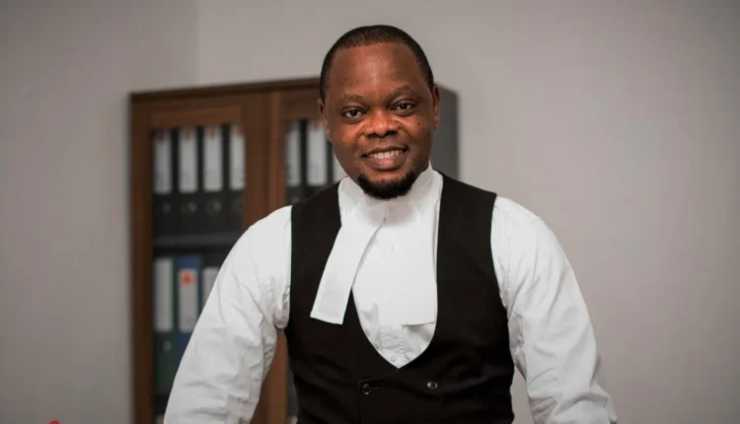
Deputy Attorney-General and Minister for Justice, Justice Srem Sai, has indicated that the Attorney-General’s Department is willing to grant the Office of the Special Prosecutor the necessary authorisation to prosecute cases if a formal request is made.
Speaking on the Super Morning Show on Joy FM on Friday, April 17, he dismissed suggestions of tension between the two institutions, insisting that the Attorney-General’s office remains open to collaboration in the fight against corruption.
“Why not, why won’t we grant them the authorisation when they apply for it,” he stated, underscoring what he described as a practical and cooperative approach to prosecutorial work under the Constitution.
Srem-Sai, however, argued that the OSP has not been seeking such authorisation because it believes it operates independently of the Attorney-General’s approval.
“OSP is not interested in coming for the authorisation. That is because the OSP says that it is independent and doesn’t require the authorisation. That is the issue at the centre of it,” he stated.
He explained that the debate should not be reduced to a simple question of approval being granted or withheld, but should be understood in the broader context of the Special Prosecutor’s constitutional independence.
“The whole argument is the independence of the Special Prosecutor, which is at the core of this issue. So if you simplify the matter and you say that it’s just about giving authorisation and not giving it, then you probably have completely left the issue aside, and you’re addressing a completely different issue,” he added.
Background: High Court ruling and pending Supreme Court case
The Deputy Attorney-General’s comments follow a recent ruling by an Accra High Court that significantly affected the prosecutorial mandate of the Office of the Special Prosecutor (OSP).
In its decision delivered on April 15, 2026, the court held that the OSP does not have the constitutional authority to independently prosecute criminal cases without authorisation from the Attorney-General’s Department. The court ruled that under Article 88 of the 1992 Constitution, the power to initiate criminal prosecutions is vested exclusively in the Attorney-General unless that authority is formally delegated.
As part of the ruling, the court directed that all ongoing prosecutions being handled by the OSP be transferred to the Attorney-General’s Department. The judgment has created uncertainty around several corruption-related cases previously initiated by the anti-corruption body, effectively placing them in abeyance pending further legal direction.
The ruling followed a legal action filed by private citizen Peter Achibold Hyde, who questioned the legal basis for the OSP’s independent prosecutorial authority.
Meanwhile, the High Court decision comes against the backdrop of a separate constitutional case already pending before the Supreme Court of Ghana, which could have far-reaching implications for the future of the OSP.
That suit was filed by private citizen Noah Ephraem Tetteh Adamtey, who is challenging the constitutionality of the law that established the OSP — the Office of the Special Prosecutor Act, 2017 (Act 959).
In the suit, the plaintiff argues that Parliament exceeded its constitutional mandate by creating an office with independent prosecutorial powers, contending that Articles 88(3) and 88(4) of the Constitution vest prosecutorial authority solely in the Attorney-General. The suit seeks to have portions of Act 959 declared unconstitutional, particularly provisions that grant the OSP authority to prosecute cases independently.
Legal proceedings in the Supreme Court have also established that the Attorney-General’s office is the proper defendant in the constitutional challenge, as Parliament — rather than the OSP itself — is responsible for the law establishing the office.
Legal analysts say the outcome of the Supreme Court case is expected to determine the long-term structure and authority of the OSP, including whether it can continue to function as an independent prosecutorial body or operate under the supervision of the Attorney-General.
Until the apex court delivers its final determination, the ongoing legal developments are likely to continue shaping the operational scope of anti-corruption prosecutions in Ghana.
Latest Stories
-
White vs traditional marriage: Aesthetics above culture?
7 minutes -
Tumu Municipal Hospital receives new delivery bed to boost maternity care
14 minutes -
Telecel Ghana unveils Project X with Black Sherif partnership
24 minutes -
Rev. Kwadwo Bempah defies restriction on preaching on buses; warns it won’t succeed
38 minutes -
French Embassy to partner Kobby Kyei Media for bloggers’ training
41 minutes -
Nestlé and NBA announce multi-year international marketing partnership
55 minutes -
Mahama sends condolences to Nigeria over plane crash that killed 25
55 minutes -
Our lifestyles may be killing us but our spatial planning is too
1 hour -
12 arrested as police seize firearms, suspected drugs in Tamale
1 hour -
Chamber of Mines challenges Reuters report on proposed mining law
1 hour -
LA 2028: Black Queens take first leg advantage with 3-0 win over Mauritius
1 hour -
UG academic calendar could collapse if GAUA strike extends into next week – Awandare
1 hour -
Black Sherif partners with Telecel Ghana to promote Telecel Cash
1 hour -
Nestlé Ghana expands Tema factory, raises evaporated milk production capacity
1 hour -
Telecel Ghana launches CARE Month with customer rewards and community outreach
1 hour