

Audio By Carbonatix
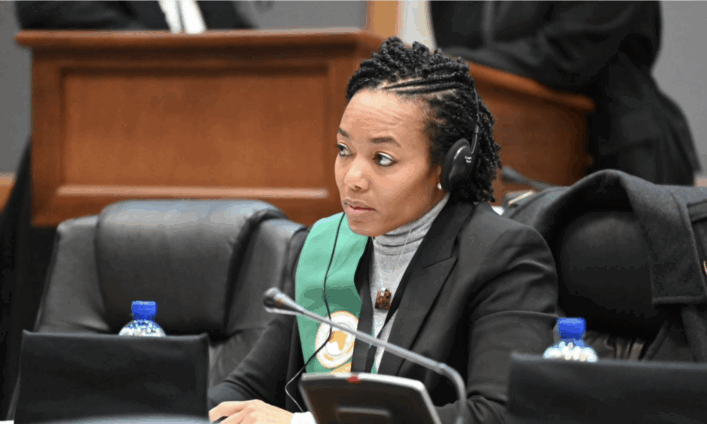
Klottey-Korle MP Dr Zanetor Agyeman-Rawlings has called for urgent structural reforms to unlock the full potential of African women in agribusiness, trade, and development.
Highlighting land ownership as a persistent barrier at the 2025 Pan-African Women’s Day Commemoration, which fell on 31st July 2025, Dr Agyeman-Rawlings, also a Member of Ghana’s Delegation to the Pan African Parliament, noted that although women do much of the work in agriculture, they often could not own land, and therefore could not use it as collateral for loans.
“Ironically, studies show women are more reliable in loan repayments, yet they face the greatest barriers to accessing credit,” she said.
On cross-border trade, where women comprise about 90 per cent of participants, Dr Agyeman-Rawlings proposed the introduction of female customs and immigration officers at all border posts to provide both practical support and protection to women traders.
Touching on the issue of reparations, she urged a shift in perspective.
“We must view the transatlantic slave trade as a conquest; millions were taken as prisoners of war,” she stated
“Reparations should come in tangible forms such as infrastructure, technology, and energy investments that support African development.”
Dr Agyeman-Rawlings also put forward two key recommendations for promoting women’s empowerment.
These are: “the Visibility of Women Leaders in the Pan-African Parliament,” on which she proposed the creation of short video profiles of the diverse and accomplished women in the Pan-African Parliament, and showcasing their achievements to inspire young girls across the continent.
“If they can see it, they can aspire to it,” she said, stressing the importance of representation in shaping ambition and possibility.
She also proposed “supporting cooperatives,” cautioning against urging women to abandon traditional cooperative systems, which often function more organically and efficiently than formal structures.
Instead, she advocated for financial institutions to redesign their models around these organic, community-based systems that already drive local economies.
She concluded with a call to value women’s unpaid labour across the continent, stressing, “We must put a financial value on the unpaid labour of women on the continent to make sure that more women are empowered.”
Latest Stories
-
Bitter times for cocoa farmers as chocolate market slumps
6 minutes -
Australians must prove they are over 18 to access porn under new laws
13 minutes -
Ghana not immediately threatened by fuel shortages – Energy Ministry
16 minutes -
Ghana records eight deaths, over 1,000 mpox cases since May 2025 – Health Minister
17 minutes -
X probes offensive Grok chatbot posts as AI safety concerns intensify
18 minutes -
Planet One announces TVET projects worth $327m in three West African countries
25 minutes -
UN Chief condemns attack on Ghanaian peacekeepers in Lebanon, demands accountability
31 minutes -
US-Israeli air campaign hits hundreds of military targets in new wave of Iran strikes
36 minutes -
Ghana must lead Africa in criminalising environmental destruction – Annoh-Dompreh
37 minutes -
US-Israeli war against Iran enters new phase with rise of hardline successor Mojtaba Khamenei
42 minutes -
Kofi Adu Domfeh honoured with Excellence in Climate Journalism and Advocacy Award
43 minutes -
WPL 2025/26: Hasaacas, Ampem Darkoa Ladies close in on another final
45 minutes -
Bole MP donates GHS200,000 to support teacher training college establishment
1 hour -
Danyame Old Town residents face eviction on a land occupied for 200 years
1 hour -
60% of our water bodies are polluted – Minority Chief Whip pushes Ecocide Law
1 hour