


Audio By Carbonatix
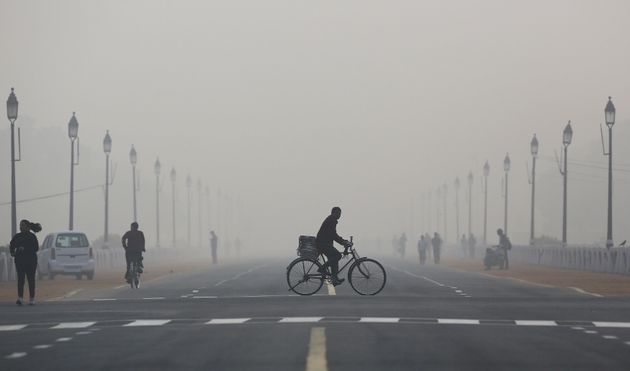
Exposure to indoor and outdoor air pollution is linked to the premature deaths of about 6.5 million people every year, according to new International Energy Agency cautionary report this week.
That makes it the fourth-largest threat to human health after high blood pressure, dietary risks and smoking.
And the number of deaths attributed to poor air quality is set to only rise in the coming decades, said the Paris-based energy security group — unless swift international action is taken to tackle this crisis.
“Clean air is vital for good health. Yet despite growing recognition of this imperative, the problem of air pollution is far from solved in many countries, and the global health impacts risk intensifying in the decades to come,” the report said.
The IEA warned that while premature deaths due to household air pollution should fall to 2.9 million a year from 3.5 million by 2040, outdoor air pollution-related deaths could rise from 3 million to 4.5 million annually in that time.
Asia will account for almost 90 percent of this increase, the report said.
The outlook may be dire, but the IEA stressed that this prediction is not a foregone conclusion.
Millions of lives could be saved if a concerted global effort to invest in cleaner energy and emissions controls is undertaken, the agency said.
Unregulated or inefficient production and use of energy is currently the single most important man-made source of air pollutant emissions, the IEA said. Eighty-five percent of hazardous particulate matter, for instance, comes from energy industry. Particulate matter, which can contain acids, metals, soil and dust particles, have been linked to lung cancer, strokes and heart disease, among other ill effects.

Governments worldwide need to adopt new energy and air quality policies, such as improving access to clean cooking oil and strictly enforcing emissions standards for road transportation, the IEA said. A collective long-term air quality goal and regulations to monitor and enforce it are also necessary.
The agency said these efforts would require an increase in total energy investment by 7 percent, or about $4.7 trillion, through 2040. This may cut air pollution-related deaths by more than 3 million a year.
That additional investment amount is “completely peanuts” for the impact it would have, IEA Executive Director Fatih Birol told reporters in London this week.
“Clean air is a basic human right that most of the world’s population lacks,” Birol said. “We need to revise our approach to energy development so that communities are not forced to sacrifice clean air in return for economic growth.”
Latest Stories
-
I never went to university – Tommy Annan Forson
6 minutes -
NACOC concludes four-day anti-drug operation in Eastern, Greater Accra regions
22 minutes -
Cedi dips further as external shocks intensify; one dollar equals GH¢11.70 at forex bureaus
34 minutes -
Sampa chieftaincy dispute: Sammordua dragged to court for contempt
42 minutes -
Okyere Baafi calls for suspension of Publican AI system over ‘serious flaws’
44 minutes -
Fuel fraud: OSP uncovers “secret collusion” between 5 oil companies and 3 state entities
51 minutes -
VIP Transport defends fare increase over rising fuel and maintenance costs
1 hour -
LGBTQ+ issues not a priority for Ghanaians – Felix Kwakye Ofosu
1 hour -
Kwakye Ofosu rejects NPP Minority’s call for apology over anti-LGBTQ bill
1 hour -
Music giant Universal gets $64bn takeover offer
2 hours -
NPP criticism of anti-LGBTQ Bill ‘nothing more than political posturing’ — Kwakye Ofosu
2 hours -
Joy FM was birthed over a bowl of fufu’ – Tommy Annan-Forson shares interesting story
2 hours -
World Athletics to introduce standalone World Marathon Championships from 2030
2 hours -
Africa’s voice in global journalism grows as funding, AI and misinformation shape newsrooms
2 hours -
First Atlantic Bank holds Annual General Meeting, reports strong growth and bold outlook for 2026
2 hours