

Audio By Carbonatix
Finance Minister Dr Mohammed Amin Adam has highlighted the pivotal role of key performance indicators in facilitating the successful completion of the Second Review by the International Monetary Fund (IMF).
This announcement follows the disclosure by the IMF on Saturday, April 13, 2024, that a staff-level agreement had been reached on the second review of the extended credit facility with Ghana.
According to the IMF, upon approval by IMF Management and formal completion by the IMF Executive Board, Ghana is expected to gain access to approximately US$360 million in financing.
- Read also: Ghana reaches Staff-Level Agreement with IMF for second review of Extended Credit Facility
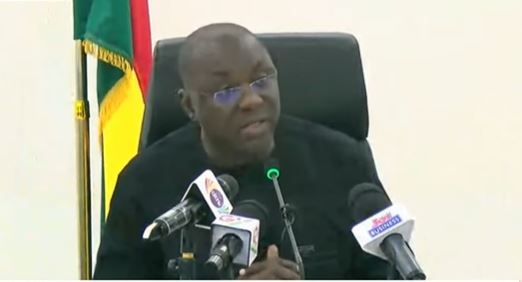
Providing an update on the outcome of the 2nd Review of the IMF-supported Post Covid-19 for Economic Growth (PC-PEG), Dr Amin Adam explained during a joint Ghana-IMF press conference on Saturday, April 13, that adherence to specific performance indicators by the government played a crucial role in the review's successful completion.
The Minister of Finance elaborated on how the government voluntarily subjected itself to these performance indicators, which ultimately contributed to meeting the requirements outlined by the IMF.
“The Second Review was based on key performance indicators, including six Quantitative Performance Criteria, three Indicative Targets, and one Structural Benchmark which were due at the end of December 2023 and 4 Structural Benchmarks due at the end of March 2024 since the programme is also forward-looking.”
Dr Amin Adam also emphasised that while the economy has achieved notable successes, there remain areas requiring greater focus, notably the energy and cocoa sectors.
He reiterated the implementation of robust control mechanisms to ensure the fulfilment of key targets outlined in the IMF-supported programs, despite the challenges posed by the upcoming election year in 2024.
“We have also put in place sufficient control and monitoring mechanisms to ensure key targets under the IMF-supported programme are met, even though 2024 is an election year.”
Meanwhile, he has also assured that the government is determined not to overburden Ghanaians with the payment of more taxes.
Rather, the government would ‘use the hard way’ to collect revenue from those who have not been paying the appropriate taxes, as well as those who have been evading taxes in the country.
Latest Stories
-
Mustapha Abdul-Hamid declares bid for NPP National Vice Chairman
5 minutes -
NRSA boss defends planned closure of garages involved in illegal left-to-right steering conversions
10 minutes -
Invite more investors to explore Ghana’s oil and gas potentials – PIAC to gov’t
20 minutes -
Ghana, Egypt move to deepen cooperation in border security, counter-terrorism, cybersecurity
28 minutes -
Guggisberg Fiagbenu enters race for Central Tongu NPP Chairmanship in Volta region
42 minutes -
Today’s Front pages: Thursday, April 9, 2026
1 hour -
“Black Stars have what it takes to win the World Cup” – Sports Minister Kofi Adams
2 hours -
Bank of Ghana Governor to perform official tee-off at 3i Africa Invitational Tournament
2 hours -
Chamber of Bulk Oil Distributors urges caution amidst Special Prosecutor’s petroleum probe
2 hours -
NDC elections: Nat Tetteh eyes Eastern Regional Deputy Secretary position
2 hours -
Ablakwa highlights Ghana-France cooperation, praises Macron on reparatory justice
2 hours -
Protect people, not prices – Joe Jackson rejects fuel tax cuts and subsidies
3 hours -
Finance Ministry, BoG clarify false claims about Databank’s bond market specialist status
3 hours -
Lawyer petitions President to halt Terminal 2 refurbishment over value-for-money concerns
3 hours -
Sunyani Market traders urge government action amid surging ginger prices
3 hours