

Audio By Carbonatix
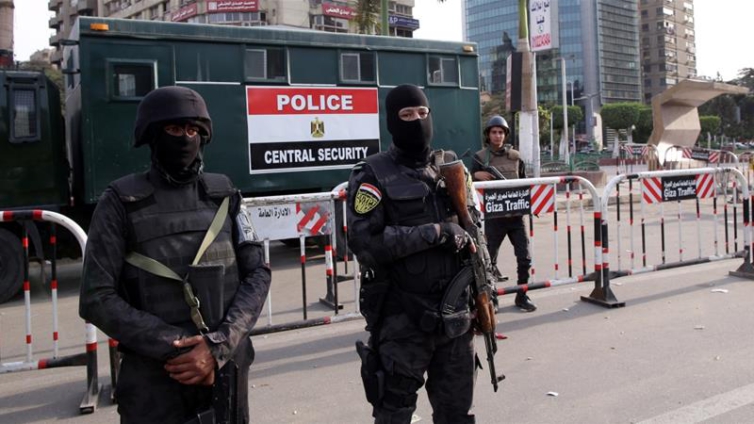
Dozens of anti-government protesters took to the streets in the Egyptian governorate of Giza on Sunday, despite heightened security in the country in advance of anticipated demonstrations.
Video clips circulating on social media showed the demonstrators holding banners and chanting slogans calling on Egyptian President Abdel Fatah el-Sisi to step down. Others set a police car on fire while some threw stones at security forces who tried to stop them.
Egypt went into high alert after former army contractor Mohamed Ali called for anti-government protests on September 20 to commemorate a year since similar demonstrations were launched in the country.
ارحل ياسيسي هتاف أهالي بقرية الكدايه الجيزة وتحطم سيارات للشرطة غضبا علي الأوضاع وقفل مصانع الطوب
— الدِڪتوُرٍة 🩺 (@dC00R) September 20, 2020
نسال الله ان تكون البدايه لنهايه المنقلب#نازلين_ومش_خايفين pic.twitter.com/gVxknuliFZ
Translation: "Leave el-Sisi is the slogan that people in the village of Kadaya, Giza, chanted as they destroyed police cars in anger at the situation and closure of the brick factories. We ask God that this be the beginning of the end of the putschist."
In a rare show of dissent, thousands of people rallied in cities across Egypt in September last year, demanding the resignation of el-Sisi following a call for protests by Ali, also an actor and businessman who said his company used to carry out projects for the Egyptian military.
In response, authorities launched the "biggest crackdown" under el-Sisi's rule, according to Amnesty International, rounding up more than 2,300 people.
Security services pre-empted Sunday's protests by launching a campaign of arrests that included political figures, including the left-wing political thinker Amin al-Mahdi, and a number of activists, especially in the eastern city of Suez.
Several social media users also reported cafes being forced to close over the past week.
In addition to the government crackdown on opposition figures and activists, pro-government media called people who planned to demonstrate part of an external conspiracy aimed at overthrowing the government.
'Take back your country'
Ali, who lives in self-imposed exile in Spain, had expected a strong response to his calls for demonstrations against the government and over deteriorating living conditions.
In an interview with Al Jazeera last week, Ali said: "If five million people took to the streets [on Sunday], no one would be arrested at all.
"Last time [September 2019], the demonstrators returned to their homes, which made it easier for the regime to arrest them," he added.
In a video message, Ali called on protesters to stay out until their demands are met. "Egyptians unite. Out of love for the Egyptian people, take back your country again. Don't leave it in el-Sisi's hands," he said. "Do not go home. If we go home, they will detain us. We're in the streets and now we need to stay there."
William Lawrence, a former US diplomat and a professor of political science and international affairs at the American University, said the protests were "not that large and widespread" largely because "of the actions of the Egyptian regime.
"There were over 1,000 pre-emptive detentions … and there's been a crackdown [with] arrests of intellectuals, university students, common citizens - all to pre-empt larger protests," he told Al Jazeera. "What's important here is not the size of the protests but the fact that they are happening at all in such a tightly controlled situation."
Egypt outlawed all unauthorised demonstrations in 2013 after el-Sisi, as defence minister, led the military's overthrow of democratically elected President Mohamed Morsi following mass demonstrations.
Since then, Egyptian authorities have imprisoned and prosecuted thousands of people, according to human rights groups, with a nationwide crackdown intensifying after el-Sisi was first elected in 2014 with 97 percent of the vote.
Some Egyptian activists have warned of the danger protesting poses to the lives of demonstrators, given what they called a tight grip on security by authorities.
On January 25, 2011, the Egyptian people began their revolution that toppled longtime president Hosni Mubarak.
Latest Stories
-
Lambussie MP awards Over GH¢200,000 in scholarships to students
1 minute -
Vice President expresses gratitude after double enstoolment in Volta Region
2 minutes -
Beyond the Noise: Rebuilding trust in journalism in a digital age
6 minutes -
I have to follow the law – CAF president tells Senegal regarding AFCON saga
10 minutes -
No government has shown urgency — Political scientist pushes Mahama on LGBTQ+ bill
10 minutes -
Gideon Boako cuts sod for new maternity block at Duayaw Nkwanta Health Centre
18 minutes -
NRSA to limit use of converted Toyota Voxy to Intra-city operations
20 minutes -
Mustapha Abdul-Hamid declares bid for NPP National Vice Chairman
34 minutes -
NRSA boss defends planned closure of garages involved in illegal left-to-right steering conversions
40 minutes -
Invite more investors to explore Ghana’s oil and gas potentials – PIAC to gov’t
49 minutes -
Ghana, Egypt move to deepen cooperation in border security, counter-terrorism, cybersecurity
58 minutes -
Guggisberg Fiagbenu enters race for Central Tongu NPP Chairmanship in Volta region
1 hour -
Today’s Front pages: Thursday, April 9, 2026
2 hours -
“Black Stars have what it takes to win the World Cup” – Sports Minister Kofi Adams
2 hours -
Bank of Ghana Governor to perform official tee-off at 3i Africa Invitational Tournament
2 hours