

Audio By Carbonatix
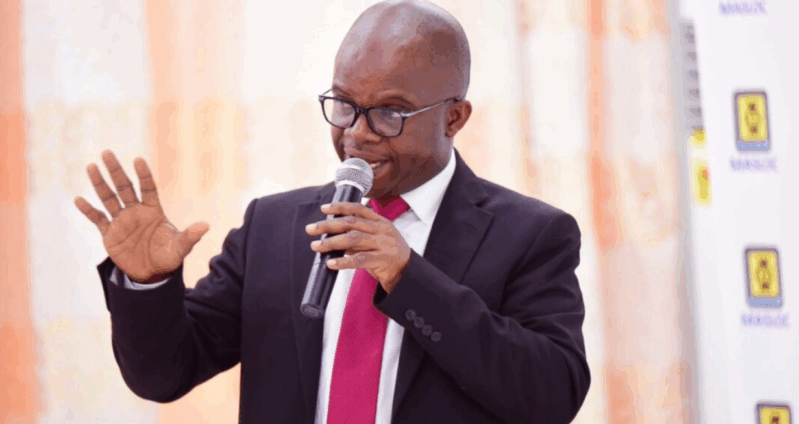
Former Deputy Finance Minister, Dr Stephen Amoah, says it is too early to make a definitive judgment on the economic performance of the Mahama administration, warning that claims of success or failure within the government’s first year amount to propaganda rather than objective analysis.
Speaking on Joy FM's Top Story, Dr Amoah argued that a fair assessment of the government’s performance must be based on key macroeconomic indicators, flagship policy delivery, and institutional reforms, rather than political narratives.
“Honestly speaking, it will be extremely difficult for any honest person to say that the government has done well or otherwise, except those who just want to play propaganda,” he said.
According to him, a meaningful evaluation of the government’s economic performance requires careful consideration of primary macroeconomic indicators, including growth, inflation, fiscal balance, and reserves, as well as the status of flagship programmes promised to Ghanaians.
Dr Amoah noted that many of the current economic conditions reflect global economic challenges and inherited trends, rather than the direct impact of new government policies.
He recalled that Ghana’s economic recovery was already underway before the change of government, citing improved growth figures, a strengthening primary balance, declining inflation, and improved foreign reserves.
“By the end of 2024, provisional growth figures were around 6.3 per cent, even higher than the 5.6 per cent presented earlier, and inflation had declined from a peak of 54.1 per cent to about 22 per cent,” he said.
Dr Amoah explained that new economic policies, particularly those requiring parliamentary approval, take time to design, pass, and implement, making it premature to attribute current outcomes to the new administration.
He referenced flagship initiatives such as the 24-hour economy and the Big Push, noting that it is impossible at this stage to measure their contribution to economic growth or express them as a percentage of GDP.
“You cannot record any component of these programmes yet and say this is what they have contributed to GDP,” he stated.
According to the economist, 2026 will be a more appropriate period to critically assess the government’s economic impact, as policy implementation, structural reforms, and growth outcomes would then be clearer.
“This is the year we should begin to critically examine the government’s contribution to growth, job creation, and improvements in welfare, compared to where the economy was when they took over,” he added.
Dr Amoah stressed that both excessive praise and outright condemnation at this stage undermine serious economic discourse.
“Personally, I cannot place this government in any appraisal position yet—neither to say they have done well nor that they have done badly,”
Latest Stories
-
Dagbamete chief urges completion of road project, expansion of vocational training
2 minutes -
Urgently cancel Truedare AI Customs deal over cost concerns – Joseph Cudjoe to Mahama
8 minutes -
Poor safety habits to blame for recurring boat fatalities — GMA boss, Kamal-Deen Ali
14 minutes -
Owabi 75% blocked, Barekese loses 40% capacity as siltation, plastics threaten water supply crisis
23 minutes -
Ashanti RCC seeks to clear unauthorised garages under new car mall initiative
25 minutes -
DPS International steals spotlight at Ghana Interschool Festival Part 2
26 minutes -
Republic Bank Ghana PLC leverages Kwahu Business Forum deliberations
27 minutes -
Ghana and Artemis II: Hospitality, Love, and Conquest
29 minutes -
AMA enforces planning rules, demolishes wall built on public right of way
32 minutes -
GFA urged to move for Welbeck, Nketiah amid injury concerns
49 minutes -
KGL to honour 2025 Corporate Income Tax obligations with GHC150m April payment
1 hour -
KiDi, Kuami Eugene, Adina, others billed for Okyeame Kwame’s 50th birthday celebration
1 hour -
Akwapim-Akropong Chieftaincy Clash: One dead after Police shoot-out
1 hour -
Israel and Hezbollah continue strikes as US-Iran ceasefire faces collapse over Lebanon
1 hour -
Asanko Gold supports road rehabilitation to ease transport challenges in Amansie West
1 hour