

Audio By Carbonatix
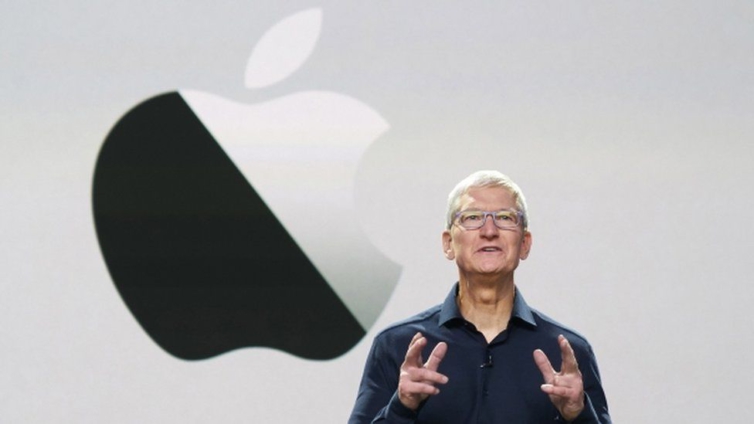
Apple boss Tim Cook has said his company may have to change its diversity practices as the US legal landscape shifts.
His comments came just minutes after a majority of shareholders rejected a proposal calling on the tech giant to consider ending its diversity policies, such as the use of race and sex in hiring decisions.
Apple had urged shareholders to vote against the measure, which the company had argued was "inappropriately" trying "to micromanage" its business.
The scrutiny of the firm comes as US President Donald Trump has called for an end to diversity, equity and inclusion (DEI) programmes in the government and private sector.
Trump's orders have run into legal roadblocks, but many companies in the US, including big names such as Meta, Amazon and Goldman Sachs, have already ended or rolled back their own policies, citing legal risks.
Apple's decision to fight the shareholder proposal had bucked that tide.
Shareholder measures opposed by companies rarely succeed, so the outcome of Tuesday's vote was expected.
It marked the second high-profile defeat of shareholder proposal targeting DEI, after a similar rejection at retailer Costco.
However, despite the vote, Mr Cook on Tuesday acknowledged that the firm may have to alter some of its practices.
"As the legal landscape around this issue evolves, we may need to make some changes to comply, but our north star of dignity and respect for everyone and our work to that end will never waver," Mr Cook said during a question-and-answer session at the company's annual shareholder meeting.
He noted that Apple did not use "quotas" for hiring - a practice that has come in for some of the fiercest criticism - while saying the firm's strength came from a culture where "people with diverse backgrounds and perspectives come together".
"We'll continue to work together to create a culture of belonging where everyone can do their best work," he added, saying the company would remain "committed to the values that have always made us who we are".
The proposal targeting Apple's DEI policies was backed by the National Center for Public Policy Research, a conservative think tank, which had also put forward the proposal at Costco.
It argued that the existence of Apple's diversity and inclusion programmes exposed the firm to "litigation, reputational and financial risks", pointing to the wider corporate retreat andnoting that recent lawsuits have made it easier for workers to sue over discrimination.
Stefan Padfield of the organisation's Free Enterprise Project, who presented the proposal at Tuesday's meeting, said the risks to Apple had increased after the Trump administration recently ordered staff to investigate DEI in the private sector.
"The vibe shift is clear," he said. "DEI is out and merit is in."
Apple's decision to push back against the shareholder proposal, while simultaneously opening the door to changing its policy is likely to satisfy both sides of the fight, said Angela Jackson, a senior advisor to the Project on Workforce at Harvard University and author of the forthcoming book, The Win-Win Workplace.
But she warned that it left Apple "playing defence". She said she wanted to see the company lead by making a more robust business case for the programmes.
"They've made the right moves. The one step they could go further... is to really say, 'Yes it's our values, we believe it's the right thing to do, but it's also an economic imperative."
The fight over DEI in the US has raised questions about whether such policies in other countries will face similar challenges.
Catherine Howarth, chief executive of the responsible investment charity ShareAction, said she thought that Apple - a global, consumer-facing firm - had made the bet that the benefits of pushing back against the shareholder proposal outweighed the risks.
"It's not popular with consumers and it's not popular with employees to abandon what were supposedly your principles in this area until very recently," she said.
"They think it would go down very badly - and it would - with their global consumer base."
Shareholders also rejected proposals that would have required Apple to report about its AI privacy practices, charitable giving and policies to combat child sex abuse.
They backed the board members supported by the company, as well as its executive compensation, including a pay package for Mr Cook worth more than $74m.
Latest Stories
-
Sole-sourcing: Osae-Kwapong urges political consensus on procurement practices
14 minutes -
‘Soldier, sit down, I’m safe here’ – President Mahama’s surprise moment at Easter gathering [Video]
27 minutes -
Investigating sole-sourcing claim is an indictment on Roads Minister – Tonto
28 minutes -
Sole-sourcing: Mahama has reneged on his promise to amend Public Procurement Act – Tonto
42 minutes -
Kobina Atta-Bedi criticises government’s sole-sourced contracts, calls for reform
2 hours -
Kwahu to become industrial powerhouse under new 24-Hour Economy – Goosie Tanoh
2 hours -
Lawra MP donates transformer to Eremon SHTS to resolve power crisis
2 hours -
Lawra MP delivers medical equipment, commissions renovated nurses’ quarters
2 hours -
Livestream: Newsfile discusses galamsey taxes, sole-sourcing probes, Black Stars coach sacking and presidential dialogue
3 hours -
Ghana-Russia partnership supports mothers and children at Princess Marie Louise Hospital
3 hours -
Mother arrested for allegedly severing daughter’s toe in Juaboso
3 hours -
Iran and US race to find missing American crew member downed in fighter jet
5 hours -
Gomoa Easter Carnival: Samini, Ofori Amponsah and Kwabena Kwabena rock Day 2; Obrafour and Kwaw Kese set for Day 3 showdown
6 hours -
‘Comical joke’: Atta Akyea disputes ‘personal account’ claim in former NSB boss Adu-Boahene case
6 hours -
Kenpong intervenes as Afua Asantewaa, husband reconcile after public scrutiny
6 hours