

Audio By Carbonatix
More than twelve farming communities in the Assin South District of the Central Region have reported of the re-emergence of the devastating Fall Armyworms on maize farms in the area.
The worms have destroyed over 65 acres of maize and vegetables and rendered hundreds of farmers and families disillusioned.
The affected communities are Akufful-Beposo, MbaaMpehia, Homaho, Appiahkrom, Haruna, Domeabra, Nfanti, Yaw Boamah, Abodweseso, Adadientem, and Beyerden.
The farmers in an interview with the Ghana News Agency said the worms have increased in numbers over the last one-month destroying maize and some vegetable farms.
They described the situation as disheartening and a disincentive to farming.
“The worms are feeding on virtually every green-leafy-edible. This is very strange because I have not seen worms that eat and multiply with such speed” said Mr Kofi Nkyi from Abodweseso.
He said the extent of the invasion required urgent response and a re-energized national effort to wage a relentless war against the pests.
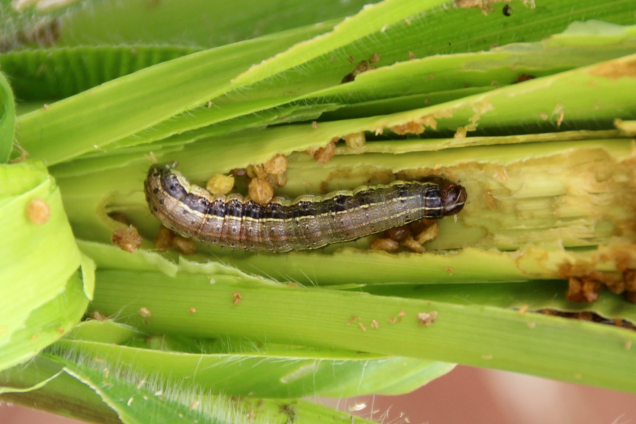
“The fall armyworms are super-hungry tinny caterpillars feeding on all our crops. They look dull yellow to gray colour with stripes running down the length of the body and lives on leaves of plants and hatch to re-launch a massive onslaught on food crops,” Mr Nkyi added.
They blamed the situation on the non-availability of the recommended spraying chemicals which had forced farmers to use unauthorized and dangerous chemicals meant for spraying cocoa farms.
“I have sprayed my farm about three times with chemicals meant for spraying cocoa farms, yet they keep coming in their numbers. I have used two different chemicals to spray my farm but it seems they have not been effective,” Mr Enock Baidoo, another farmer said.
The farmers appealed to officials of the District Directorate of Agriculture to get them the recommended chemicals to save their remaining farms.
In response to the farmers' claims, Mr John Tawiah Aidoo, District Director of Agriculture who confirmed the invasion by the worms and urged them to adhere to the best agronomic practices to save their farms.
They should buy the recommended chemicals from the approved agro-inputs stores and stop the use of unscientific methods and concoctions to spray the worms.
Among others, he particularly advised them to grow their maize in lines, spray farms before sunrise and after sunset and inspect their farms regularly for early detection of the nocturnal worms which are not familiar to Ghanaian soil.
Latest Stories
-
‘Our missing players are more important’ – Gambia coach fires shot at Ghana
56 minutes -
Today’s front pages: Tuesday, September 29, 2026
59 minutes -
Ghana ‘showing up differently’ on global stage – Joyce Bawah Mogtari
1 hour -
Ghana’s tuna industry in crisis as 20 hook-and-line vessels collapse
2 hours -
South Tongu MP launches apprenticeship programme for 159 young people
2 hours -
The Pusiga connection behind Gertrude Atongi’s work in New York
3 hours -
Teachers took promotion exams in December to beat government clearance deadline – GNAT
3 hours -
NPA launches 2026 staff welfare week with focus on teamwork and employee wellbeing
3 hours -
Ghana, Saint Kitts and Nevis sign labour deal to strengthen protections for Ghanaian nurses
3 hours -
Delayed promotions put teachers’ retirement benefits at risk – GNAT
3 hours -
No ‘Bawumia candidates’ in NPP executive elections – Anthony Karbo
3 hours -
Over 3,000 displaced as flooding overwhelms Hohoe communities
3 hours -
Sunyani East NPP executives begin reconciliation drive ahead of 2028 polls
3 hours -
Agric Minister engages Ga Mantse on agriculture transformation agenda
3 hours -
Aayalolo expansion targets private car users, not trotro operators – Mahama Ayariga
3 hours