

Audio By Carbonatix
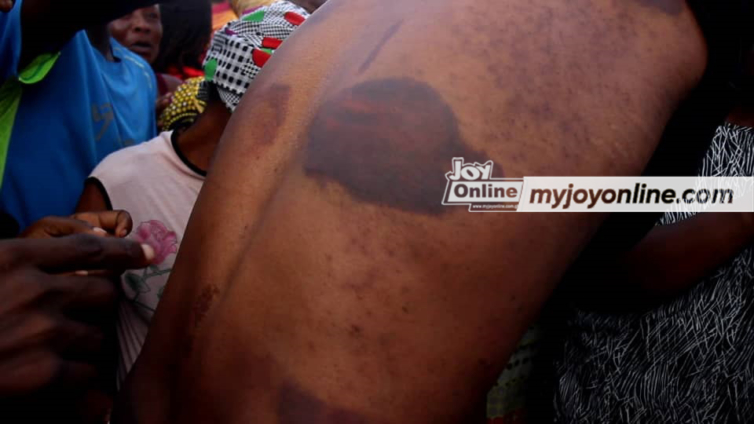
Director of the Faculty of Academic Affairs and Research, Kofi Annan International Peacekeeping Training Centre (KAIPTC) says the Ashaiman brutality proves the military does not understand its mandate.
Prof Kwesi Aning said the Ghana Armed Forces (GAF) is in existence to protect the lives of people against external threats and not attack them
Speaking on JoyNews’ Newsfile on Saturday, he stressed that a look at the brutality in the community left him disappointed.
“There was a sense of shock, of sadness and a sense of failure. Failure not in the context that we could not protect it but failure in the sense that hard work that has been done to try to build a society in which those in service understand their role that when we use taxpayers’ money to train you, feed you, educate you and arm you that our role is to serve but service has a synergetic relationship.
“That those who are served accept that service and in return have a dialogic consensual respectful collaborative relationship and my dismay at the failure is that almost 20 years or so of hard work seeking to build civil-military relations,” he told host Samson Lardy Anyenini.
Prof Aning’s comment comes in the wake of what he describes as a recurring struggle between civilians and the army.
In 2017, Major Maxwell Adam Mahama was murdered by some residents of Denkyira Obuasi in the Central region.
Six years on, there are alleged reports of the killing of another soldier, Sherrif Imoro in Ashaiman.
On the back of this, Prof Aning believes much has to be done to bridge the tension between civilians and the military in such a manner that civilians play an effective oversight role in the military.
“I think you've cited 10 cases and we don’t seem to be learning any lesson at all and the failure is not only from the military side the failure is also from the civilian oversight side,” he said.
Making reference to one of the videos in which a soldier could be heard audibly saying “mo nsua nyansa” which translates to ‘learn to be wise’ he stated that this indicated that the military was yet to come to terms with the fact that it was possible to discipline people without violating their rights.
“I think we need to understand that what took place is part of that cultural historical struggle within the army itself to move away from the 'bo nkutuku' mentality and this I am borrowing from Raymond Atuguba. The culture that says you know I am not going to argue with you I give you a couple of very dirty slaps and that will change you.
“When someone says learn to be wise or intelligent or behave in particular once that same person is flouting your rights then it creates a particular time of danger because it tells you the way that threats are constructed and how enemies Imagine and re-imagine,” he said.
Latest Stories
-
Ghana earns nearly $12bn from petroleum sector since 2011
2 minutes -
Classic ‘I Told You So’ to be remade in 2027 for Ghana at 70
3 minutes -
533 admitted to Ghana Armed Forces College of Nursing and Midwifery
9 minutes -
Manhyia North MP, Akwasi Konadu questions speed of Damang mine tender process
12 minutes -
Accra hosts 24th EBID AGM as Finance Minister calls for bold action
15 minutes -
The Insurance Paradox: Of state capture, greedy monopolies, and the SIC reset
17 minutes -
AU welcomes US-Iran ceasefire, urges sustained dialogue for lasting peace
17 minutes -
Ato Forson praises EBID’s resilience and strategic impact at 24th AGM in Accra
19 minutes -
Ghana welcomes ECOWAS leaders to Accra for EBID high-level meeting
21 minutes -
Ato Forson urges ECOWAS states to honour EBID capital commitments
24 minutes -
Why Ghana’s Mobile Money security is a house of cards
27 minutes -
EBID records strong financial growth amid global economic uncertainty – Ato Forson
28 minutes -
PSG vs Liverpool: Date, time and everything you need to know about the Champions League quarterfinal
45 minutes -
Education Minister orders probe into illegal SHS online class fees
46 minutes -
Barcelona vs Atlético Madrid: Date, time and everything you need to know about the Champions League quarterfinal
50 minutes