

Audio By Carbonatix
The Ashanti caucus of the New Patriotic Party (NPP) in Parliament has questioned the government’s funding priorities following the decision to downgrade the Suame Interchange Project, arguing that claims of debt-related constraints are inconsistent with broader road infrastructure spending.
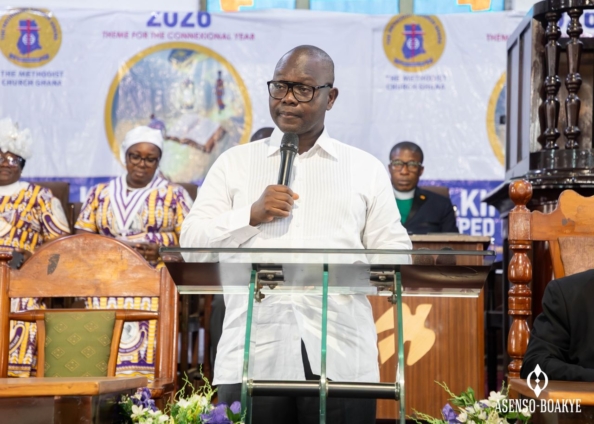
Speaking on behalf of the caucus at a press briefing on Monday, February 6, Francis Asenso-Boakye, MP for Bantama and former Minister for Roads and Highways, asked why the government could mobilise funds for other major road projects while the Suame Interchange, intended as a long-term solution to Kumasi’s worsening traffic congestion, was being scaled back.
“If government could mobilise funds for the Ofankor–Nsawam road and other major projects, why is the Suame Interchange being short-changed?” he queried.
The caucus highlighted what it described as contradictions in government policy. They noted that the Suame Interchange was included in the Big Push Road Programme in 2025, which was meant to guarantee continuous funding for critical infrastructure projects.
Mr Asenso-Boakye also referenced public statements by the Finance Minister indicating that GHS 43 billion has been allocated to road infrastructure this year, questioning why a fraction of that funding could not be used to complete the Suame Interchange as originally designed.
The MPs criticised the government for prioritising 64 new road projects awarded through sole sourcing instead of completing ongoing, high-impact infrastructure, saying this undermines economic efficiency and long-term urban planning.
According to the caucus, failure to complete the Suame Interchange as planned will not only prolong congestion in Kumasi but also result in continued productivity losses, higher transport costs, and deteriorating mobility across the city.
The Ashanti Caucus, therefore, called on the government to reconsider its funding approach, restore the original four-tier design of the Suame Interchange, and ensure that allocations reflect the strategic importance of Kumasi as Ghana’s second-largest city and a national transport hub.
“Kumasi deserves infrastructure that meets its scale and significance,” Mr Asenso-Boakye said. “Short-changing major projects now will cost the city and the nation—far more in the long term.”
Latest Stories
-
Omanhene Kwabena Asante slams GIADEC CEO over alleged discrimination in mining concessions
51 minutes -
Majority of Ghanaian importers lack awareness of cargo insurance – Gyampo
57 minutes -
GJA Ashanti applauds Asantehene for securing land for new press centre
1 hour -
CIMAF Ghana donates cement to Afua Kobi SHS
1 hour -
Ghana to benefit from France’s National health platform following Paris talks
1 hour -
Due process must prevail in Ofori-Atta’s immigration and extradition cases – Lawyer
1 hour -
Oil palm fund will create coherent ecosystem, boost supply—DBG CEO
1 hour -
Police arrest man for illegal drug peddling at Pankrono
1 hour -
Industry collaboration key to solving skills mismatch – NYA CEO Osman Ayariga
2 hours -
Ghana, Egypt deepen security ties following high-level meeting
2 hours -
Every neurodivergent child deserves to thrive – AWARE 2026 walk set for North Legon
2 hours -
Ghana-Russia Centre, ATF donate to Princess Marie Louise Children’s Hospital
2 hours -
NPP increases polling station coverage per election committee from 10 to 25
2 hours -
Ghana card cannot be used for financial transactions – NIA debunks false reports
2 hours -
Successful conviction secured for illegal fish processing operation in Watford
2 hours