

Audio By Carbonatix
When Australia first entered Ghana’s mining landscape over half a century ago, few could have imagined how deeply the partnership would influence both countries’ economic trajectories.
What began as a commercial interest has since matured into a strategic relationship, one that blends trade, education, governance, and environmental stewardship.
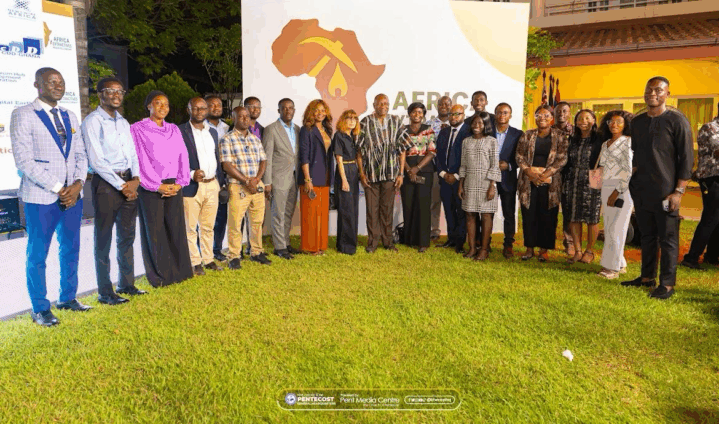
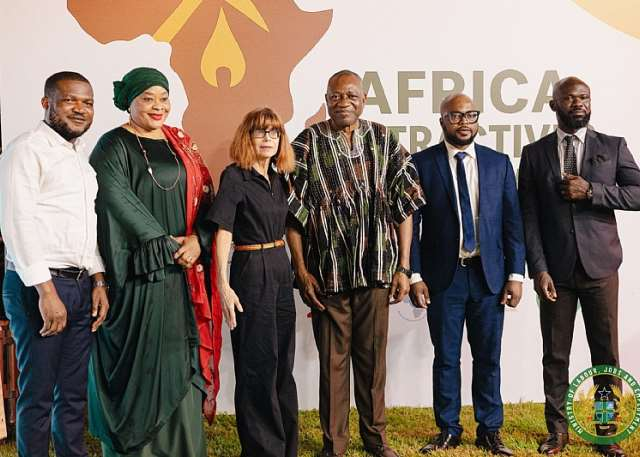
That legacy was at the heart of remarks delivered by High Commissioner Berenice Owen‑Jones at the launch of the Africa Extractive Media Fellowship (AEMF) in Accra.
The fellowship, launched in collaboration with Newswire Africa, reflects a new phase in Ghana–Australia relations: one that links responsible mining with informed media and good governance.
The event underscored a broader question confronting all resource‑dependent economies — how to balance extraction with accountability and profit with sustainability.
A Partnership Anchored in Responsibility
High Commissioner Owen‑Jones described Australia’s engagement in Ghana’s extractive sector as “a partnership built not just on investment, but on integrity.”
With over 150 Australian mining firms operating across Africa and combined investments running into the tens of billions of dollars, Ghana remains a key partner in this broader footprint.
Australian companies, she noted, have brought not only capital but also global best practices — prioritising transparency, environmental care, and community engagement.
That approach, she argued, has helped Ghana maintain relative stability in a sector often vulnerable to social and ecological pressures.
“Ours is a partnership that delivers enduring value — for workers, for local communities, and for Ghana’s economy at large,” she said.
This message reflects a wider shift in global mining diplomacy: investors are increasingly judged not only by what they extract but by how responsibly they operate.
Celebration of Shared Vision
The event attracted a broad cross‑section of stakeholders, including Deputy Chief of Staff Nana Oye Bampo Addo and Minerals Commission CEO Isaac Andrew Tandoh, alongside journalists and industry representatives.
Their presence signalled how the extractive sector has become central to Ghana–Australia cooperation and how both nations now view sustainable governance as integral to mutual benefit.
Creating Jobs and Building Futures
Australia’s investments in Ghana’s mining industry have had measurable economic effects. For example, in 2024 Ghana’s extractive sector injected over US$5.5 billion into the economy through procurement, social investment and fiscal payments.
Beyond financial flows, employment has also grown significantly: the sector is credited with generating approximately 1.1 million jobs in 2024 according to the National Development Planning Commission — though the bulk of those jobs were in small‑scale operations.
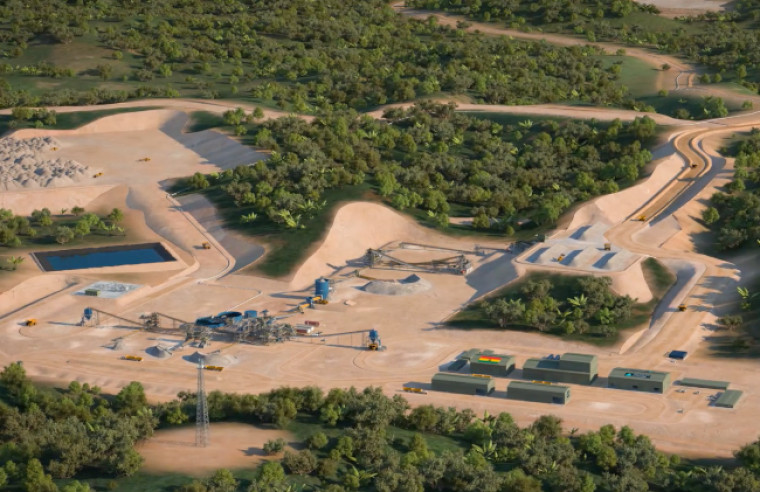
High Commissioner Owen‑Jones highlighted the Atlantic Lithium project as a symbol of future opportunity: Ghana’s potential first lithium mine, expected to create thousands of direct and indirect jobs and boost export earnings and royalties.
Analytically, these figures signal both opportunity and challenge: while the scale of economic impact is significant, the reliance on small‑scale jobs and the imperative to ensure sustainable, high‑quality employment remain central tasks for Ghana’s development agenda.
Investing in People, Not Just Projects
While minerals remain the foundation of the relationship, the High Commissioner stressed that its future depends on people. Through the Australia Awards programme, more than 4,000 scholars from African countries (including Ghana) have studied in Australia since 2004.
“These professionals return to Ghana equipped to drive innovation and growth,” she said — a reminder that long‑term development is built on human capital, not just infrastructure or investment flows.
Women, Journalism, and the Power of Inclusion
Owen‑Jones also emphasised that equity and inclusion are becoming as critical to sustainable growth as technology and finance. Citing the Her Press Initiative (supported via the Dikan Centre), she reaffirmed Australia’s commitment to empowering women journalists — a field that shapes public understanding of the extractive sector.
The newly launched AEMF builds on that commitment. By training journalists — particularly women — to report accurately on mining, environment, and governance issues, the programme aims to bridge the gap between technical industry knowledge and public discourse.
“When journalism is informed and inclusive,” she said, “it doesn’t just tell stories — it builds accountability and peace.”
Towards a Sustainable Future
The Fellowship’s focus on sustainability and accountability mirrors the evolving nature of Ghana–Australia relations. What began with mining now extends to education, media, and environmental diplomacy. The partnership’s trajectory reflects an understanding that responsible investment and informed citizenship must progress together.
“Fifty years on,” Owen‑Jones concluded, “our story with Ghana is no longer just about minerals. It’s about people, purpose, and progress — and how, together, we can continue to shape a sustainable future.”
Australia’s long‑standing presence in Ghana’s extractive industry offers a case study in how foreign investment can move beyond resource extraction to become a driver of capacity‑building, gender equity, and institutional accountability. The emphasis on sustainability and media engagement marks a strategic evolution — positioning the partnership not merely as economic, but as developmental and values‑driven.
Latest Stories
-
Floods: Body of man believed to be in his 60s found along Alajo railway line
7 minutes -
Gov’t outlines aggressive anti-flood measures as devastating rains submerge Accra and Tema
21 minutes -
NACOC sensitises motorists on drug-trafficking risks
31 minutes -
Energy Ministry: Heavy rains disrupt power supply in Greater Accra Region; restoration to begin when conditions are safe
36 minutes -
Cholera, typhoid, and snakebites: Ghana Health Service warns public over escalating rainy-season dangers
36 minutes -
Ghana Eye Project provides free eye screening and surgery to over 2,000 people
38 minutes -
Laughing at Harm: Akabenezer and the problem with sexualised comedy
54 minutes -
Presidency issues urgent flood safety advisory following heavy rains
54 minutes -
Finance Ministry cites ¢10.7bn 2025 NHIS funding as health financing reforms deepen
58 minutes -
Accra floods: Two killed as floodwaters and electrical hazards threaten residents
1 hour -
GAUA-KNUST gets new executive following successful elections
1 hour -
Children, elderly, PWDs to receive priority support in flood response – Gender Ministry
2 hours -
ECG begins phased power restoration to Accra after flood shutdowns at key substations
2 hours -
Legal dispute remains before Court of Appeal, Zeepay urges caution over reports
3 hours -
World Drug Day: Study reveals high substance use among youth in La Nkwantanang-Madina Municipal
3 hours