

Audio By Carbonatix
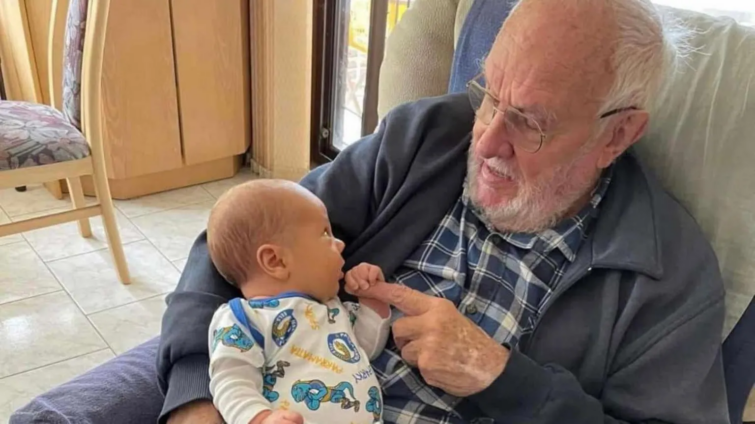
One of the world's most prolific blood donors - whose plasma saved the lives of more than 2 million babies - has died.
James Harrison died in his sleep at a nursing home in New South Wales, Australia on 17 February, his family said on Monday. He was 88.
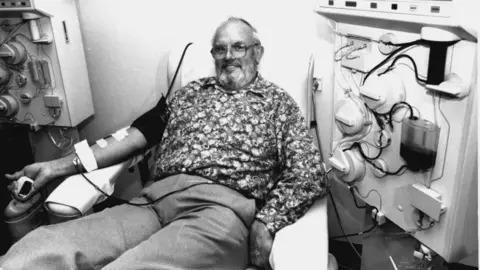
Known in Australia as the man with the golden arm, Harrison's blood contained a rare antibody, Anti-D, which is used to make medication given to pregnant mothers whose blood is at risk of attacking their unborn babies.
The Australian Red Cross Blood Service who paid tribute to Harrison, said he had pledged to become a donor after receiving transfusions while undergoing a major chest surgery when he was 14.
He started donating his blood plasma when he was 18 and continued doing so every two weeks until he was 81.
In 2005, he had the world record for most blood plasma donated - a title he held until 2022 when he was overtaken by a man in the US.
Harrison's daughter, Tracey Mellowship, said her father was "very proud to have saved so many lives, without any cost or pain".
"He always said it does not hurt, and the life you save could be your own," she said.
Mellowship and two of Harrison's grandchildren are also recipients of anti-D immunisations.
"It made [James] happy to hear about the many families like ours, who existed because of his kindness," she said.
Anti-D jabs protect unborn babies from a deadly blood disorder called haemolytic disease of the foetus and newborn, or HDFN.
The condition occurs at pregnancy when the mother's red blood cells are incompatible with that of their growing baby.
The mother's immune system then sees the baby's blood cells as a threat and produces antibodies to attack them. This can seriously harm the baby, causing severe anaemia, heart failure, or even death.
Before anti-D interventions were developed in the mid-1960s, one in two babies diagnosed with HDFN died.
It is unclear how Harrison's blood came to be so rich in anti-D, but some reports said it had to do with the massive blood transfusion he received at 14.
There are fewer than 200 anti-D donors in Australia, but they help an estimated 45,000 mothers and their babies every year, according to the Australian Red Cross Blood Service, also known as Lifeblood.
Lifeblood has been working with Australia's Walter and Eliza Hall Institute of Medical Research to grow anti-D antibodies in the lab by replicating blood and immune cells from Harrison and other donors.
Researchers involved hope lab-made anti-D can one day be used to help pregnant women worldwide.
"Creating a new therapy has long been a 'holy grail'," Lifeblood's research director David Irving said.
He noted the scarcity of donors committed to regular donation, who are able to produce antibodies in sufficient quality and quantity.
Latest Stories
-
Humour at its finest at Kumasi Comedy Show
6 minutes -
Police Christmas special operation: 101 suspects arrested in Greater Accra
30 minutes -
15 arrested after sporadic shootings at Ho central mosque
44 minutes -
GES condemns alleged theft of food supplies at Awaso STEM SHS
1 hour -
DopeNation electrifies crowd at Joy FM’s Party in the Park
1 hour -
Philip Ayesu emerges as the 2025 Achimota Champion after beating Percival Kwadjo Ampoma
1 hour -
Support your own – Mr P tells Ghanaian artistes
2 hours -
Ghana EXIM Bank develops 5-year export-led growth strategy to drive trade expansion
2 hours -
Big Smiles, Bigger Bounces: Kids take over the fun at the Joy Party in the Park
3 hours -
Joy FM Party in the Park 2025: Kwabena Kwabena takes centre stage
3 hours -
Ghana-Nigeria cyber-fraud network dupes over 200 victims of $400,000
3 hours -
Tackling terrorism requires jobs and anti-corruption drive, not strikes alone – Nigerian security analyst
3 hours -
Terror attacks in Nigeria affect all faiths, not only Christians – Security analyst
3 hours -
$120,000 stolen from Ghanaian financial institution by hackers – INTERPOL
3 hours -
Modern security management defined by trust – IGP
3 hours