

Audio By Carbonatix
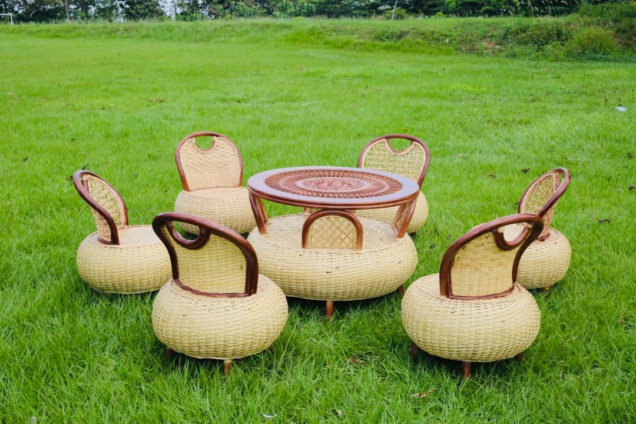
Bamboo is a plant that can absorb carbon dioxide (CO2) for a longer period, therefore deemed as a measure for climate mitigation in terms of carbon sequestration.
Hence the push by the International Network for Bamboo and Rattan (INBAR) for the evergreen flowering plant to be fully utilized for its environmental benefits, climate change solutions and livelihood development.
West Africa Regional Director of INBAR, Michael Kwaku, says after years of public education and awareness creation, there is an increased appreciation of the use of bamboo and rattan in Ghana.
He says the network is currently focused on enhancing skills and introducing advanced tools to inculcate innovations and designs in bamboo products.
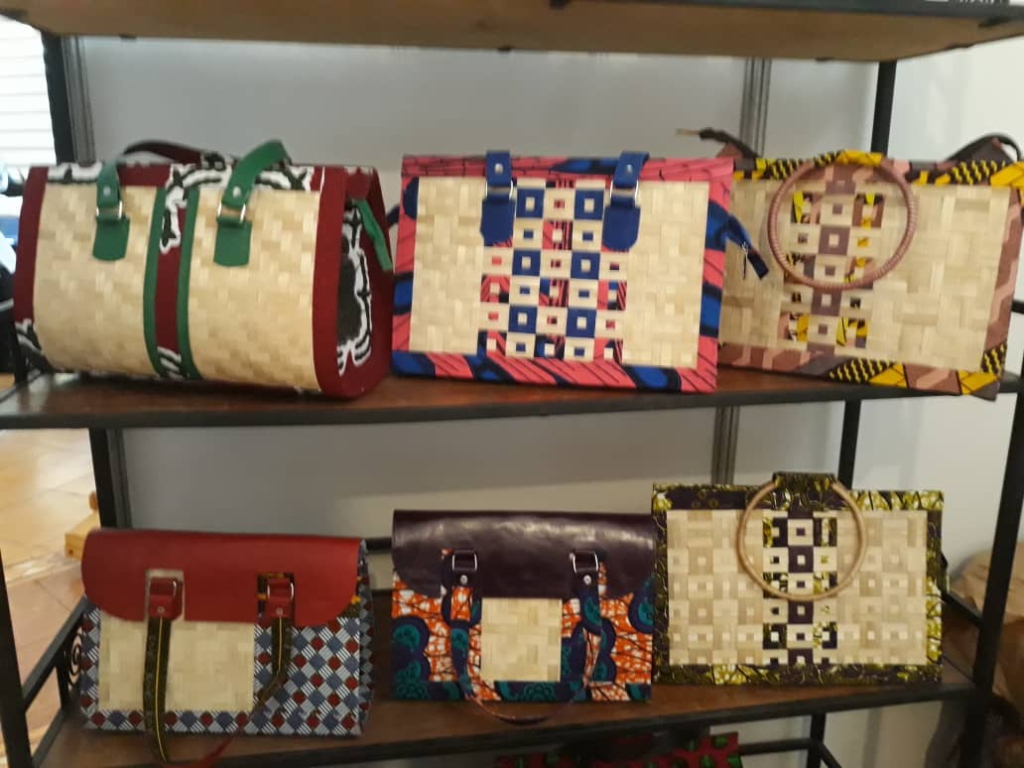
“People have been using bamboo and rattan but what is challenging is that many of them are not innovative enough to introduce new designs. Most of the designs are a bit monotonous and that gives that buyer an upper hand over the producers. So if we are to come up with innovations, it offers value and varieties to choose from, while giving the producer a better bargaining power,” said Michael.
Bamboo as substitute for plastic
A sharp rise in single-use plastics, which are produced almost entirely from fossil fuels, has seriously damaged the wellbeing of the planet. After being discarded, they form colossal mounds of waste that enter the terrestrial and marine ecosystems. As they break down, they degrade into microplastics that contaminate food sources, with potential deleterious effects on human health.
Bamboo and rattan are two forest resources with numerous ecological benefits as a nature-based solution that occupies an important position for confronting numerous global challenges such as climate change, solving plastic pollution, eliminating absolute poverty and achieving green development.
Bamboo, which grows as a multifunctional fast-growing and resilient plant in tropical and subtropical climates, can be sourced for a wide variety of sustainable and durable products.
INBAR has long touted bamboo as a green method for lowering dependency on plastic and ameliorating the effects of climate change.
At COP27, INBAR and the Chinese delegation to the climate change talks would be promoting bamboo as an alternative to plastic.
“We are trying to depart from the use of plastic cutlery in airplanes and use of plastic flower pots. Bamboo can help replace single-use plastic for wood cutlery, cups, straws, paper and packaging, while being recyclable at the end of their lifespan,” said Michael.
The Bamboo as a Substitute for Plastic Initiative acts as a roadmap for radically scaling up the use of bamboo as a renewable resource. It is driven by the twin goals of using bamboo to reduce plastic pollution while simultaneously addressing climate change.
About 50 million hectares of bamboo are distributed across Asia, Africa and the Americas.
INBAR@25
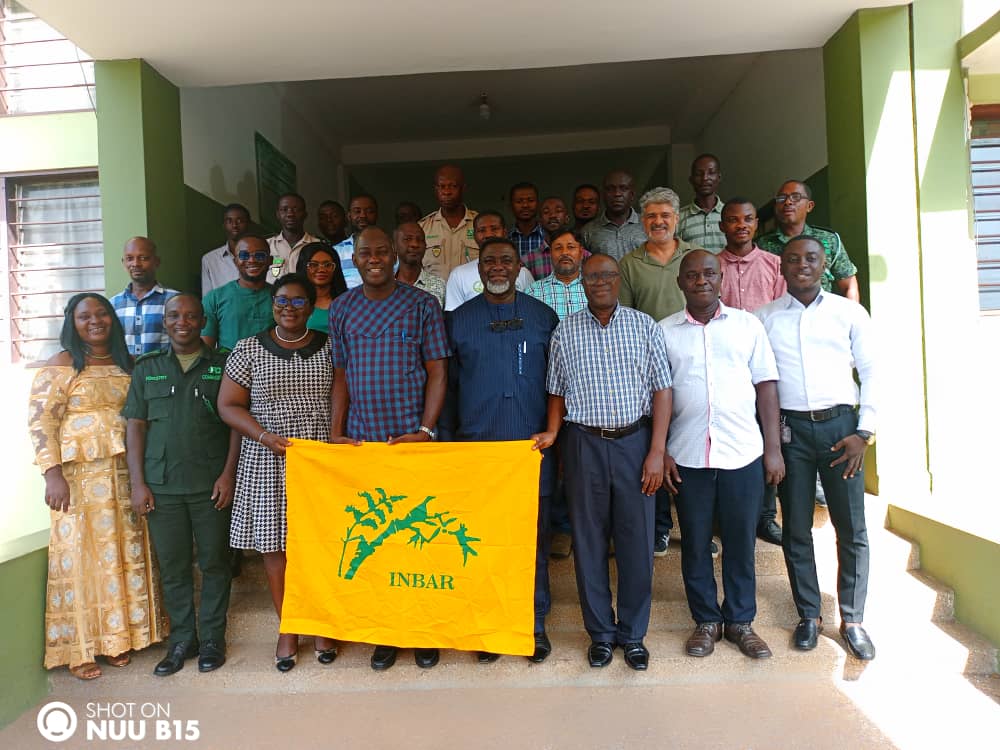
INBAR is celebrating its silver jubilee under the theme: ‘Bamboo and Rattan – Nature-Based Solutions for Sustainable Development’.
In collaboration with the Forestry Commission Training Center (FCTC), INBAR Ghana is looking at putting up more physical structures as model demonstration activities for bamboo promotion.
This is to ensure that “if you're talking about bamboo housing, for instance, you can pinpoint demonstrated bamboo housing schemes in parts of the country that people can see and then be able to transform the techniques for people to build bamboo housing on their own,” said Michael.
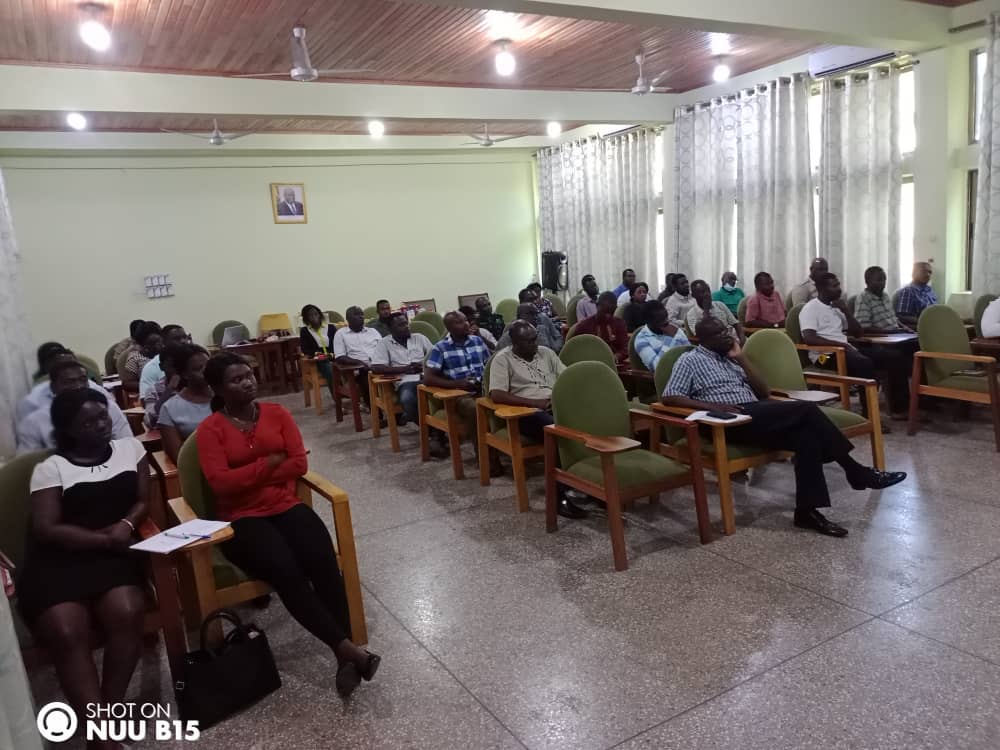
The INBAR West Africa Regional Office was set up in Ghana in 2002 and has worked with the Forestry Commission and the Ministry of Lands and Natural Resources.
“The government of Ghana appreciates the unique roles bamboo and rattan can play in our effort to reclaim degraded lands, conserve watersheds and meet the country’s huge demand for wood fuel,” said Andy Osei Okrah, Director of the FCTC.
“We have come to appreciate the potential of bamboo and rattan for improving the livelihoods of millions of people whose lives have depended on these two resources, combating climate change and for addressing the challenges of deforestation and land degradation,” he added.
Mr. Michael Kwaku acknowledged that Ghana does not lack policies in the promotion of bamboo and rattan.
“What is left is to ensure the implementation of these policies, and as we implement them, we can review and improve. I am hoping the Ministry of Lands and Natural Resources will lead in terms of promoting the environment and livelihood components of bamboo,” he concluded.
Latest Stories
-
‘Not our jurisdiction’ — Mahama breaks silence on Ofori-Atta case
7 minutes -
Mahama pushes for return of civic education to tackle indiscipline, sanitation challenges
8 minutes -
Ghana’s Black Stars fall again as Germany snatch late victory
11 minutes -
Mahama praises Volta Region’s cleanliness, urges national replicati
39 minutes -
Ghana Medical Trust Fund set for launch as Board finalises key systems
59 minutes -
Ghana restores investor confidence through economic reform – Deputy Finance Minister
59 minutes -
We never promised to end sole sourcing, only its abuse – Sammy Gyamfi
1 hour -
Middle East tensions: Ghana’s current energy resilience thanks to increased domestic gas production – Mahama
1 hour -
KsTU unveils ‘Nimde3 Hyiren’ Regenerative Electric Vehicle
1 hour -
(VIDEO) Kumasi Technical University shatters EV barriers with self-charging car
1 hour -
Mahama praises JoyNews’ ‘Tax for Galamsey’ exposé, orders end to illegal mining levies
1 hour -
Mahama vows stronger environmental governance, seeks CSO collaboration in fighting galamsey
2 hours -
Anti-LGBTQ bill not Ghana’s most pressing concern, but must be addressed through democratic processes – Mahama
2 hours -
Gender Ministry mourns victims of Accra New Town building collapse
2 hours -
Gov’t will introduce amendment to Procurement Act to limit sole sourcing – Mahama
2 hours