

Audio By Carbonatix
A ban on some single-use plastic products will come into force across England on Sunday.
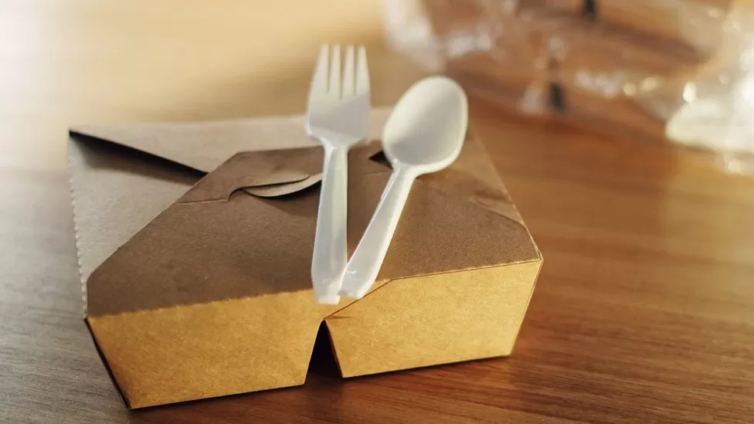
Shops and hospitality businesses will no longer be able to supply plastic cutlery, balloon sticks and polystyrene cups under the new rules.
The government says the move will "tackle the scourge of litter and protect the environment from plastic pollution".
But councils have warned that some firms are not ready for the change.
Around 1.1 billion single-use plates and more than four billion pieces of plastic cutlery are used in England every year, government figures suggest.
The vast majority of these products cannot be recycled and can take hundreds of years to biodegrade in landfill sites.
From Sunday, some new restrictions will also be applied to the supply of single-use plastic plates, bowls, and trays - but exemptions are in place for takeaways and other businesses which sell pre-packaged food.
The new rules, which were first announced in January, are part of a wider goal to eliminate avoidable plastic waste by 2042.
Environment minister Rebecca Pow said the government has already implemented "world-leading" bans on straws, stirrers and cotton buds, as well as rolling out charges for carrier bags and an industry tax on large plastic packaging imports.
She said the latest ban will "protect the environment and help to cut litter - stopping plastic pollution dirtying our streets and threatening our wildlife".
Rules vary in different parts of the UK, but Wales and Scotland have pursued similar policies to those coming into force in England.
The ban in England will be enforced by local trading standards officials but a body representing councils warned some businesses and customers are unaware of the change.
Darren Rodwell, environment spokesman for the LGA, said: "This is a valuable policy to reduce waste but there is still more to do."
Some environmental campaigners have criticised the government for not introducing wider restrictions on plastic products.
Anna Diski, plastics campaigner for Greenpeace UK, told the BBC: "Legislating token bans on a few single-use plastic items every few years... [is] completely inadequate to the scale of the problem.
"Instead of this piecemeal approach, the government needs to address the problem at source and roll out a serious strategy to cut how much plastic is being produced."
Latest Stories
-
AGI commends government’s move to resolve the power crisis in Volta and Oti Regions
7 minutes -
Trump agrees to two-week ceasefire, Iran says safe passage through Hormuz possible
1 hour -
Dozens killed as Angola flood death toll rises
1 hour -
Russia confirms deaths of 16 Cameroonians fighting in Ukraine war, Yaounde says
1 hour -
Plan to scrap presidential elections puts Zimbabweans at loggerheads
2 hours -
Guinea-Bissau transporters strike over higher fuel prices
2 hours -
Iran ceasefire deal a partial win for Trump – but at a high cost
2 hours -
Oil slides below $100 after Trump announces two-week ceasefire
2 hours -
Madagascar declares state of emergency over energy situation due to Iran war
2 hours -
Ex-Meta worker investigated for downloading 30,000 private Facebook photos
2 hours -
World Bank says Nigerian economy to grow in 2026 but Iran war lifts inflation
3 hours -
Ringleader of suspected human trafficking network arrested in Ethiopia
3 hours -
Alexander-Arnold fails to ease Tuchel concerns as Kane stars
3 hours -
Amad backs Carrick for Manchester United job
3 hours -
English Premier League secures fifth Champions League spot
3 hours