

Audio By Carbonatix
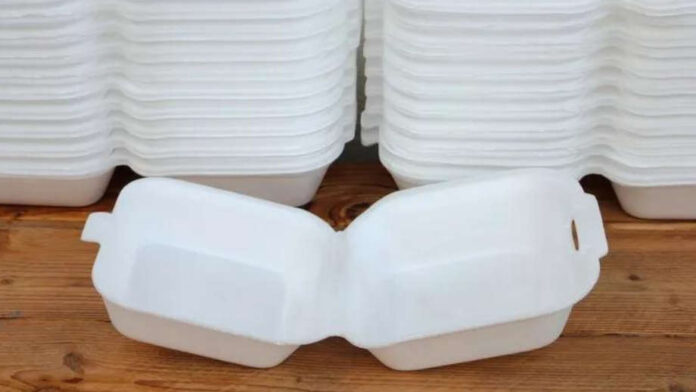
The Environmental Protection Authority (EPA) has defended the government’s decision to ban Styrofoam takeaway packs, insisting the move is aimed at protecting public health and tackling the country’s growing plastic pollution crisis.
The nationwide ban on the production, importation, distribution, sale, and use of polystyrene foam products commonly known as Styrofoam takeaway packs is scheduled to take effect on January 1, 2027.
According to the EPA, the decision follows years of scientific evidence showing that Styrofoam containers pose significant health risks, particularly when used to package hot, oily, or acidic foods.
The authority also cited the increasing environmental burden caused by discarded Styrofoam products, which frequently clog drainage systems, pollute beaches and waterways, and disrupt fishing activities.
Speaking in an interview, the Director of Human Settlements at the EPA, Hope Smith Lomotey, said the ban is not intended to eliminate takeaway food packaging but to encourage the use of safer and environmentally friendly alternatives.
He explained that Styrofoam containers release harmful chemicals when exposed to heat or when they come into contact with oily or acidic foods, making them unsafe for everyday food packaging.
“Anytime heat gets in contact with this styrofoam, it releases chemicals that are harmful to human beings. Immediately oily foods come into contact with it, it releases these toxins, and acidic foods also cause it to release a lot of toxins that are not good for our health,” Mr Lomotey stated.
He noted that popular meals such as kenkey, instant noodles, shito, and even acidic beverages and citrus fruits are among the food items that can trigger the release of these harmful substances.
Mr Lomotey stressed that the government’s decision is based on long-standing scientific evidence rather than precaution, arguing that the health and environmental consequences of continued Styrofoam use can no longer be ignored.
Beyond the health concerns, he said the widespread disposal of Styrofoam has become a major environmental challenge, with large quantities ending up in drains, rivers, beaches, and the sea.
“For human health, it’s not safe. Public health is not safe. Environmentally, we are seeing it in our drains and in the sea. Our fishermen go to sea and harvest some of these plastics and styrofoam. I think we have all reached a point where we have agreed that enough of the problem is enough,” he added.
The EPA maintains that the transition to alternative packaging materials will help reduce plastic pollution while safeguarding public health without disrupting the takeaway food industry.
Latest Stories
-
Imperial General Assurance, World Vision Ghana empower girls with menstrual hygiene support
54 seconds -
Bolt rewards outstanding drivers with household appliances, fuel vouchers
21 minutes -
GEPA opens Ghana Trade House in Philadelphia, deepening commercial footprint in USA
30 minutes -
Bill to end witchcraft accusations under consideration—Local Govt Minister
48 minutes -
Calgary University professor leads experts at a free virtual data science and AI conference
54 minutes -
Sentuo Oil Refinery expansion will reduce fuel imports when completed – John Jinapor
55 minutes -
Sahara Group advances energy journalism in Africa with US$5,000 Fellowship
59 minutes -
Christmas market attacker jailed for life for murdering six in Germany
1 hour -
High Commissioner urges Ghana to look beyond the west for economic solutions
1 hour -
Ban on ‘takeaway packs’ driven by serious health risks, EPA explains
1 hour -
Parliament must be guarantor of press freedom – Minority Leader advocates
1 hour -
Media urged to inform and hold power accountable
1 hour -
Photos: Mahama cuts sod for Phase II of Sentuo Oil refinery expansion
1 hour -
THE LAW 101: Larry’s contempt judgment
2 hours -
Two killed, four injured in head-on collision at Abease on Takoradi highway
2 hours