

Audio By Carbonatix
The heads of banking institutions in the Bono Region have called on the Government to be proactive enough and flush out money exchangers in the ‘black market’ for the Ghana cedi to regain its strength.
They observed that the illegal money exchange business was flourishing in Sunyani, the regional capital, and thereby putting undue pressure on the cedi, saying, because their exchange rates were high, they had high patronage from the public.
“I think the Government must do more to restrict the activities of the black marketers because their illegal businesses have a huge devastating toll on the banking business,” Mrs. Gloria Mensah Atakora, the Bono Regional Manager, GCB Bank PLC stated.
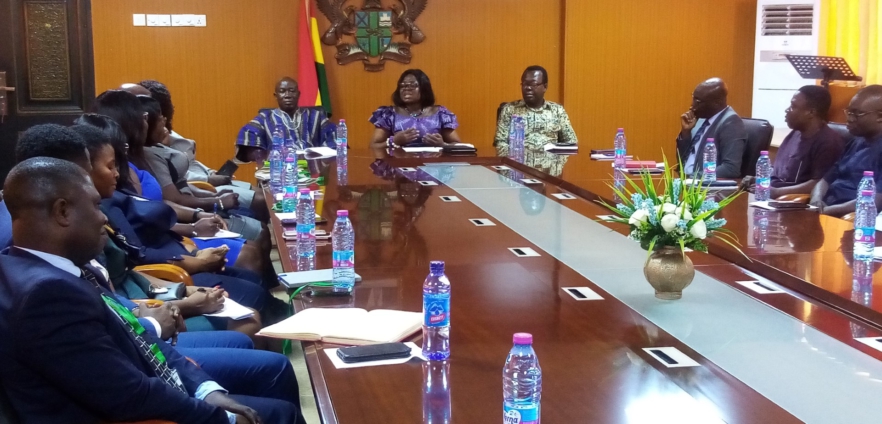
The Bank Managers made the call when they interacted with Madam Justina Owusu-Banahene, the Bono Regional Minister in a meeting in Sunyani.
Mr Charles Eshun, the Bono Regional Manager of the Agriculture Development Bank (ADB), also advised the public to desist from exchanging foreign currencies in the black market to support government efforts to strengthen the Ghana cedi.
The Bank Managers also called on the National Identification Authority (NIA) to be expeditious in the issuance of the Ghana cards to the public, particularly Ghanaian residents abroad.
“Because they find it difficult to access the Ghana card, many Ghanaians who returned home from abroad are unable to open bank accounts and most of them also patronise the activities of the black marketers,” Mr Foster Frimpong, the Bono Regional Manager of the Zenith Bank stated.
They also appealed to the Regional Security Council to intervene and help increase Police presence at the Sunyani central business district (CBD) where most of the major banks were situated to enhance security in the enclave.
On her part, Madam Owusu-Banahene commended the managers for their frank discussions and assured that the Bono Regional Coordinating Council would also work hard in tackling some of the challenges impeding their operations in the region.
The Regional Minister called on the banks to open cash outlets in some of the major rural communities in the region to serve the rural population.
Madam Owusu-Banahene indicated that about 60 per cent of the regional population were farmers spread in the local communities, hence the need for the banks to extend their services to them too.
Meanwhile, activities of the illegal money exchangers are very common and rife, as several ‘black marketers,’ mostly nationals from Niger and Burkina Faso are dotted around corners of the CBD.
They transact their illegal businesses in the open as they approached visitors in the enclave for foreign currency exchange, with emphasis on the Euro and US dollar.
Latest Stories
-
Trade Minister applauds GUTA as a pillar of economic growth; Prez Mahama honoured
51 minutes -
President’s brother’s takeover of Damang Mines is ‘untidy’ – Alhassan Tampuli
57 minutes -
It’s not true that gov’t decided not to renew the lease for Gold Fields – Bobby Banson
1 hour -
Ghana to boost tomato production with 60-hectare irrigated farms and processing initiatives
1 hour -
E&P’s takeover process of Damang Mines was very clean – Inusah Fuseini
1 hour -
Damang takeover: There is not going to be any job loss; it is a lease change – Bobby Banson
2 hours -
Gold Fields didn’t stop mining at Damang mines; such claims are untrue – Bobby Banson
2 hours -
Engineers and Planners currently operate only in Ghana – Bright Simons
2 hours -
Lands Minister has no legal basis to restrict lease to Ghanaian firms – Bright Simons
2 hours -
Gov’t’s refusal to renew Gold Fields’ lease was simply untenable – Bright Simons
2 hours -
SOS Children’s Villages Ghana deepens partnership with Gender Ministry
3 hours -
Gender Ministry celebrates Christina Koch, reaffirms commitment to empowering girls
3 hours -
Live stream: Newsfile digs into E&P’s takeover of Damang Mines, OSP powers and Anti-LGBTQ Bill
3 hours -
Moody’s maintains Ghana’s rating at Caa1, revises outlook to positive
4 hours -
Zambia elevates tourism education to national priority as President Hichilema backs continental summit
4 hours