

Audio By Carbonatix
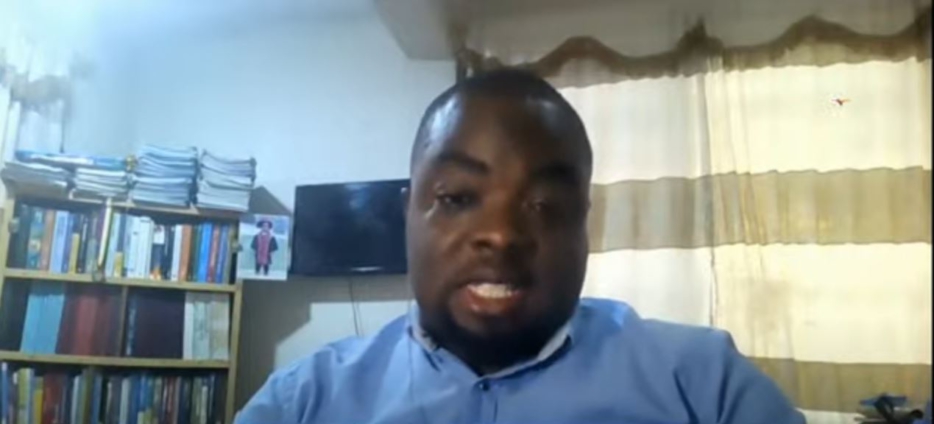
As students in conflict-ridden Bawku and Nalerigu prepare for their West African Senior School Certificate Examination (WASSCE) amidst ongoing chieftaincy clashes, Dr. Peter Anti, Executive Director of the Institute for Education Studies (IFEST), has called for urgent intervention.
He stated that these students desperately need "mental stability" to perform, urging the immediate implementation of robust "education emergencies" protocols.
Speaking on the Joy News AM Show today, July 29, Dr. Anti highlighted the immense psychological toll of the recent violence, which has seen students killed at both Nalerigu Senior High School (SHS) and Bawku SHS.
The Nalerigu incident, occurring just last Saturday, July 26, saw two students tragically shot dead on campus by unidentified assailants, throwing the entire community into fear.
This was believed to be retaliatory attacks after a Bawku SHS student was allegedly dragged out of his dormitory and killed.
The area has been a hotspot for violence, with previous reports indicating its devastating impact on educational access and outcomes.
"I know and I understand that in recent times there's been a lot of talk about education in emergencies," Dr. Anti stated, acknowledging global discourse on the issue. "In fact, there have been studies conducted, funded by donor agencies in this country, to try to look at how best to be able to provide education for students who are in an emergency situation."
He noted that this has been a global agenda since the COVID-19 pandemic highlighted the need for educational continuity during crises.
However, Dr. Anti critically pointed out Ghana's significant unpreparedness in this regard.
"The point is that as of now, Ghana, we do not have those protocols. We have not been able to finalise and kickstart anything on educational emergencies, and that does not refer to even the final year students. It includes the second and the first years, who are also supposed to undergo education."
He emphasised the core principle: "Basically, we say that education should not stop because of an emergency situation. So if you go to other places where they have protocols, as soon as there's an emergency situation, those protocols kick in. How do you handle the students when they are in the house, when they are supposed to be somewhere, and when they are displaced? All those things are... it is just like you are switching from your national... national grid to your private generator. It just kicks in, and then everything starts rolling. We don't have that in Ghana, and that is a fact."
While conceding that "We cannot be prepared for an emergency enough. That is also true," Dr. Anti insisted that "those protocols should be finalised and we should try to implement them because this is not the only situation." H
He revealed alarming statistics: "In fact, I've been doing reviews of violence and clashes and instability in our secondary schools, and since January, we've recorded about six or seven issues, including gun violence and other things in the various senior high schools, which is a little bit problematic for me."
The plight of the WASSCE candidates in Bawku and Nalerigu is particularly acute, given the proximity of the exams. Dr. Anti painted a vivid picture of the stressful conditions these students face.
"Imagine I wake up at 5:00 a.m. I'm supposed to sit in a bus, guided by police and army, driven from my community to another community. I get there around 6:30, 7:00. I have to now get prepared, I mean, research, and then sit in the exam room and then I write. After that, I have to come and sit in the bus and then be driven back to my community. Come on. These are SHS3 students."
He argued passionately that the environment around an examination can significantly impact performance.
"The conditions around examination can either enable students to pass or fail, and that is why we say that you cannot ascribe a particular factor to a student's performance because so many things take place... so many things determine a student's performance in an examination."
Dr. Anti proposed a more humane and practical solution.
"If authorities decide not to allow students to write exams in their immediate conflict-affected communities, they should be moved to safer schools as soon as possible to ensure their stability," he suggested.
"I think that we need to take them to the schools;if they agree that they will not allow them to write in their communities, they need to move them to the schools as soon as possible and let them integrate."
He emphasised the need for normalcy.
"Stability is important so that they can go to the prep like the other students are doing. They can have access to teachers like other students are doing, and then when it is time to write the exams, they wake up in the dormitory, bathe, dress and walk to the exam centre. I think this is not too much to ask for us to do for this case."
Latest Stories
-
Finance Ministry set to give clearance for recruitment of 450 new NSA staff
12 minutes -
Sand winners urged to comply with environmental regulations
32 minutes -
Civilians as Fuel for Sudan’s War: The bloodshed of children and women continues in Darfur
54 minutes -
Bees kill a three-year-old boy, injure 10 in Agona Swedru
1 hour -
Brazil President endorses Ghana’s Reparations push at UN
1 hour -
GPL 2025/26: Eleven Wonders earn 2-2 draw against Samartex
2 hours -
Legal analysis of CAF Appeal Board decision on Morocco vs. Senegal AFCON final chaos
3 hours -
44 Ghanaians rescued from fraudulent recruitment network in Nigeria – Foreign Affairs Ministry
5 hours -
Odumasi Health Centre appeals for standby power plant to safeguard healthcare delivery
5 hours -
2025/26 Women’s FA Cup: Hasaacas Ladies beat Jonina to set up Army Ladies final
5 hours -
Journey to Destiny Ministries breaks ground for 90-bed dormitory for orphans at Journey Center – Ghana
5 hours -
Health Minister reaffirms commitment to ending ‘No Bed Syndrome’ after Korle Bu visit
6 hours -
Afram Plains youth rally behind Mahama’s Farmers’ Service Centre initiative
6 hours -
Investments underway to boost tomato production despite export concerns – Gov’t
6 hours -
2025/26 Women’s FA Cup: Army Ladies thump Samartex Ladies to reach final
6 hours