

Audio By Carbonatix
On March 21. 2020, due to the spread of Covid-19, the President announced the closure of the country's borders, effective midnight on Sunday, March 22.
As each country in Africa, and countries and territories in other continents, announced border closures on different dates, questions arose as to why countries were responding to the pandemic in disparate ways.
So far, there is no indication that world leaders consulted among themselves for a more unified approach, before shutting down their borders.
The World Health Organisation (WHO) is to be commended for its work, and so also Ghana.
Through this pandemic, the United Nations (UN) has failed to emulate the kind of leadership shown in past health crises.
Typically, a declaration by the WHO of an outbreak triggers a response from the UN that strengthens, reinforces and complements its work more forcefully. This happened during the HIV and Ebola outbreaks.
Discussions
In lieu of an international response, there have been national, regional or bloc discussions about, and responses to COVID-19.
For instance, in the President’s initial message to the country, he hinted on the importance of a coordinated response with ECOWAS leaders.
And, in Europe, the European Union (EU) heads and health ministers have held several meetings.
At the long-anticipated April 9 UN Security Council meeting, the Secretary-General, António Guterres, reiterated his appeal for a global cease-fire.
In response, Council members chose a more muted approach: a statement expressing their support of Guterres’ efforts and the importance of a unified front in the face of the pandemic.
During the Ebola outbreak, the Council declared that the outbreak posed a threat to peace and security, which carried the full force of international law.
Stories emerging of WHO staff killed in the conduct of their duties underscore the need for a stronger response from the UN Security Council.
The UN stance might be due to the fragile and complex relationship between two of its veto-wielding, permanent members, the United States (US) and China.
That is further complicated by the unsettling fact that the majority of the current leadership of what are traditionally considered the ‘powerful’ countries lack a global mindset.
During the last few elections in Europe and North America, we witnessed the victories of presidents with right-wing populist political ideologies.
These leaders seem to prefer focusing on national priorities at the expense of global or international interventions.
They lack an appreciation of the fact that the progress of their nations owes much to the international system created after the devastating Second World War.
It is this same system that has preserved the world from confrontation and annihilation by the nuclear-armed powers.
Tendencies
The nationalistic tendencies of these leaders prevented the early adoption of proactive measures to mitigate the far-reaching impact of this virus within their borders.
In the weeks following the pandemic, Estonia recommended that the Council issues a statement that COVID-19 could pose a threat to international peace and security.
That proposal was not embraced by other members. In the United Kingdom (UK), there was a failure or reluctance to act swiftly. And in the US, it is troubling that some initially considered the virus a hoax.
It is fair to state that all this is occurring at a time when the UN itself is grappling with managing its operations virtually and performing diplomacy digitally, a field that thrives on interpersonal relationships.
The irony of the situation is that at a time when we are all ‘connected’ through this pandemic, we are more disconnected than ever.
No one country is in this alone. We are no longer islands unto ourselves. Our interconnectivity implies that any one country’s ineffective approach to eradicating this pandemic within its borders puts us all at risk.
Coordinating a global response and leveraging the learning should be our priority.
We should all be bound by a common goal and desire to find a global solution in our fight out of this global pandemic.
It no longer takes only a village. At least not in this fight. It will take us all, working together and in tandem, to defeat this pandemic.
The academic world has long had a well-known phrase among faculty: publish or perish.
With COVID-19, the new phrase could very easily be: work together or perish. Literally.
_________
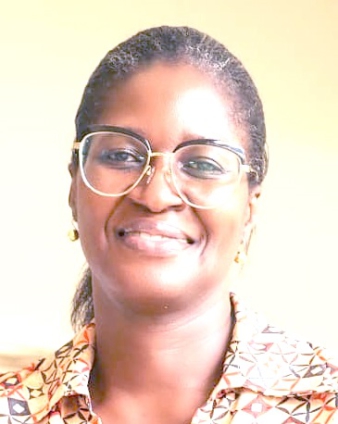
The writer; Dr G. Koryoe Anim-Wright is the Dean, Centre for International Education and Collaboration at the University of Professional Studies, Accra.
Latest Stories
-
First Atlantic Bank targets regional growth and digital expansion in 2026 outlook
30 seconds -
Bond market: Turnover surges 559.42% to GH¢2.49bn
4 minutes -
Dagomba line residents begin rebuilding after Easter Monday inferno
5 minutes -
ECG substation upgrade exercise: parts of Accra to experience power outages
8 minutes -
IMANI petitions Mahama over alleged procurement breaches in state insurance placements
14 minutes -
First Atlantic Bank posts strong 2025 results as profit surges 30.5%
17 minutes -
Maguire signs contract extension with Man United
19 minutes -
The WTO is debating trade: The world runs on investment
46 minutes -
Minority questions gov’t purchase of fuel-powered buses, pushes for electric alternative
48 minutes -
GFA Executive Council to decide on new Black Stars coach ahead of 2026 World Cup
48 minutes -
One injured as fire destroys 14-bedroom house at Kwame Danso
56 minutes -
GACL struggling despite recording profit, levy needed for expansion – Agalga
59 minutes -
Kwahu Business Forum: Ghana Sports Fund calls for stronger corporate backing for sports dev’t
1 hour -
Suhum Children’s Health Centre: A story of collaboration, recognition, and global support
1 hour -
Polling is no longer measuring opinion, it’s manufacturing it – Opong-Fosu
2 hours