

Audio By Carbonatix
Benin has prevented neighbouring Niger from using its port to export its first crude oil, as a border dispute rages between the two nations.
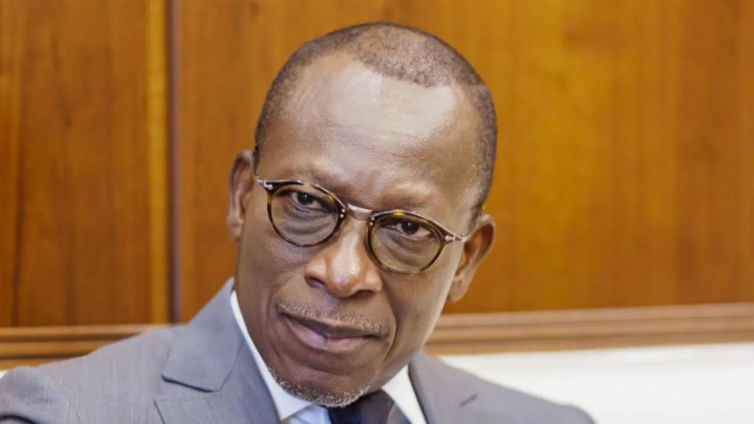
President Patrice Talon's government is demanding that landlocked Niger reopens its side of the border if it wants to use Benin's ports.
Mr Talon accused Niger of treating its neighbour like an “enemy”.
Relations between the two nations soured after the military staged a coup in Niger last year.
Benin and other West African nations imposed sanctions on Niger, including border closures, in a bid to force the military to hand back power to the elected government.
The sanctions by the Economic Community of West African States (Ecowas) were eased in February, and were expected to normalise trade relations with Niger.
But Niger refused to open its land border for goods coming from Benin.
Mr Talon has accused Niger of not co-operating to restore ties.
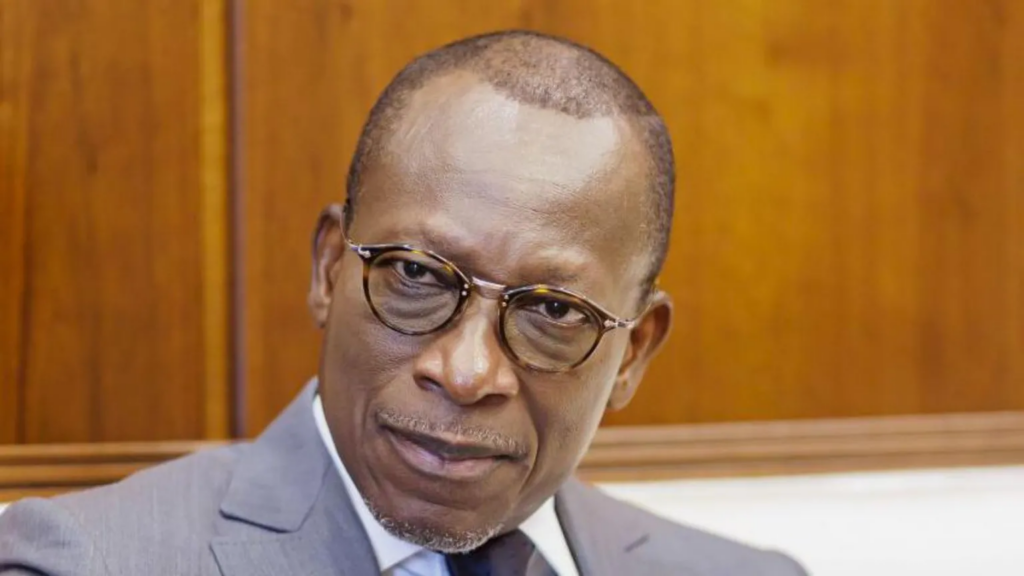
"If you want to load your oil in our waters, you must consider that Benin is not an enemy country and that [its] territory cannot be the subject of illicit trafficking or informal exchange," he said on Wednesday.
"If tomorrow the Nigerien authorities decide to collaborate with Benin in a formal manner, the boats will be loaded," he added.
Niger's junta has not yet responded to his comments.
Benin’s move puts at risk Niger’s plan to begin exporting oil - the landlocked country has been producing about 20,000 barrels per day primarily for domestic consumption due to the lack of an export route.
Following the completion of a 2,000km-long (1,240 miles) Chinese-built pipeline through Benin, production was set to rise significantly to 110,000 barrels.
The dispute is seen as undermining the project and affecting relations between two countries that were close trade partners before the coup in Niger.
Herve Akinocho, the director of the Centre for Research and Opinion Polls in Benin, said the country would lose about $7m (£5.6m) daily from oil transit fees that Niger would have paid.
He told the BBC Newsday radio programme that Benin was suffering bigger losses from Niger's decision to keep the border shut.
He said that most of Niger’s imports and exports passed through Benin before the coup, but this was now happening through Togo.
He said that Niger's refusal to open the border was "really hitting the economy of Benin [including] the transport sector”.
Latest Stories
-
From Golgotha to Kwahu: The Easter Migration of the Faithful and the Faithless
55 minutes -
How the Ghanaian onion traders’ standoff with Nigeria unfolded and threatened local supply
57 minutes -
No compensation for demolished structures on 24-Hour Economy market lands — Gov’t to structure owners
1 hour -
Financial Institutions must back local enterprises to spur growth – Deputy Minority Whip
1 hour -
Photos: Gomoa Easter Carnival 2026 ends in a burst of colour and celebration
2 hours -
Gomoa Easter carnival ends in colour as fashion, music and celebrity appearances light up final night
2 hours -
Families pick Luv Fm Family Party to celebrate Easter Monday with music and more
2 hours -
IMANI flags procurement issues in Ghana Gas insurance switch
2 hours -
Kaneshie footbridge rehabilitation to take up to 9 months — AMA
3 hours -
AMA confirms trading will be banned on Kaneshie footbridge after rehabilitation
3 hours -
IMANI flags procurement concerns in state insurance placements
3 hours -
Mahama’s push for visa-free Africa reflects Nkrumah’s Pan-African vision – Rashid Tanko-Computer
3 hours -
Redefining sweetness: Why our celebrations must heal, not harm
3 hours -
IMANI urges Mahama to reaffirm his 2014 directive on competitive state insurance placements
3 hours -
Maiden Katon Praise comes off at Accra Sports Stadium on April 17
3 hours