

Audio By Carbonatix
Benin has prevented neighbouring Niger from using its port to export its first crude oil, as a border dispute rages between the two nations.
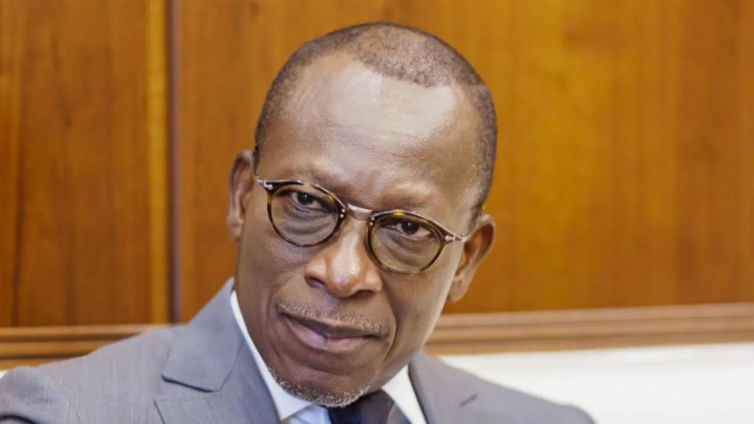
President Patrice Talon's government is demanding that landlocked Niger reopens its side of the border if it wants to use Benin's ports.
Mr Talon accused Niger of treating its neighbour like an “enemy”.
Relations between the two nations soured after the military staged a coup in Niger last year.
Benin and other West African nations imposed sanctions on Niger, including border closures, in a bid to force the military to hand back power to the elected government.
The sanctions by the Economic Community of West African States (Ecowas) were eased in February, and were expected to normalise trade relations with Niger.
But Niger refused to open its land border for goods coming from Benin.
Mr Talon has accused Niger of not co-operating to restore ties.
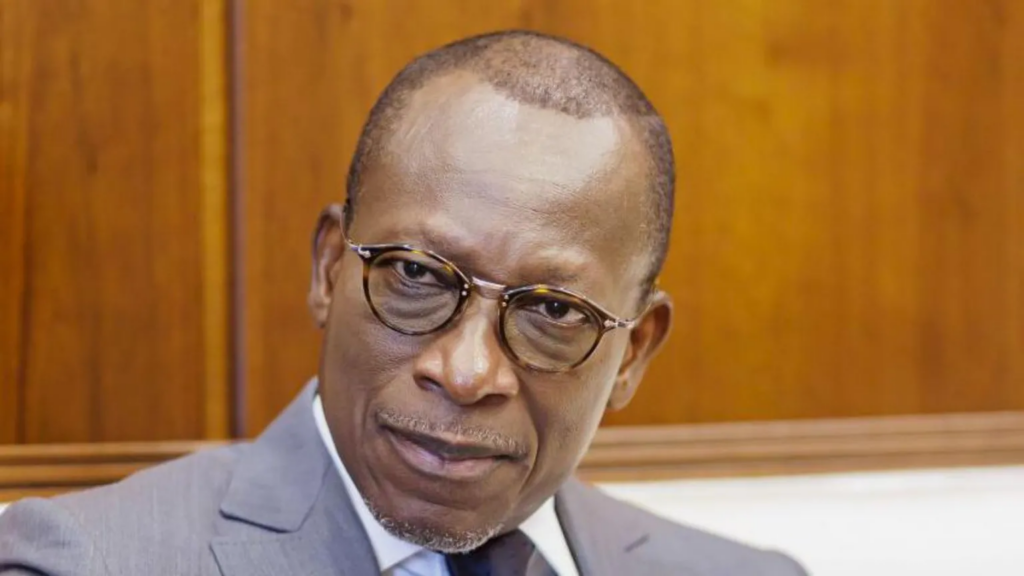
"If you want to load your oil in our waters, you must consider that Benin is not an enemy country and that [its] territory cannot be the subject of illicit trafficking or informal exchange," he said on Wednesday.
"If tomorrow the Nigerien authorities decide to collaborate with Benin in a formal manner, the boats will be loaded," he added.
Niger's junta has not yet responded to his comments.
Benin’s move puts at risk Niger’s plan to begin exporting oil - the landlocked country has been producing about 20,000 barrels per day primarily for domestic consumption due to the lack of an export route.
Following the completion of a 2,000km-long (1,240 miles) Chinese-built pipeline through Benin, production was set to rise significantly to 110,000 barrels.
The dispute is seen as undermining the project and affecting relations between two countries that were close trade partners before the coup in Niger.
Herve Akinocho, the director of the Centre for Research and Opinion Polls in Benin, said the country would lose about $7m (£5.6m) daily from oil transit fees that Niger would have paid.
He told the BBC Newsday radio programme that Benin was suffering bigger losses from Niger's decision to keep the border shut.
He said that most of Niger’s imports and exports passed through Benin before the coup, but this was now happening through Togo.
He said that Niger's refusal to open the border was "really hitting the economy of Benin [including] the transport sector”.
Latest Stories
-
GPL 2026/27: Medeama go three clear as Hearts of Oak recover and Bechem stage stunning comeback
2 minutes -
Ntiamoah Foundation launches “BEYOND 20” anniversary campaign
22 minutes -
Credit Risk Management Directive: BoG to begin implementation for banks, others from July 1, 2027
39 minutes -
Ghana Brands Awards 2026: Leading brands, business trailblazers to shine on November 20
55 minutes -
T-bills auction: Demand improves as government exceeds target by about 76%; interest rates soften
1 hour -
Ziope undertakes initiative to build a technologically inclined community, commissions self-help ICT lab
1 hour -
ECG announces power outage in parts of Tema, Central Region due to network fault, maintenance
2 hours -
When the Gospel Becomes a Weapon: The church, blackmail and the abuse of faith
2 hours -
JoyNews’ Jacqueline Ansomah Yeboah selected for UK Media Excellence for Emerging Technology Fellowship
3 hours -
Mental Health Alliance urges government to operationalise Mental Health Fund
3 hours -
Ghana–Holy See agreement heads to Parliament after Cabinet approval
3 hours -
Luv FM Corporate Games 2026: Kumasi Central Prisons, Amanfiman Bank win big amid fun
3 hours -
WAFU B U17: Ghana top Group A after win over Togo
4 hours -
Ho Central Mosque reopens amid unresolved leadership dispute that led to closure
5 hours -
Minority caucus questions GH¢16.4m in Ablakwa’s SA evacuation spending, demands independent audit
5 hours