

Audio By Carbonatix
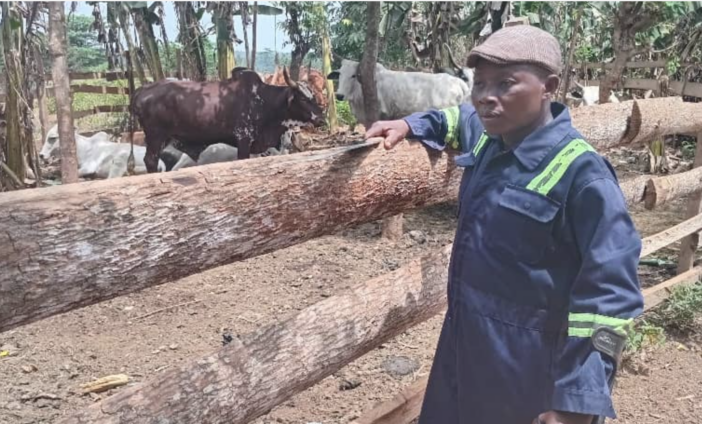
Yahya Iddrisu, an award-winning farmer from Susuanho in Tano North, says cashew is beginning to reshape rural life and farmers’ incomes, as climate shocks and a wider downturn continue to weaken Ghana’s cocoa industry.
He said people in his community had not expected cashew to take root so strongly, but the crop was now giving many households a reliable source of income at a time when cocoa yields were falling, and weather patterns had become unpredictable.
He shared his experience with the Ghana News Agency, reflecting on years of struggling with cocoa farms and the silent rise of a new crop of hope: cashews.
He noted that Ghana’s cocoa production had fallen sharply in recent seasons, dropping to between 650,000 and 700,000 tonnes in 2024, far below peaks of more than one million tonnes in previous years.
Ivory Coast remains the world’s top producer at about 1.8 million tonnes, widening its lead as Ghana struggled with disease, ageing trees and climate stress, he noted.
Mr Iddrisu, who was the 2024 Ahafo Regional Best Physically Challenged Farmer, said he turned to cashew after a major setback.
“I started a 16-acre cocoa farm in 2009 but by 2013, I was done. Then the 2015 drought killed over 90 per cent of the cocoa trees,” he said.
He said advice from colleagues pushed him toward cashew, saying, “I was advised to shift to cashew, which I did in 2017 and since then, the yield has been in commercial quantities.”
He noted that presently global cocoa prices had slumped with international prices falling by nearly 50 per cent between late 2025 and early 2026, deepening the pressure on Ghana’s domestic pricing system.
In response, the government had decided to cut its farm gate price by 28.6 per cent to GHS41,392 per tonne, to align with world prices and ease COCOBOD’s cash strain.
The government had explained that the move, aimed to safeguard the sector, stabilise financing, and alleviate the financial strain on COCOBOD.
Despite the challenges, Mr Iddrisu described cashew as the transition zone’s most dependable and safest crop, saying it had become a lifeline because “it is suitable for all the transitional zones where cocoa is failing.”
Meanwhile, illegal mining, or galamsey, had added further stress to the country’s cocoa belt, destroying farmland, polluting water bodies, and forcing some families to abandon their farms.
However at Susuanho, cashew had triggered a return to rural farming Mr Iddrisu said, adding that “Now, there is no household in my village that does not have a cashew farm.”
“Young men have left galamsey sites and the cities and they are coming back home to farm cashew,” he said.
He said the economic impact was already noticeable as “revenue from cashew is changing the fortunes of our communities.”
Mr Iddrisu noted that seasonal work had also increased, and people migrate from the north to collect the beans, with some taking as much as a quarter of whatever they gathered.
Again, market activity had also expanded and grown busier, as some buyers even carried their weighing scales in tricycles to the farm gate, he said.
He stated that unlike cocoa, almost everyone benefited from cashew.
He also said farmers had discovered that cocoa grew and survived very well under cashew shade, therefore “COCOBOD” now supplied free cocoa seedlings to anyone planting under cashew.”
The dual‑cropping system, had proven that the two crops cound peacefully coexist and give better yields when combined.
Mr Iddrisu noted that cashew, originally introduced to support cocoa production, had now changed the landscape, helping to reduce bushfires as its plantations steadily replace the dry grasslands that once fuelled frequent fires.
He said after years of droughts and uncertainty in the cocoa industry, the quiet cashew boom in the area had renewed confidence, stressing that it had brought hope back to these communities.
Latest Stories
-
One dead as train travelling 99mph collides with lorry in France
5 minutes -
Airlines cut flights and hike fares as fuel prices surge
22 minutes -
Kane inspires Bayern to first-leg advantage over Real Madrid at Bernabéu
33 minutes -
Wireless Festival cancelled after Kanye West blocked from coming to UK
41 minutes -
Wa West MP commissions five boreholes for the benefit of his constituents
41 minutes -
Havertz’s late strike hands Arsenal narrow first-leg advantage over Sporting
43 minutes -
Damang mine award: Minority not against Ghanaian participation; we’re asking for fair process – Konadu
1 hour -
NPA to enforce stricter registration rules for petroleum tankers
2 hours -
Manhyia South MP laments decline in hospitality operations in his constituency
2 hours -
How a simple clean charcoal innovation could benefit Ghana’s climate future
2 hours -
NPA, COMAC launch Safety Week 2026 to promote risk management in petroleum sector
2 hours -
Stakeholder engagement resolves onion trade impasse
2 hours -
Gender Ministry holds staff durbar, welcomes new Chief Director
2 hours -
Unexpected illness sparked my radio career – Tommy Annan-Forson
2 hours -
Bolt Ghana awards GH¢50,000 to women entrepreneurs through “She Moves to Win” campaign
2 hours