

Audio By Carbonatix
Ghanaians have every right to question how tax policies are formulated, administered, and managed. The controversy surrounding the Electronic Levy (E-Levy) under the previous administration and the current debate over the Energy Sector Levy Amendment Bill underlines a broader concern: transparency, public engagement, and trust.
When the E-Levy was introduced by the New Patriotic Party (NPP), it was met with public resistance, not just because it taxed mobile money and transfers, but because many believed the communication around it was inadequate. Critics argued that the government failed to properly explain its necessity, failed to engage citizens sufficiently, and failed to demonstrate the returns on the revenue collected. Indeed, as may be recalled, the former finance minister went on a vigorous solicitation and sensitisation campaign across the country prior to submitting the E-levy bill to Parliament.
Yet, we must ask: was this merely a failure of communication, or also the calculated success of an opposition party determined to amplify public discontent, discredit the sitting government and deepen the 2022 crisis?
As we can see, this government is also facing a crisis, took a tax bill to parliament under a certificate of urgency and passed it without stakeholders’ engagement, no roadshows, yet the minister is hailed.
The E-Levy came at a time when the Ghanaian economy was under acute stress from the global COVID-19 pandemic. As Deputy Director of Communications at the Office of the President then, I clearly remember the challenges the nation was faced with: revenues had plummeted, expenditures had ballooned, and the fiscal deficit was widening rapidly. In this context, the E-Levy was not a whimsical or reckless policy—it was a response to an urgent revenue crisis. One may debate its structure or regressivity, but it is intellectually dishonest to frame it as a vehicle for personal gain or an act of economic sabotage. How can a national tax pass through state institutions and go into the pocket of a person or family? It should be obvious that these are lies and propaganda just to destroy someone and taint him disingenuously as corrupt.
Some of these narratives have gone beyond policy critique into personal vilification. It is troubling that former Finance Minister Ken Ofori-Atta, who worked so hard and oversaw difficult reforms during one of Ghana’s most turbulent economic periods, is now being portrayed by some as a fugitive or thief. Such characterisations are not only unfair—they are dangerous. They erode public trust in leadership, discourage capable individuals from public service, and polarise national discourse.
The Energy Sector Levy Amendment Bill, introduced by the current administration, imposes additional taxes on petroleum products. Its stated aim—to pay down the country’s $3.1 billion in energy debt.
But it is disingenuous to claim that this process has been significantly more transparent or participatory than the E-Levy. The energy levy was introduced under a certificate of urgency, bypassing the traditional norm of using the budget process to enact expenditure and revenue policy. The public was informed primarily through parliamentary discussion, not through a comprehensive national engagement strategy.
Moreover, while petroleum taxes are unavoidable and regressive—disproportionately affecting the poor—the E-Levy affected voluntary digital transactions, which could be adjusted or avoided. Both taxes have distributional consequences and merit scrutiny. But framing one as demonic and the other as righteous is not economic analysis; it is political theatre.
We must move beyond politicised interpretations of economic decisions. All governments make difficult choices, and none are immune to mistakes or inefficiencies. But weaponising policy debates to destroy reputations is corrosive. It is possible to disagree with Ken Ofori-Atta’s policies without turning him into a scapegoat for Ghana’s structural economic challenges. Can we say the current Finance Minister is recklessly taking money from the pockets of the poor, so they will not benefit meaningfully from the recent global fuel price decline? Just as previous leaders—Nkrumah, Rawlings, Acheampong, Kufuor, Mahama—were once demonised and later vindicated let’s see what the wisdom of the current managers of the economy delivers. Most people undoubtedly have the best intentions for their country, and time will vindicate us all.
The lesson here is not that one tax is inherently better than another, or that one party is infallible. The lesson is that transparency, accountability, and public engagement must be constant, regardless of who holds power. But these virtues cannot be selectively demanded or used as tools to tarnish reputations for short-term political gain.
Let us critique policies, not personalities. Let us demand accountability, not scapegoats. And above all, let us not forget that building a resilient economy requires honest dialogue, not convenient villains.
*******
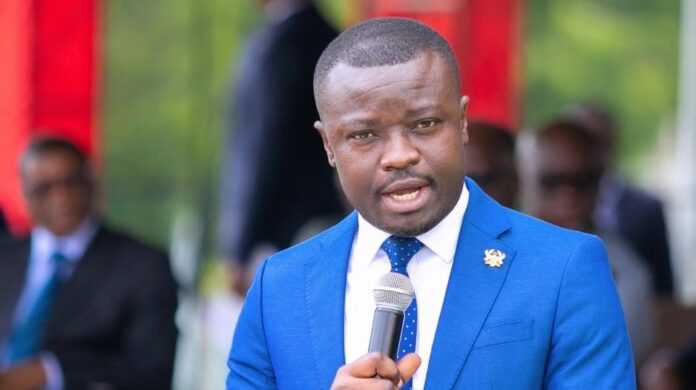
The writer, Jefferson Kwamina Sackey, is a Media and Communications Consultant
Latest Stories
-
DWM honours Nana Konadu Agyeman-Rawlings as it renews pledge for gender equality
13 minutes -
See the areas that will be affected by ECG’s planned maintenance on Tuesday, March 10, 2026
30 minutes -
CID recovers over 100 tonnes of stolen ECG cables in Tema raid
33 minutes -
Police identify fifth suspect in killing of Liberian national at Sakumono
39 minutes -
Pastor arrested in Cape Coast for child sexual abuse and production of indecent materials
40 minutes -
Dr Agnes Naa Momo Lartey to address the 70th Session of the Commission on the Status of Women
46 minutes -
Osei Assibey Antwi faces 21 counts as state files amended charge sheet
49 minutes -
Gender Ministry marks 2026 IWD with renewed call for equality
52 minutes -
IWD: Media must be deliberate in ending stereotypes about women – Joy Brands Projects Coordinator
54 minutes -
Awutu Senya East MP urges gov’t to boost malaria vaccination funding amid global cuts
1 hour -
Petrine Addae launches ‘Single and Being – Trust the Faithful God’
1 hour -
McDan donates GH¢200,000 to Volta Youth Development Fund, hails region as Ghana’s human skill hub
1 hour -
Nana Osowa Abena Korama-I aka Mrs Juliana Ackom
1 hour -
Invest in Ghana’s garment industry for job creation – Expert urges gov’t
1 hour -
Anny Osabutey: What is Daddy Lumba’s crime
1 hour