

Audio By Carbonatix
Soil is the most significant source of various nutrients and microflora.
But due to its depletion by excessive addition of chemical fertilizers, rehabilitated attention is needed to maintain sustainable approaches in agricultural crop production.
Researchers are recommending the use of biochar as a carbon-rich solid material to help restore soil nutrients and combat climate change.
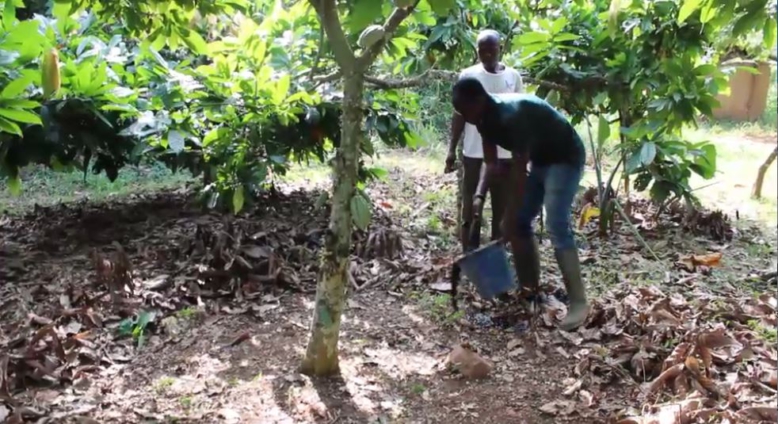
They say crop growth and yield can be increased using biochar. Ithaka Institute is therefore conducting scientific research about biochar in cocoa production, as it has high potential for under-utilized biochar feedstock.
The research which is currently ongoing at Bechem in Ahafo, Asanko in Western and Agona Juaben in the Ashanti regions, is expected to alleviate nutrient stress and sustainably intensify system productivity.
Global Technical Coordinator, Jonannes Meyer Zu Drawer, says research targeting biochar application in cocoa systems is limited. Mr. Drewer says piloting this new technology comes with some challenges that need to be addressed citing the mode of application as an example.
The technology is free for now and farmers are trained and motivated to produce the biochar for their farms.
The project has certified 18 beneficiary farmers who produced and applied Biochar to their cocoa farms.
This is the first certified biochar-based carbon sink in smallholder agriculture/cocoa systems. It is verified according to the European Biochar certificate, as developed by the Ithaka Institute. This enables beneficiaries to receive a carbon premium on their produce.
"We trained 33 farmers, and we have applied biochar to 18 farmers. These 18 farmers are biochar based carbon sink certified.” Country Lead Consultant of Ithaka Institute, Aikins Nyamekye.
Biochar is a high carbon organic matter, a by-product derived from biomass through high-temperature and low-oxygen pyrolysis. It is black, highly porous, and finely grained, with light weight, large surface area and pH, all of which have a positive effect on its application on the soil.
To address major concern on the quality of agricultural soil degradation, biochar is applied to the soil to improve its quality.
It has been considered as an effective method to reclaim contaminated soil and achieve high crop yields without destroying the natural environment.
Global Technical Coordinator indicates that, the overall objective is to explore the positive effects of biochar amendment on cocoa growth, the positive influence of biochar on plant growth and soil quality that suggest, using biochar is a good way to overcome the nutrient deficiency.
"In perennial crops it make sense to use the root zone application method and this was done by using the Geo injection technology for this pilot phase. We also see the topsoil application of biochar slurry as feasible for upscaling and this also been investigated."
Biochar can be produced from raw materials such as grass, cow manure, wood chips, rice husk, wheat straw, cassava rhizome, and other agricultural residues. It is produced during pyrolysis, thermal decomposition of biomass in an oxygen-limited environment.
"This project seeks to use the cocoa husk which already has management challenges. The biochar also has economic and agronomic benefits,” Dr. Issaka Abdulai, Researcher at the University of Gottingen in Germany.
To combat climate change, biochar is added to the soil to sequester carbon because its physical properties support its role as an environmental management product.
"The project has a high potential for climate change mitigation potential.” That’s according to Mr. Drewer.
Mr. Drewer says biochar increases soil microbial respiration by creating space for soil microbes, soil biodiversity and soil density.
It is believed that biochar has a long average lifetime in soil, ranging from 1000 to 10,000 years, with an average of 5000 years.
Latest Stories
-
Gender Ministry holds staff durbar, welcomes new Chief Director
3 minutes -
Unexpected illness sparked my radio career – Tommy Annan-Forson
6 minutes -
Bolt Ghana awards GH¢50,000 to women entrepreneurs through “She Moves to Win” campaign
9 minutes -
NRGI Country Manager questions speed of ministerial approval in Damang mining deal
17 minutes -
Publish the assessment — NRGI demands transparency in Damang mining deal award to E&P
33 minutes -
Tamale: Alhaji Hussein Fuzak funds construction of 3-storey classroom block at Ambariya Islamic School
60 minutes -
Gender Ministry holds staff durbar, welcomes new Chief Director
1 hour -
Anti-LGBTQ+: Mahama prioritises sentiments of development partners over Ghanaian values – Ntim Fordjour
1 hour -
CPA intensifies crackdown on fake diapers across public hospitals
1 hour -
Deputy Defence Minister urges failed GAF applicants to check medical disqualification reasons
1 hour -
Video: President Mahama’s speech at One Health Summit
2 hours -
Constitution review must protect Ghanaians values, not advance LGBTQ agenda — Haruna Mohammed
2 hours -
Foreign Affairs Ministry advises Ghanaians to take recommended vaccinations before traveling to Senegal
2 hours -
If you have fixed the economy, why hide behind basic needs to delay Anti-LGBTQ+ Bill? – Ntim Fordjour to Mahama
2 hours -
NACOC Central Regional Command partners with NSRA on drug awareness campaign
3 hours