

Audio By Carbonatix
The Bank of Ghana has commenced the development of a Business Model and Viability Analysis (BMVA) Framework to enhance its supervisory practices for assessing the sustainability of banks’ business models.
BMVA allows supervisors to identify banks’ vulnerabilities at an early stage and ensure safety and soundness.
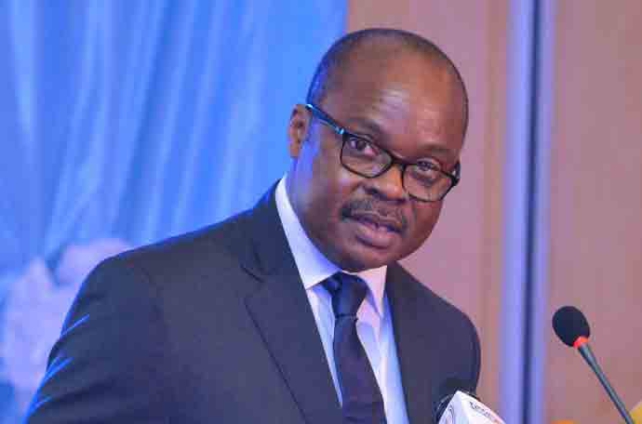
Speaking at the 40th Annual General Meeting of the Ghana Association of Banks, the Governor of the Bank of Ghana, Dr. Ernest Addison, said his outfit is focused on assessing the implications of banks’ strategic decisions and its alignment with their risk appetites, following the adverse impact of the Domestic Debt Exchange Programme.
Due to this, he said his outfit has incorporated a limited Asset Quality Review in its supervisory programme for 2023.
This special exercise is being conducted to assess the health of banks’ loan and investment portfolios to determine if their asset classification is in line with the Bank of Ghana’s classification norms as well as International Financial Reporting Standards.
Similarly, as a sequel to the implementation of Pillar 1 of the Basel II/III implementation in 2018, the Bank of Ghana intends to scale up the regulatory reform agenda through a series of engagements with the Ghana Association of Banks on the roll-out of Pillar 2 of the Basel II/III capital framework.
The framework will ensure that banks hold adequate capital for all material risks inherent in their operations.
In this regard, the regulatory guidance will be provided in the following aspects of Pillar 2, among others.
They are Liquidity Risk Management, Internal Capital Adequacy Assessment Process (ICAAP), Guide to Supervisory Intervention, and Concentration Risk Interest Rate Risk in the Banking Book.
To pave the way for a seamless rollout of Pillar 2 of the Basel II/III capital framework, the Bank of Ghana issued the Risk Management Directive in November 2021 to ensure that banks put in place appropriate systems for identifying, measuring, evaluating, controlling, mitigating, and reporting material risks that may affect their ability to meet their obligations to depositors and other stakeholders.
profitability of banks remain relatively strong
The Governor also said the profitability of banks remained relatively strong, on the back of the portfolio shifts and exchange rate revaluation effects, the Bank of Ghana has revealed.
According to him, these developments culminated in a 41.4% increase in profit-before-tax in August 2023, compared with 26.5% growth recorded during the same period a year ago.
Similarly, the industry’s net income or profit-after-tax increased to GH¢13.5 billion in August 2023, representing a 37.9% percent increase. The industry’s return-on-assets also increased to 5.4% from 4.7%, while return-on-equity rose to 36.9% from 23%.
Latest Stories
-
Spotify makes fandom the ticket with debut Surround Sound experience in Lagos
5 minutes -
Deputy Interior Minister calls for joint action to strengthen Ghana’s cybercrime response
15 minutes -
Gov’t announces plans to create 20,000 jobs in waste management, circular economy
20 minutes -
T-bills auction: Government exceeds target by 30%, but demand to remain relatively soft at next auction
22 minutes -
Election Watch Ghana raises concern over low female representation in NPP leadership
28 minutes -
Four drinks that help manage blood sugar
28 minutes -
Ray Michael Djan Jr puts Ghanaian creativity on global stage with Chelsea anthem
38 minutes -
Matilda Dibloni Kokar elected USAG president after two-year dormancy
41 minutes -
NPP delegates wanted youthful energy with Kojo Bamba’s election – Political scientist
44 minutes -
Zenith Bank supports Childhood Cancer Unit at Greater Accra Regional Hospital
44 minutes -
KMA empowers 64 persons with disabilities; Mayor unveils plan for sustainable skills centre
46 minutes -
DJs Union urges musicians to prioritise respect, communication amid industry tensions
54 minutes -
“Ghanaian DJs deserve their flowers” – Lasmid
54 minutes -
Zenith Bank supports childhood cancer unit at Greater Accra Regional Hospital
56 minutes -
‘Who’s in charge doesn’t really matter; we’re all servants’ – John Boadu on leader of NPP
59 minutes