

Audio By Carbonatix
The Monetary Policy Committee (MPC) of the Bank of Ghana has kept its policy rate unchanged at 29.5%.
It cited a slowdown in inflation as the main reason to the unchanged rate, which is the rate at which it lends to commercial banks.
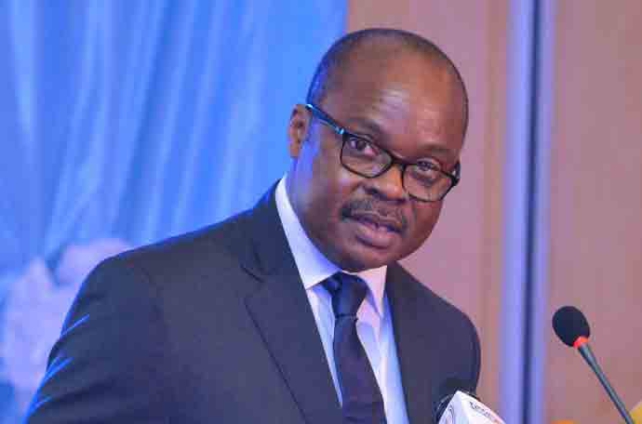
"The Committee noted the significant decline in headline inflation from the beginning of the year of more than 12.0%. The percentage of items in the CPI basket with inflation of more than 50% and above is receding, an indication of a strong return to the disinflation path", Governor of the Bank of Ghana, Dr. Ernest Addison said at a press briefing.
He explained that the tight monetary policy through additional liquidity management operations to address excess liquidity conditions in the market, relative stability in the local currency, and easing of ex-pump petroleum prices have supported the disinflation process.
He added that the Bank of Ghana has signed the Memorandum of Understanding on zero financing to the budget to eliminate fiscal dominance and allow for a faster ease in inflation towards the target band.
"These policies should provide the much-needed anchor to reinforce the disinflation process and reset the economy on the path of recovery," he expressed optimism.
Implications of unchanged rate
By this, the cost of credit is expected to remain high with the average lending rate going for about 31.5%.
The International Monetary Fund (IMF) had revealed last week that the Bank of Ghana will continue tightening monetary policy until inflation is on a firmly declining path.
According to the Fund, monetary and exchange rate policies under the programme will focus on reining in inflation and rebuilding foreign reserve buffers.
Since July 2022, the policy rate has gone up by 10.5%.
Banking sector performance
Dr. Addison announced that the performance of the banking sector broadly reflected the general macroeconomic operating environment as well as the impact of the Domestic Debt Exchange Programme as indicated in the 2022 audited financial statements.
He, however, stated that the prudential returns for the first four months of 2023 have shown signs of recovery in the profitability of banks and a gradual improvement in the solvency positions.
This, he said is supported by the regulatory reliefs issued to safeguard stability of the financial sector
Interest rates trended upward
On the money market, interest rates broadly trended upward in April 2023 at the short end of the yield curve, consistent with the tightening policy stance.
The 91-day and 182-day Treasury bill rates increased to 19.67% and 22.29% respectively, in April 2023, from 16.22% and 16.72% respectively, in April 2022.
Similarly, the rate on the 364-day instrument increased to 27.04% in April 2023, from 18.93% in April 2022.
Latest Stories
-
Ga Adangbe traditional priests petition Mahama over McDan aviation licence revocation
2 minutes -
Anti-LGBTQ Bill: NDC’s arrogance is worrying – Hassan Tampuli
13 minutes -
Let’s give OSP time to mature, not to scrap it – Hassan Tampuli
17 minutes -
Nigeria convicts 386 Islamist militants in mass trials
22 minutes -
Djibouti president wins election with 97.8% of vote, state media says
26 minutes -
We don’t have mandate to deduct tax from rent allowance of security services personnel – Interior Ministry clarifies
41 minutes -
Ablakwa receives Presidential Special Envoy on Reparations to advance global agenda
58 minutes -
Christina Koch becomes first woman to travel around the moon on Artemis II
1 hour -
Epstein survivors’ calls to meet King Charles and Queen harder to ignore as US visit approaches
1 hour -
UN Secretary-General names Ghana’s Anita Kiki Gbeho as South Sudan envoy
1 hour -
Mali withdraws recognition of Sahrawi Republic, backs Morocco’s autonomy plan
1 hour -
Gov’t distributes over 8,500 laptops to One Million Coders project
1 hour -
Julius Debrah, ‘man to beat’ as NDC’s James Agbey dismisses Musah Dankwah’s polls
1 hour -
GPRTU in Savannah Region to protest alleged eviction in Damongo
2 hours -
Re: Reinsurance does not replace process — A response to the SIGA–SIC defence
2 hours