


Audio By Carbonatix
The Bank of Ghana (BoG) has clarified that its recent decision to convert part of its gold reserves into foreign exchange assets was a deliberate strategy to diversify the country’s reserve portfolio rather than a depletion of national assets.
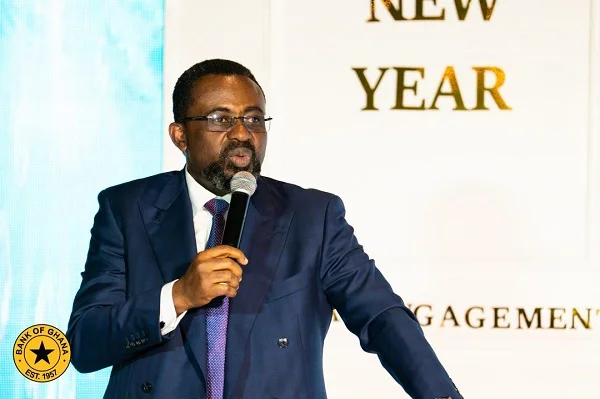
Addressing the Parliamentary Committee on Economy and Development, the Governor of the central bank, Johnson Pandit Asiama, explained that the gold remains within Ghana’s national reserve framework despite the adjustment in asset composition.
“The gold remains part of our national reserves; what changed was the composition of these reserves,” he said.
Dr Asiama noted that under the central bank’s Domestic Gold Purchase Programme, the country’s gold holdings rose significantly from 8.7 tonnes in 2021 to more than 40 tonnes by October 2025.
This represented approximately 42 per cent of Ghana’s Gross International Reserves at the time.
He added that the sharp increase in global gold prices—rising by about 62 per cent between January and October 2025—also boosted the overall value of Ghana’s gold portfolio.
However, the Governor cautioned that maintaining such a high concentration of reserves in a single asset category could expose the country to portfolio concentration risks.
“Such a high concentration in a single asset class introduces portfolio concentration risk for countries like Ghana,” Dr Asiama stated.
He pointed out that international recommendations referenced by institutions such as the International Monetary Fund and the World Gold Council suggest that emerging economies typically maintain around 20 per cent of their reserves in gold to ensure adequate liquidity and flexibility.
“In light of these considerations, the Bank undertook a measured portfolio rebalancing, converting a portion of its gold holdings into foreign exchange assets to restore a more balanced reserve composition,” he explained.
The Governor emphasised that the foreign exchange obtained from the exercise continues to be actively invested to generate returns while strengthening Ghana’s external buffers.
According to him, periodic portfolio rebalancing is a standard practice among central banks to maintain diversification, liquidity and effective risk management.
Dr Asiama also highlighted broader improvements in the economy, including a significant decline in inflation from above 23 per cent at the end of 2024 to about 3.3 per cent in February 2026, as well as signs of stability in the cedi and improved performance within the financial sector.
“This measured rebalancing ensures that Ghana’s reserves remain not only valuable but also liquid and ready for use when needed,” he concluded.
Latest Stories
-
Missing service member rescued by US forces after jet downed in Iran, Trump announces
6 minutes -
Gomoa Easter Carnival: Sarkodie, Kuami Eugene, Tinny, set festival ablaze as Day 3 ends on high note
31 minutes -
“Feels amazing” – Antoine Semenyo reveals after Manchester City dismantle Liverpool
57 minutes -
Mahama calls for emergency cabinet meeting over rising fuel prices
2 hours -
Asante Gold reports US$345million loss for 2025
3 hours -
Gov’t making progress in clearing $1.7bn power debt – Mahama
3 hours -
Justice is the engine of growth – Chief Justice
4 hours -
Meet us halfway – Trade Minister tasks private sector with AfCFTA success
5 hours -
After more than 14 years at Atletico Madrid, what next for Simeone?
5 hours -
Conquering the World – Building on the foundations laid by Otto Addo
5 hours -
[Playback] Sarkodie, Kwami Eugene, Tinny, Keche and others thrill fans at Gomoa Easter Carnival
5 hours -
Gomoa Easter Carnival: Experts charge indigenes to own festival to ensure sustainability
6 hours -
Gomoa Easter Carnival: Edem Agbana and Joy Prime fans shower festival with huge endorsements
8 hours -
Gathering of Royals 2026: Empowering women, boosting tomato production
8 hours -
Gov’t to overhaul free zones into manufacturing hubs for local production – Trade Minister
9 hours