

Audio By Carbonatix
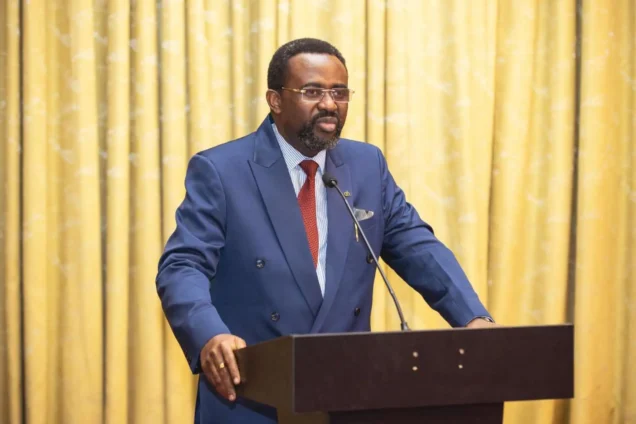
The Governor of the Bank of Ghana, Johnson Pandit Asiama, has disclosed that the central bank’s GH¢17 billion liquidity stabilisation measures in 2025 significantly contributed to a rapid decline in inflation, one of the steepest drops recorded in recent years.
Dr Asiama made the remarks on Monday while addressing the Parliamentary Committee on Economy and Development.
He explained that when he assumed office, inflation levels remained high and existing monetary conditions were not sufficiently tight to bring prices under control within a reasonable period.
According to the Governor, a major difficulty at the time was the presence of excess structural liquidity within the banking sector, which weakened the transmission of monetary policy decisions and allowed inflationary pressures to persist.
To address the problem, the central bank intensified its open market operations to absorb surplus liquidity from financial institutions.
He noted that such operations involve withdrawing excess funds from the banking system while paying interest on those funds to prevent too much money circulating in the economy.
“Liquidity management through open market operations is a core function of central banks around the world and is one of the primary tools used to ensure that monetary policy decisions are effectively transmitted through the financial system,” Dr Asiama said.
The Governor indicated that the policy actions have helped stabilise the economy and strengthen confidence in financial markets.
Inflation has dropped significantly from 23.8 per cent in December 2024 to 3.3 per cent in February 2026, representing one of the lowest inflation rates recorded in the country in recent times.
He added that the improvement has eased the pressure on household incomes, noting that lower inflation helps protect the purchasing power of Ghanaians by preventing wages from being eroded by rising prices.
Dr Asiama further revealed that the Ghanaian cedi has shown signs of stability, while interest rates have started to decline, creating more favourable borrowing conditions for businesses and households.
He also pointed to a strong improvement in the country’s external position, explaining that gross international reserves have risen to about 13.8 billion dollars, providing approximately 5.7 months of import cover.
Latest Stories
-
South Korea deploys thermal cameras to track escaped zoo wolf
29 seconds -
Calls for royal meeting with Epstein survivors grow ahead of US visit
4 minutes -
Ibn Chambas advocates blend of technology and human values in education
5 minutes -
UMA improves healthcare access in Asutifi North with GH₵700k ‘Kim Taylor Legacy’ Walkway
10 minutes -
Scholarships Authority and Fanaka University offer sponsorship for procurement and supply chain studies
13 minutes -
Bisa Kdei drops new single ‘Go N Look’ featuring Medikal
20 minutes -
Benin facing rising terrorism in north as French military presence faces growing criticism
21 minutes -
UEW Public Lecture Series 2026: Education debate ‘about the soul of Ghana’s future’ — Dr Ibn Chambas
22 minutes -
EU fingerprint and photo travel rules come into force from today
49 minutes -
Anti-LGBTQ+ Bill: Ghanaians demand expedited passage, not dialogue – Ntim Fordjour to Mahama
57 minutes -
EU airline industry warns of fuel shortages if Strait of Hormuz stays closed
60 minutes -
White House staff told not to place bets on prediction markets
1 hour -
Auctioneers petition Prez Mahama over ‘interference’ in public auctions
1 hour -
GEA, Mastercard Foundation drive market access for MSMEs at Kwahu Business Forum
1 hour -
Education Ministry begins review of Ghana Library Authority law
1 hour