

Audio By Carbonatix
Cocoa production in Ghana is expected to increase with the completion of automated drip irrigation schemes.
The 28.3 hectares automated drip irrigation schemes were developed by the Mennonite Economic Development Associates (MEDA).
The Project was funded by the Global Affairs Canada (GAC), a Canadian government agency, at the cost of CAD$756,000.
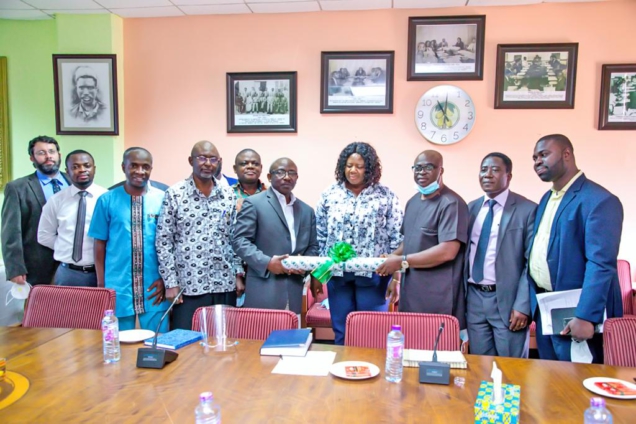
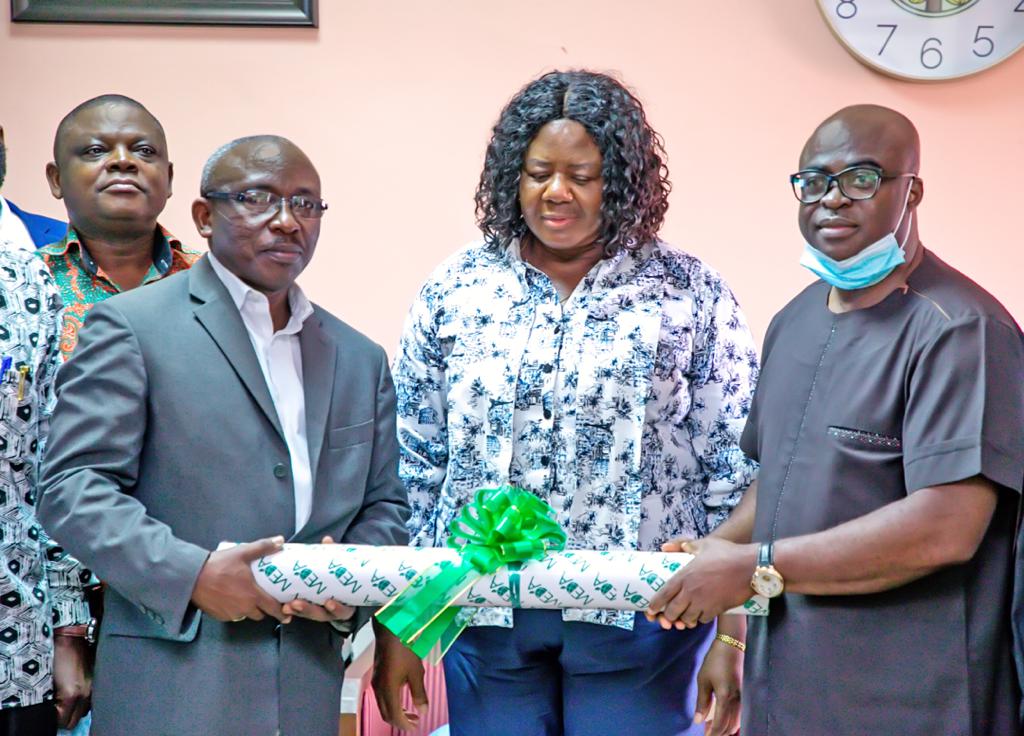
On Wednesday, August 26, 2020, MEDA officially handed over the project to the Ghana Cocoa Board (COCOBOD) in Accra.
MEDA, an international economic development organization whose mission is to create business solutions to eradicate poverty is implementing the Farmers' Economic Advancement Through Seedlings (FEATS) Project in Ghana.
The FEATS activities are in four major tree crop industries namely cashew, cocoa, rubber and Shea.
MEDA identified the Cocoa Seed Garden as a critical plank in the cocoa value chain in Ghana, which led to MEDA’s partnership with COCOBOD.
Using hybrid cocoa trees developed by the Cocoa Research Institute of Ghana (CRIG), COCOBOD through these seed gardens ensures that only high-quality cocoa seeds and seedlings are distributed to Ghanaian cocoa farmer.
The schemes are anticipated to support some 3,000 to 5,000 cocoa farmers with free high-quality hybrid cocoa seeds and seedlings to either replant their old cocoa farms or replace their diseased cocoa trees.
About 14.2 hectares are in the Bunso Cocoa Station in the Eastern Region and 14.2 hectares at Goaso Cocoa Station in the Ahafo Region.
The installations are expected to lead to a 30 to 50% increase in cocoa pod production, which will in turn, support an additional 3000 to 5000 cocoa farmers with free high-quality hybrid cocoa seeds and seedlings to either replant their old cocoa farms or replace their diseased cocoa trees.
Speaking at the handing over ceremony held at the Head of COCOBOD in Accra, MEDA Ghana Country Director, Robert Austin, said in 2019, the scope of work agreement was signed between the two organizations.
Mr. Austin assured COCOBOD that the contractor has to remain on site for a year under warranty condition to ensure that any equipment that develops fault is repaired.
According to Mr. Austin, the schemes will help increase cocoa production in Ghana, a country ranked as the second largest producer of world cocoa beans.
The irrigation system will be able to increase production provided it is managed effectively, he said.
With the irrigation schemes, he indicated that it is now potentially possible for every cocoa farmer who has the resource to irrigate his farm.
"Going forward, what is important for MEDA, and we are confident COCOBOD will do this, is to effectively manage this 28.3 hectares, show clearly the increase in production of cocoa pods and by extension, demonstrate to all cocoa farmers in Ghana that by investing in irrigation for their cocoa farms, they may significantly increase their income from cocoa,” Mr. Austin says.
Chief Executive of COCOBOD, Joseph Boahen Aidoo, in a statement read on his behalf by COCOBOD's Deputy Chief Executive, Dr. Emmanuel Agyemang Dwomoh, thanked MEDA and the Canadian Government for successfully completing and funding project.
"The coming in of MEDA with financial support from Global Affairs Canada (GAC) for this important project in the two cocoa stations is therefore very appropriate and timely," he said.
He observed that COCOBOD with other partners like MEDA are taking giant steps to ensure sustainability of the cocoa industry through production of best quality cocoa through positive pre-and-post harvest initiatives.
The Chief Executive says that COCOBOD through its subsidiary, the Seed Production Division (SPD) has played a pivotal role in the production and distribution of quality cocoa planting materials to farmers.
"These are genetically improved seeds which establish well, mature early, tolerant to the CSSVD and with the potential to yield better," he says.
Over the years, he added, Cocoa Stations have been the main source of
generating planting materials (seeds) for cocoa farmers.
According to him, currently, there are about 28 cocoa stations located strategically in all seven cocoa regions of Ghana.
As a result of climate change, he noted, the rainfall pattern has changed, becoming more erratic and the amount of water received not adequate.
He indicated that "currently, some of the seed gardens experience serious water stress which adversely affects seed pod production. This results in flower abortion, cherelle wilt, production of small undersized pods, drying of pods, 'caking' of seeds in pods, as well as dying of mature trees."
"In 2014/15, some stations in the transitional zone of Brong Ahafo and parts of Ashanti Regions suffered severely and could not produce pods at all. The stations, therefore, resorted to manual watering which is laborious and not able to support the seed garden trees to bear optimally," he added.
According to him, these challenges notwithstanding, there is increase demand for hybrid seed pods and cocoa seedlings for the cocoa rehabilitation program, filling vacancies in recently established farms, replanting of burnt farms and establishment of new farms.
"Increasing interest of the youth to venture into cocoa production is also adding up to the existing high demands for seed pods. There is the need to boost production to meet the high demands for pods," he noted.
Mr. Boahen Aidoo said with the MEDA drip irrigation project of about 28.3 hectares of seed garden, "it is anticipated that pods production will increase tremendously, and undersized and poorly developed pods would be reduced,"
"Farmers in the two regions (Ahafo and Eastern) especially will be fully satisfied with pods supply," he said, assuring that "other regions will also benefit since Goaso and Bunso Cocoa Stations supply hybrid seed pods to other cocoa regions." the Chief Executive of COCOBOD stated.
Meanwhile, he observed that with the current climatic trends, the seed garden would only remain viable if irrigation is integrated into the farming activities, saying "irrigation development in seed gardens will also go a long way to satisfy the high seed demands of farmers."
Acting Canadian High Commissioner to Ghana, Annika Allman, says Canada was delighted to be able to support the project.
Latest Stories
-
EBID strengthens regional integration role amid global economic uncertainty
6 minutes -
Two assault rifles, ammunition retrieved in Police probe of Tamale gang attack
12 minutes -
EBID records strong financial growth with $722m disbursements in 2025 – President, Dr George Donkor
14 minutes -
EBID to mobilise $2.69bn under new 2026–2030 growth strategy – Dr George Donkor
18 minutes -
An open letter to telcos, regulators and security agencies on mobile money fraud in Ghana
18 minutes -
Mobile Money Merchants are driving fraud
33 minutes -
Alban Bagbin declines minority’s motion to investigate sale of gold reserves at BoG
33 minutes -
NACOC leadership tours drug testing centres in Accra
35 minutes -
OSP’s power to prosecute without AG’s authorisation unconstitutional – AG files at Supreme Court
38 minutes -
Seven African referees selected for World Cup 2026 as Ndala, Issa Sy miss out
56 minutes -
Why diaspora investors are using Accra real estate to hedge against global uncertainty in 2026
1 hour -
GWL urges public support to stem water thefts
1 hour -
Fire guts 2-storey apartment at Ashaley Botwe
1 hour -
Come down and account, it’s a constitutional requirement – Martin Kpebu to Ofori-Atta
1 hour -
The power of the private courtyard: How regalia is redefining resort-style living in Accra
2 hours