

Audio By Carbonatix
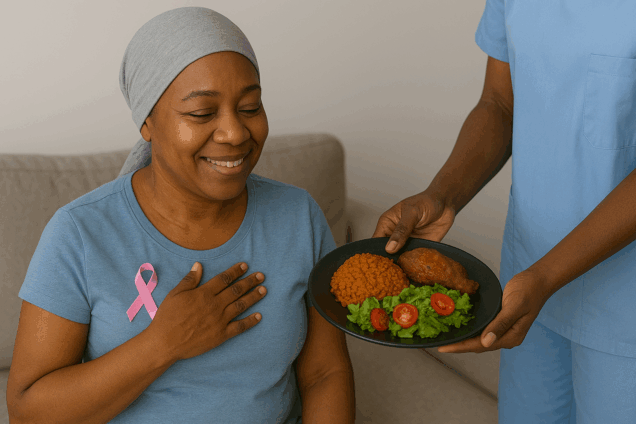
Across Ghana, breast cancer remains one of the most common cancers affecting women. Each year, several women are diagnosed, and while advances in surgery, chemotherapy, and radiotherapy have improved survival, one vital aspect of care often remains overlooked - NUTRITION.
Many women battling breast cancer face some form of malnutrition as a consequence of both the disease and disease treatments. This quietly undermines their strength, recovery, and overall quality of life. In this article, I am excited to share insights from my recent publication, a book chapter co-authored with my colleagues, titled ‘Malnutrition in Chemotherapy: Ghanaian Aspects’ (see reference) and published by the reputable Springer Nature.
What Our Research Found
In our work, my colleagues and I report how nutritional challenges intersect with cancer treatment, particularly in low- and middle-income countries like Ghana. During cancer treatment, many patients experience changes in taste and smell, nausea, vomiting, fatigue, or painful swallowing, all of which reduce food intake. In particular, women receiving chemotherapy often struggle with moderate to severe malnutrition.
The treatment can irritate the digestive system and cause side effects such as nausea, vomiting, loss of appetite, changes in taste, pain, constipation, diarrhoea, dry mouth, difficulty swallowing, and mouth sores, all of which make eating well much harder. In our context, limited access to dietetic services, the high cost of nutritious foods, and the emotional strain of illness often make matters worse.
The result is that even patients who appear “well-nourished” by weight may be losing vital muscle mass or lacking essential nutrients. These nutritional gaps matter as they can lead to delayed healing, reduced tolerance to chemotherapy or radiotherapy, longer hospital stays, and poorer quality of life. Our work emphasizes the urgent need for a stronger integration of nutrition into Ghana’s cancer care system.
Why Nutrition Deserves Equal Priority
Nutrition is not a supplement to cancer treatment; it ought to be part of the treatment itself. Adequate nourishment helps the body handle toxic therapies, supports immune function, and preserves lean body mass. Yet, in many cancer care settings across Ghana, dietitians are not routinely part of the multidisciplinary team, and nutrition screening is rarely done systematically.
An undergraduate dissertation (which we cited in our work) found that only 5% of women undergoing breast cancer treatment in a Ghanaian health facility were referred to a dietitian. This has to change if we aim to improve survival and quality of life for cancer patients. Nutrition must be recognized as a clinical priority.
A Call for Broader Change
Health policymakers and cancer program leaders should ensure that nutrition care is integrated into all oncology services. Hospitals and treatment centres should routinely screen for malnutrition and refer patients for dietetic support early in the treatment process. When we strengthen the nutrition component of cancer care, we improve treatment outcomes, reduce complications, and help restore dignity to patients battling the disease.
For Patients and Families
If you or someone you know is undergoing cancer treatment, here are some important considerations especially as we celebrate Breast Cancer Awareness Month.
- Seek professional nutrition advice. A registered dietitian can tailor meal plans to your treatment needs. Talk to your healthcare provider about a referral to a dietitian.
- Stay positive and informed. Good nutrition is a form of self-care and self-advocacy.
- Eat regularly, even when appetite is low. Small, nutrient-dense meals are better than skipping meals. For practical guidance on healthy eating, you can grab a copy of my book on healthy eating - available now on Selar (Buy HEALTHY EATING MADE SIMPLE by Laurene Boateng on Selar) and Amazon (https://amzn.eu/d/6i9OeVb).
- Hydrate well. Water supports digestion and helps the body process medications.
Closing Thoughts
Our research sheds light on an often-invisible part of the cancer journey; the struggle to stay nourished while fighting for life. The time is now to bring nutrition from the background to the forefront of cancer care in Ghana. When we nourish the body, we strengthen its ability to heal. Kudos to my colleagues Prof. Matilda Asante (our amazing team lead), Dr. Eunice Nortey and Dr. Rebecca Steele-Dadzie (not forgetting yours truly, myself) for this timely work!
Reference
Boateng, L., Nortey, E., Steele-Dadzie, R., Asante, M. (2025). Malnutrition in Chemotherapy: Ghanaian Aspects. In: Preedy, V.R., Patel, V.B. (eds) Handbook of Public Health Nutrition. Springer, Cham. https://doi.org/10.1007/978-3-031-32047-7_166-1
Click here to join Full Proof Nutrition WhatsApp channel to receive free nutrition education content. Send us a mail on fullproofnutrition@gmail.com
Written by Dr. Laurene Boateng (PhD, RD)
Dr. Laurene Boateng is a Registered Dietitian and Senior Lecturer in the Department of Dietetics, University of Ghana. She is the founder and editor-in-chief of Full Proof Nutrition, a Nutrition Consultancy committed to providing reliable, evidence-based, and practical healthy eating advice through its website www.fullproofnutrition.com. Click here to join Full Proof Nutrition WhatsApp channel to receive more educative content. Send us a mail on fullproofnutrition@gmail.com
Latest Stories
-
Adenta Circuit Court remands Pastor William Gyimah over viral threats against Vice President
3 minutes -
“We’ve implemented changes to prevent a repeat of the AFCON final” – CAF President Motsepe
6 minutes -
Gov’t orders deployment of Metro Mass buses to cushion commuters amid fuel price hike
1 hour -
Key Indian state polls begin in test for Modi’s party
1 hour -
Playback: Gomoa Easter Carnival in photos
1 hour -
Gov’t orders removal of fuel taxes to ease pump price hikes
1 hour -
“Whatever the decision of CAS, we will respect it” – CAF President Motsepe after AFCON final meetings in Morocco
2 hours -
Emma Ankrah: When waiting becomes part of treatment – Reflections on hospital care
2 hours -
Ghana urges travellers to prepare for new EU border system roll-out
2 hours -
Mahama enforces fuel coupon ban for ministers as cabinet moves to slash fuel taxes
2 hours -
Task force probes strange fish deaths in Tema
2 hours -
Neglected traffic lights turn Awoshie–Anyaa highway into deadly hotspot
2 hours -
EOCO declares Dr Gabriel Tanko Kwamigah-Atokple a fugitive over alleged gold fraud
3 hours -
GSE records GH¢1.09bn trade in equity market; 10 stocks register gains
3 hours -
Fuel prices: Ghana places 15th in Africa
3 hours