


Audio By Carbonatix
"I don't view the Bride Price as me being paid for… Geoffrey can't afford me," says Angela, a British-born Ghanaian describing a family tradition common across Sub-Saharan Africa."Instead I like the idea that my fiancé and his side are thinking about me as a treasure coming into their family."Bride Price is when the family of the groom pay their future in-laws at the start of their marriage.The payment can be made up of money, presents, or a mixture of both. It's sometimes paid in one go, but instalments aren't uncommon. It's also practised widely in Thailand, China, and Papua New Guinea.For Angela it's all part of accepting her roots."Africans are proud of being Africans, you know. There was a time where it wasn't necessarily the coolest thing to be African. Now, you see this great embrace of the African culture."Her now-husband Geoffrey, who is also a British-born Ghanaian, describes it as a token of appreciation for the bride's family."Anything significantly more than a tokenistic gesture risks undermining the process as well, because then it actually gives meaning to the word Bride Price."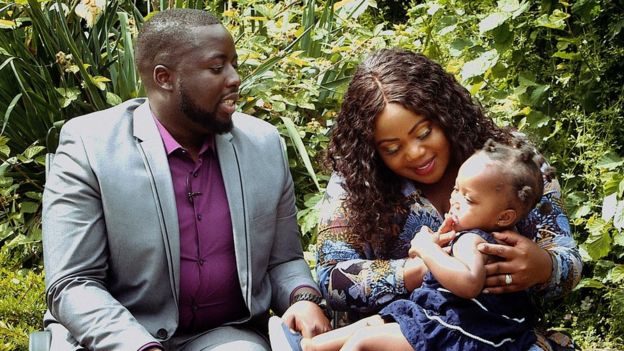 Blessing (left) says he had to work seven days a week to afford the Bride PriceBlessing, who is originally from Zimbabwe, says he took a second job to pay for the Bride Price: "I'll just say roughly, it's enough to put a deposit on a mortgage for a UK property."Initially, Chelsea was reluctant to go ahead with a traditional wedding because her dad had passed away."I was like… who's gonna take the money? Because it's mainly supposed to be about your dad and your mum. And it just didn't feel right for me."But Blessing convinced his wife to go ahead and, despite the large sum of money he paid, he believes paying the Bride Price was beneficial.If he hadn't paid the Bride Price he says he wouldn't have been able to approach his wife's family.It's not clear exactly when Bride Price became common in Africa. But in many countries, it predates cash.Historically, the tradition varied depending on country and culture.
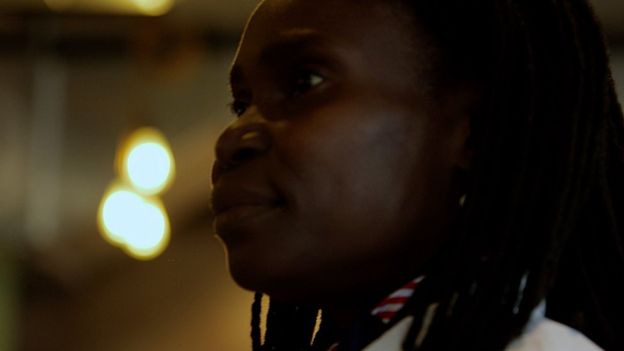 Evelyn Schiller thinks Bride Price has become too focused on money rather than giftsEvelyn Schiller campaigned against Bride Price in Uganda. She believes the focus of the tradition has changed over the past three generations."Look at today, what the gifts look like. They are monetary, and that is where the word price comes from. It is no longer a bridal gift. It has become a Bride Price."In 2015 The Supreme Court in Uganda ruled that Bride Price should be optional but, if a couple gets divorced, claiming for a refund is illegal. Support for Bride Price continues in Uganda because it is seen as a way to cement relations between communities.
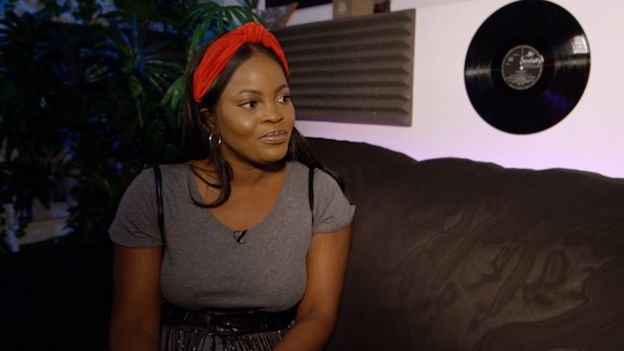 Podcast co-host Tolly T believes Bride Price feels like ownership
'You are not for sale, no-one can buy you'
A week before their legal ceremony, Geoffrey and Angela celebrated their traditional Ghanaian wedding.It's during this ceremony that the Bride Price - a collection of money and gifts - was presented to Angela's family.But the couple decided to modify the tradition slightly: "The Bride Price that is given is actually going to be gifted back to us as a couple."My mum has been super transparent with me and from the very beginning she's always said 'You are not for sale, no-one can buy you'."The cost of the Bride Price varies significantly. Geoffrey says: "It was fairly modest - in the hundreds."But Derby-based husband and wife, Blessing and Chelsea, chose to approach things differently.Blessing (left) says he had to work seven days a week to afford the Bride PriceBlessing, who is originally from Zimbabwe, says he took a second job to pay for the Bride Price: "I'll just say roughly, it's enough to put a deposit on a mortgage for a UK property."Initially, Chelsea was reluctant to go ahead with a traditional wedding because her dad had passed away."I was like… who's gonna take the money? Because it's mainly supposed to be about your dad and your mum. And it just didn't feel right for me."But Blessing convinced his wife to go ahead and, despite the large sum of money he paid, he believes paying the Bride Price was beneficial.If he hadn't paid the Bride Price he says he wouldn't have been able to approach his wife's family.It's not clear exactly when Bride Price became common in Africa. But in many countries, it predates cash.Historically, the tradition varied depending on country and culture.Evelyn Schiller thinks Bride Price has become too focused on money rather than giftsEvelyn Schiller campaigned against Bride Price in Uganda. She believes the focus of the tradition has changed over the past three generations."Look at today, what the gifts look like. They are monetary, and that is where the word price comes from. It is no longer a bridal gift. It has become a Bride Price."In 2015 The Supreme Court in Uganda ruled that Bride Price should be optional but, if a couple gets divorced, claiming for a refund is illegal. Support for Bride Price continues in Uganda because it is seen as a way to cement relations between communities.Podcast co-host Tolly T believes Bride Price feels like ownership'Black British have a culture of our own now'
British-born Nigerian podcaster, Tolly T, has questioned whether the tradition of Bride Price would work for her: "Ultimately… it's giving me money for my child. It feels very ownership like."The co-presenter of the Receipts Podcast believes that tradition encourages value to be placed on the material accomplishments of women: "It's a self-esteem thing, for example, "I'm not worth this because I didn't go to uni", or "I don't earn this amount of money".""And ultimately what does that have to do with me being a good wife?""I do think a lot of us millennials, like black British or black, Nigerian British, or whatever, we are a culture of our own now," she adds."We're taking bits that we want from being African and taking bits from being British as well. So we've created this subculture where we question things, and then we do it if it makes sense for us."DISCLAIMER: The Views, Comments, Opinions, Contributions and Statements made by Readers and Contributors on this platform do not necessarily represent the views or policy of Multimedia Group Limited.
DISCLAIMER: The Views, Comments, Opinions, Contributions and Statements made by Readers and Contributors on this platform do not necessarily represent the views or policy of Multimedia Group Limited.
Latest Stories
-
NDC’s ‘grand deception’ on anti-LGBTQ+ bill exposed – Ntim Fordjour
34 seconds -
Speak out against Mahama government’s LGBTQI+ u-turn – Ntim Fordjour to clergy
5 minutes -
Ghanaians worse off despite improved macroeconomic indicators — Miracles Aboagye
8 minutes -
Police intercept narcotics, arrests five suspects in Upper West
14 minutes -
Government to establish Kumasi Machinery Innovation Park under 24-Hour Economy programme
17 minutes -
When Hormuz Fails: The day a waterway stops the world
18 minutes -
Ghanaian students in UK to protest over unpaid fees, stipends
18 minutes -
Inflation to go up marginally in April 2026 – Report
20 minutes -
Newborn baby found abandoned at Kronkromase cemetery, residents in shock
20 minutes -
VIP Jeoun Transport increases fares effective April 8
23 minutes -
Minority warns against alleged LGBTQ provisions in constitutional review
28 minutes -
Wave of violence kills at least 26 in Nigeria as army thwarts mass church abduction
46 minutes -
Anti-LGBTQ+: Mahama must be held to account to fulfil his promise – Ntim Fordjour
48 minutes -
Latvian businessman Aldis Ozols enstooled as development Chief of Supresu-Man
58 minutes -
‘We should go in for the best’ – Ernest Thompson on next Black Stars coach
1 hour