

Audio By Carbonatix
The longest civic advocacy campaign I have ever participated in is the attempt made by Ghana’s CSOs (Civil Society Organisations) to block the totally unjustifiable effort by Ghana’s Electoral Commission (EC) to jettison millions of dollars worth of perfectly functional, in many cases brand new, equipment and subject voters to a needless re-registration exercise.
The EC did not stop at this wasteful endeavour, which shall surely one day come under the scrutiny it deserves, it went further to outlaw the existing voter identification card and block the use of birth certificates as proof of citizenship, in a decision that was not merely bizarre but truly absurd. That even the fears and anxieties of a pandemic in full flight could not restrain this exercise of wanton power made this situation all the frightening.
It is important that the record shows clearly that the EC’s actions were morally, ethically and administratively irresponsible. It must do so because this shall not be the last time a governmental entity will attempt to use raw power to push a cause so antithetical to the values of sound governance that they leave in their wake dangerous precedents that will continue to haunt the nation. When such a mess happens again, people should not be able to feign indecision about where they stand under the excuse of inconclusive information.
So, though the CSOs could not get in the way of brute power, and the things that they set out to prevent have happened, it helps to make unambiguous the sheer moral calamity that befell the Republic of Ghana, even if only for posterity.
Frequent readers of this blog should recognise the key claims that the EC made to dress its decisions and conduct with a modicum of rationality and propriety. Nonetheless, I will repeat them again:
1. The existing biometric equipment were obsolete because they date from way back in 2011, and since then have not been replaced or refurbished. Furthermore, it was alleged that the absence of facial biometric capacity in the existing machines rendered them less effective and accurate. The CSOs made it the central plank of their advocacy to expose these plain untruths, made more alarming by the barefaced shamelessness with which they were repeated non-stop by a major constitutional organ of the State.
2. The EC insisted at every turn that pandemic fears were overblown because the EC had capacity to implement health and safety protocols that will ensure that the outdoor registration activities pose no risk to registrants. The CSOs, in their ill-fated amicus brief and in many media appearances, emphasised the sheer mendacity of these assurances, given what everyone knows about the conditions under which voter registration takes place in Ghana.
These affairs shall be remembered in the history of civic activism and public administration in Ghana. When they are, let it be without doubt that the evidence eventually vindicated all the fears and assertions of the CSOs, and repudiated all the assurances and claims of the EC.
These videos sent to us by some journalists who took pains to collect the footage to help seal the record establish the following without equivocation:
A. The EC was unable to bring in enough Thales’ equipment for the registration due to the rushed and shambolic procurement exercise. So the very equipment that was said to be obsolete and had to be tossed aside to create a procurement opportunity worth tens of millions of dollars had to be mobilised for the registration exercise.
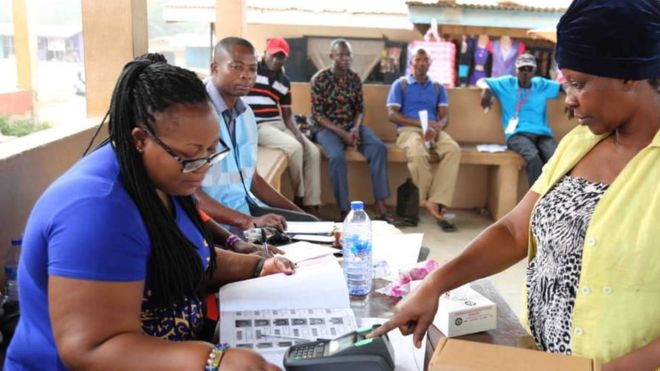
B. Readers will observe that in many polling stations in poorer neighbourhoods, almost all the BVR (biometric voter registration) equipment in use were the same HSB-compatible HP and Dell ones that were used in the last limited voters’ registration exercise in 2019. Our estimate is that at least 40% of current equipment being used for the registration exercise is made up of old BVRs, some with the Neurotechnology-provided software.
C. It will also be observed in the videos how the EC used a number of indoor facilities, contrary to claims that the exercise was entirely outdoors. Worse, it is evident that it is not the irresponsibility of a few recalcitrant citizens that led to the depressing incidents of overcrowding reported in the news; instead, in many cases, the process and facilities had been designed such that overcrowding was inevitable.
D. Zero efforts were made to enforce any social distancing rules, mask wearing or other health, hygiene and safety protocols in many registration centers, especially in poorer neighbourhoods.
E. No specialist equipment for facial biometrics were deployed. The LED lights used were paired with standard digital photography. Hence, the claims that any facial recognition requirements could not be met with existing visual data were all palpably false.
Let the record stand.
(Are you at the registration stations? Send me notes on your experience, please.)
****
Bright Simons is a social innovator, entrepreneur, writer and vice-president (in charge of research) at IMANI. He is also the founder and president of mPedigree.
Latest Stories
-
Trump seeks $152m to reopen notorious Alcatraz prison
19 minutes -
Ex-Chelsea player Oscar retires with heart issue
28 minutes -
CA Foundation drives constitutional literacy in Kpone Katamanso municipality
33 minutes -
GPRTU to hold talks with Transport Ministry over rising fuel costs
35 minutes -
CUTS International urges gov’t to halt sachet water price hike pending cost review
41 minutes -
Chief Justice: Efficient Judiciary essential to reducing business costs
44 minutes -
Bayern grabs 99th-minute winner to cap superb fightback
44 minutes -
Ahmed Ibrahim urges Ghanaians to reflect Easter values in nation-building
48 minutes -
ECG inefficiencies undermining power supply -Mahama outlines reforms
49 minutes -
Lewandowski scores as Barca fight back to defeat Atletico
51 minutes -
Lack of private sector consultation undermining economic growth – Jerry Ahmed Shaib
54 minutes -
Real Madrid seven points adrift after Muriqi’s late Mallorca winner
55 minutes -
Ghana must lead AfCFTA implementation by example – Trade Minister Ofosu-Adjare
60 minutes -
Strong Judiciary key to business confidence – Chief Justice Baffoe-Bonnie
1 hour -
Mahama announces 60-Hectare irrigation project to boost tomato production
1 hour