

Audio By Carbonatix
The newly appointed Managing Director of the Produce Buying Company Shea (PBC Shea) in Buipe, Savannah Region, Abubakari Abdul Mumin, has revealed that the shea butter processing factory is back in operation and is poised to play a key role in actualising the government's 24-hour economy policy. The factory is set to operate three separate working shifts and is projected to create approximately 30,000 direct and indirect jobs for the youth.
Mr Mumin stated that every department of the factory remains functional, and he brings with him a wealth of technical and practical knowledge of the industry to support government efforts in job and wealth creation.
Speaking in an interview with JoyNews in Buipe, Central Gonja District of the Savannah Region, Mr Mumin noted that former President John Dramani Mahama has tasked him with transforming the Buipe PBC Shea factory into a hub for youth employment and government revenue generation.
“What it means, seeing this huge investment sitting here in Buipe, is that President John Dramani Mahama’s 24-hour economy policy will be very much applicable in this factory. In fact, when I received my appointment letter from the President, he gave me two cardinal responsibilities: first, to create jobs, and second, to generate wealth for the central government,” he said.

“My intention as Managing Director is to implement a three-shift working system – morning, afternoon, and night – so that we can effectively engage over 30,000 young people, including women, both directly and indirectly,” Mr Mumin assured.
His Excellency President John Dramani Mahama cut the sod for the construction of the multi-purpose factory in 2012 and commissioned it within the same year to begin processing raw shea into butter and soya beans into soya oil and cake.
However, following the 2012 general elections, the factory underwent managerial challenges, with four different directors, the most recent being Madam Gabiana Agbanwa, who recently handed over to Mr Abdul Mumin. These transitions occurred with little impact on the factory’s output.
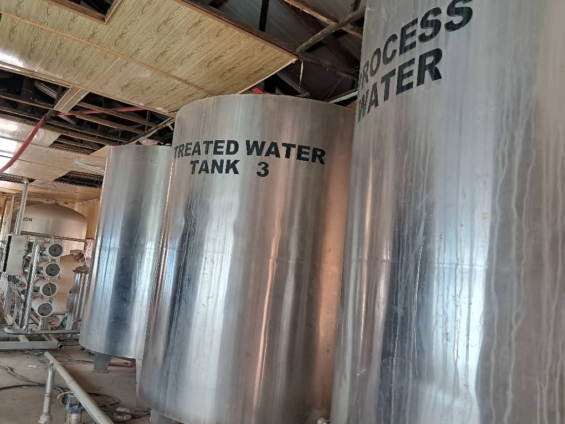
Despite its management setbacks, the factory still possesses functional infrastructure, including a water plant with a production capacity of 5,700 gallons per day and 2,562 litres per hour, according to factory records.
Other facilities include a solvent extraction plant (ACP), oil mill, boiler, laboratory, and a DOC (De-oiled Cake) room.
In addition to its underground fuel reserve, the factory has, over the years, been able to use DOC to generate energy internally, enabling it to power the entire plant efficiently.
Latest Stories
-
Prioritise cocoa sector with better prices, timely payments-Annoh-Dompreh urges NDC
11 minutes -
Lands and Mines Watch Ghana endorses Heath Goldfields’ mining capacity
27 minutes -
Gbintiri residents protest alleged diversion of 24-hour market project
52 minutes -
Justin Bieber headlines Coachella with nostalgia-fuelled set
54 minutes -
Ukraine and Russia accuse each other of hundreds of ceasefire violations
58 minutes -
Asha Bhosle: The sound of Bollywood dies aged 92
1 hour -
Fire destroys section of 4-bedroom apartment at Tantra Hill
1 hour -
Safe city: Unnoticeable protection
2 hours -
North East Regional Police Commander raises alarm over burning of checkpoints
2 hours -
Free Primary Healthcare Programme set for take-off — Health Ministry confirms readiness
2 hours -
3 co-wives, 5 children perish in canoe disaster – Maritime Authority insists life jackets use mandatory for all water transport
3 hours -
Iran war lands ‘triple blow’ to flood-ravaged Sri Lankans
3 hours -
Gunmen kill at least 11 people at Afghanistan picnic spot
4 hours -
Woman, 25, in court for stealing baby at Bogoso
4 hours -
Trump unveils giant gold-accented victory arch design for US capital
4 hours